
This article breaks down mechanical reprocessing, the method that converts sorted plastic scrap into flake or pellets for remanufacturing. It's written for manufacturers, packaging companies, and procurement teams who need post-consumer recycled (PCR) resin and want to understand what they're actually buying.
We'll cover how the process works, what affects output quality, where reprocessing fits into the supply chain, and why "chemical recycling" claims often get confused with true mechanical reprocessing.
TL;DR
- Reprocessing turns sorted HDPE/LDPE/LLDPE scrap into clean flake or pellets through grinding, washing, and melting.
- Manufacturers use PCR resin to cut costs, comply with California laws like SB 54 and AB 478, and reduce virgin plastic dependency.
- Output quality hinges on input purity, equipment condition, and process controls.
- Not every plastic is reprocessable; contamination and mixed materials limit what's viable.
- PPP, LLC has processed HDPE, LDPE, and LLDPE scrap since 1967 as a PCR-certified, APR-member facility.
What Is the Reprocessing Process?
Mechanical reprocessing is the physical conversion of cleaned, sorted plastic scrap into flake or pellet form that manufacturers can drop into their existing production lines. No chemistry and no breaking down the polymer—only physical steps:
- Sorting scrap by resin type and quality
- Grinding into flake
- Washing to remove contaminants
- Melting and pelletizing for production use
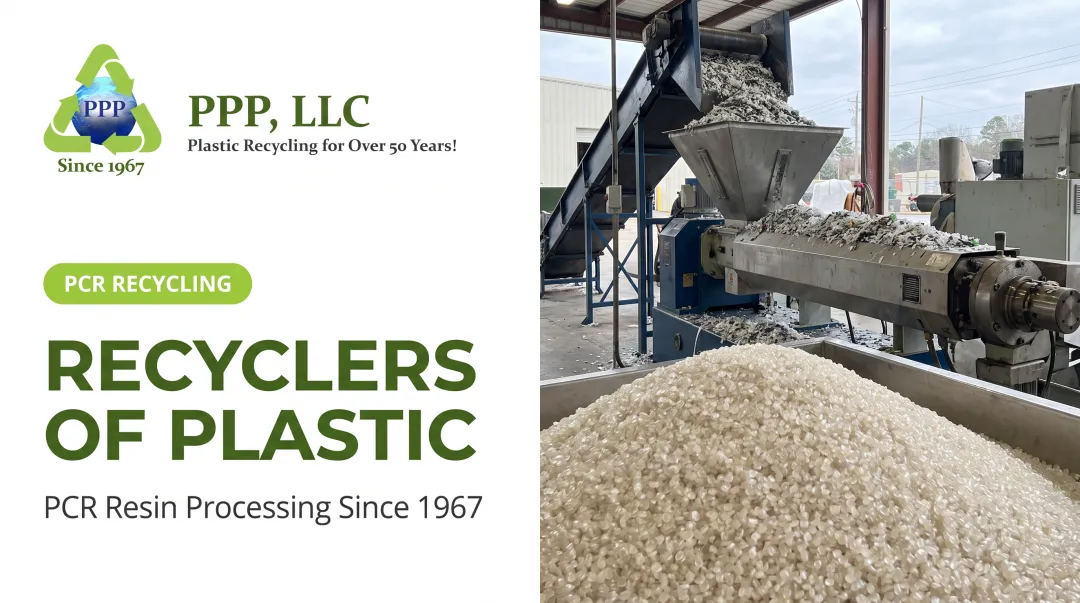
The output is PCR resin: a consistent raw material that replaces virgin plastic in new bags, containers, and packaging. That consistency is the whole point. A converter running injection molding equipment needs pellets that behave predictably, batch after batch. This differs from chemical recycling. The EPA describes mechanical recycling as sorting, cleaning, shredding, and melting, while chemical or thermal methods like pyrolysis break the polymer structure down into feedstocks, monomers, or fuels. Mechanical reprocessing keeps the polymer intact. Chemical recycling changes it into something else entirely, then rebuilds it or uses it as fuel feedstock. PPP, LLC works exclusively in mechanical reprocessing, specializing in HDPE, LDPE, and LLDPE since 1967.

Why Reprocessing Is Used in Manufacturing
Manufacturers aren't buying PCR resin out of goodwill. They're buying it because it solves specific business problems.
Demand drivers include:
- Corporate sustainability pledges that require reduced virgin plastic use
- Cost pressure: PCR resin can undercut virgin resin pricing depending on market conditions
- California's regulatory landscape, which increasingly requires recycled content
The Regulatory Picture
California has built one of the most detailed recycled-content frameworks in the country:
- AB 478 requires a minimum 20% PCR content for thermoformed plastic containers
- SB 54 sets escalating targets, including 65% recycling of covered plastic packaging by January 1, 2032, plus source-reduction and recyclability rules
- RPPC Law sets a 25% post-consumer content minimum for rigid plastic packaging containers
One clarification matters for compliance planning: SB 54's 65% figure is a system-wide recycling target, not a mandate that every package contain 65% PCR.
Without proper reprocessing, manufacturers face contaminated supply chains, non-compliance penalties, and higher raw material costs from scrambling to source compliant resin late.
PPP, LLC's PCR-certified resin, re-certified through quarterly reviews and annual audits, helps manufacturers avoid that scramble. It includes documented support for AB 478, SB 270, SB 54, SB 343, and RPPC Law compliance.
How the Reprocessing Process Works
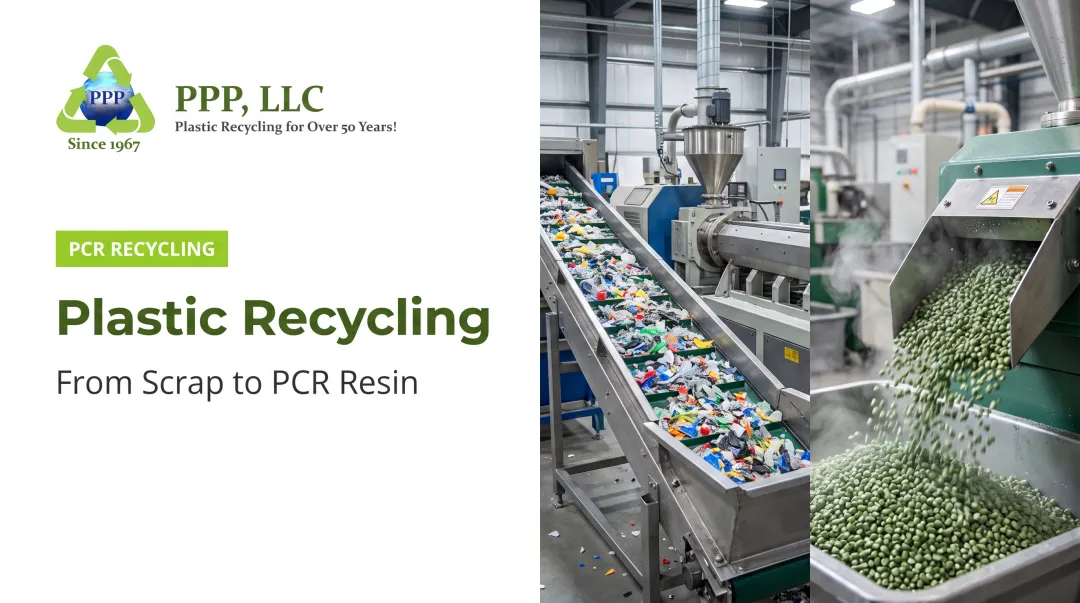
Baled scrap moves through four stages before it becomes uniform, clean resin ready for injection molding or extrusion:
- Sorting and bale breaking
- Grinding into flake
- Washing and float/sink separation
- Drying, melting, and pelletizing

Step 1: Sorting and Bale Breaking
Bales are cut apart and re-sorted to pull out residual contaminants: glass, metal, and mismatched plastic types. This pass catches what earlier sorting missed.
Step 2: Grinding Into Flake
Industrial grinders reduce the sorted plastic into small flake pieces. Smaller pieces mean more surface area, which makes the next washing stage far more effective.
Step 3: Washing and Float/Sink Separation
Hot water and detergent strip away labels, adhesive residue, and dirt. Float/sink tanks then separate plastic types by density, which matters because HDPE and LDPE must stay segregated for consistent melt behavior downstream.
Step 4: Drying and Melting/Pelletizing
Clean flake is dried, melted in an extruder, filtered to remove remaining debris, and formed into pellets ready for shipment.
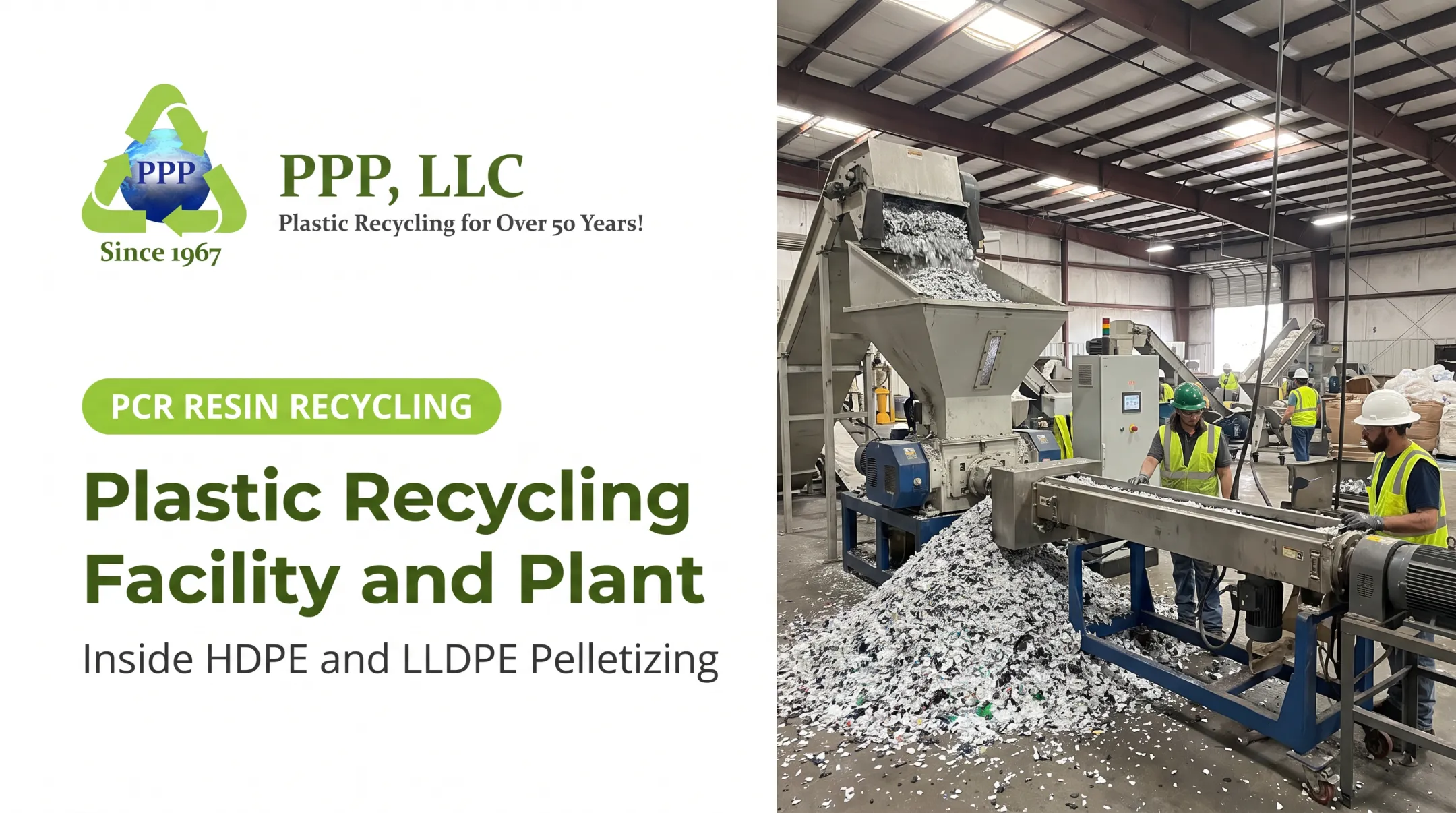
PPP, LLC runs this full path for HDPE and LDPE—from sourcing and sorting through shredding, cleaning, melting, extrusion, and pelletizing—and produces LLDPE pellets through shredding, granulation, and reprocessing.
The company also offers toll processing: customers ship their own scrap, PPP reprocesses it, and ownership never changes hands. Converters get recycled material back without buying open-market resin.
Where the Reprocessing Process Is Applied
Reprocessing happens at full-service facilities that handle grinding and pelletizing under one roof, the model PPP, LLC has run since 1967.
This fits into the supply chain at three points:
- Post-consumer collection (curbside and MRF-sourced material)
- Post-industrial scrap generation (manufacturing byproduct)
- Pre-manufacturing supply (finished PCR resin heading to converters)
Common end markets for reprocessed HDPE, LDPE, and LLDPE include:
- Bag manufacturing (grocery, retail, industrial)
- Food and pharmaceutical packaging
- Electronics packaging
- Irrigation and agricultural components
- General retail and consumer packaging

This isn't a one-off transaction. Reprocessing runs as a continuous operation tied to steady scrap supply. Facilities need predictable volumes coming in to keep pellet production consistent going out.
Key Factors That Affect Reprocessing Outcomes
Output quality isn't guaranteed just because material passed through a reprocessing line. Several variables determine whether the final pellets are usable.
- Input purity — contamination in incoming scrap directly degrades flake and pellet quality
- Resin type — HDPE and LDPE need different grinding and melt-temperature settings; treating them identically produces inconsistent results
- Equipment condition — dull grinder blades and poorly calibrated extruders introduce variability batch-to-batch
- Scale and throughput — batch size affects both cost-efficiency and turnaround time
- Regulatory constraints — food-contact and PCR-labeled applications require additional decontamination steps and documentation

On that last point: the FDA evaluates recycled-plastic food-contact processes case by case, issuing opinions on specific processes rather than blanket approvals. There's no universal green light — each application gets reviewed on its own merits.
Common Issues and Misconceptions
A few misunderstandings show up repeatedly among manufacturers evaluating PCR resin.
- Chemical vs. mechanical recycling: Mechanical reprocessing keeps the polymer intact through grinding and melting. Chemical recycling (often pyrolysis) breaks it into feedstocks or fuels—a different output and different environmental accounting.
- Recycling symbols ≠ reprocessable: The resin-identification triangle shows polymer type, not whether local infrastructure can handle it. Flexible films, multilayer pouches, and heavily contaminated loads often can't be processed anyway.
- "Recyclable" ≠ "recycled": Recyclable means it could be processed if the right facility exists. Recycled means it was turned into new material. Mixing them up creates compliance risk under labeling laws like SB 343.
- PCR % claims need proof: A "30% recycled content" figure means little without third-party verification. APR PCR Certification is a chain-of-custody audit—not a marketing claim—and it rejects mass-balance or book-and-claim shortcuts.
Frequently Asked Questions
What is the process to recycle plastic?
Plastic scrap is sorted to remove contaminants, ground into flake, washed to strip labels and adhesives, then dried and melted into pellets. This mechanical sequence produces PCR resin ready for manufacturing.
What are five methods of processing plastic?
Common methods include mechanical recycling, chemical recycling such as pyrolysis, injection molding, extrusion, and thermoforming. Only mechanical and chemical recycling reprocess waste plastic itself; the others shape resin into finished parts.
What are plastics that cannot be recycled?
Multilayer or laminated materials, heavily contaminated scrap, and mixed-resin loads are typically difficult or impossible to reprocess mechanically. Clean PE films can be recycled at specialized facilities, though acceptance still varies by region and resin type.
What is the best solution for plastic waste?
Reduction comes first, followed by high-quality mechanical reprocessing and stronger manufacturer demand for PCR resin. Together, these currently offer the most reliable path to reducing landfill-bound plastic.
How is PCR resin different from virgin plastic?
PCR resin comes from reprocessed post-consumer or post-industrial scrap rather than new petrochemical feedstock. Quality PCR resin should carry third-party certification to verify content claims and consistency.
Why do some states require recycled content in plastic products?
Laws like California's SB 54 aim to boost demand for recycled materials and cut landfill waste by mandating recycled content and packaging recyclability. These regulations push manufacturers to build PCR resin into their sourcing strategy rather than treating it as optional.