
Introduction
Sustainable packaging isn't a buzzword anymore. It's a business requirement. As recycled-content mandates tighten and buyers scrutinize every claim on a label, "PCR plastic" is a term manufacturers need to get right.
The problem? Many businesses lump PCR in with biodegradable plastics, PIR scrap, or generic "recyclable" claims. That confusion creates real compliance risk, especially as California's packaging laws tighten.
This guide breaks down what PCR plastic packaging actually is, how it's manufactured, where it falls short, and what certification and California compliance require from your supply chain.
Key Takeaways
- Post-consumer recycled (PCR) resin comes from used consumer waste reprocessed into new packaging material
- Origin and regulatory status set PCR apart from both PIR scrap and virgin resin
- Certified PCR cuts carbon footprint and helps meet state recycled-content laws
- California's AB 478, SB 270, and SB 54 make verified PCR sourcing a compliance requirement
What Is PCR Plastic Packaging?
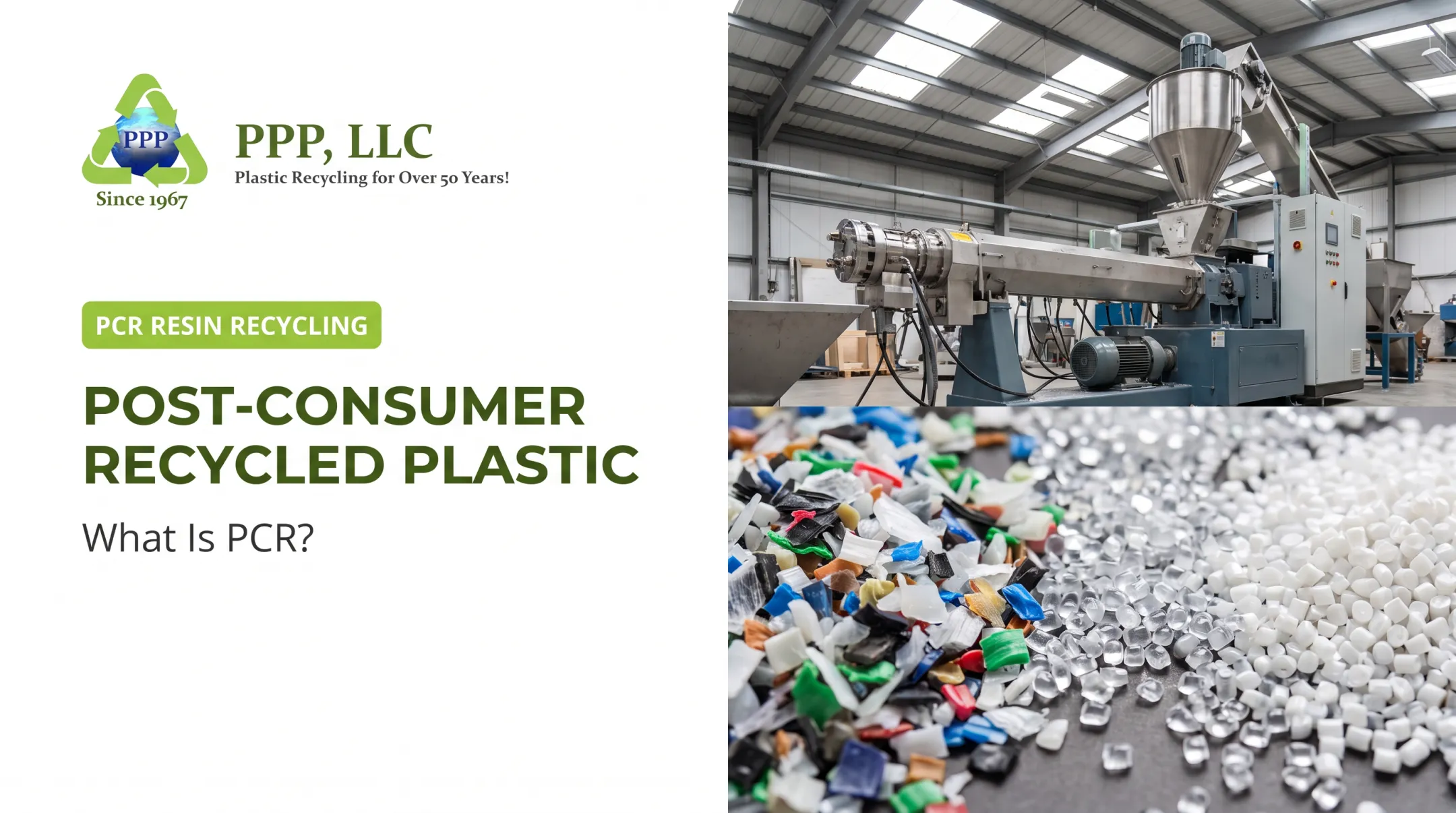
PCR stands for post-consumer recycled plastic. It comes from items households, businesses, or institutions already used and discarded. Recyclers reprocess that material and return it to the supply chain as new resin.
This is different from plastic that's simply recyclable in theory. PCR has already completed its first life cycle. Someone used it, threw it away, and a recycler brought it back.
Common PCR resin types include:
- rHDPE (recycled high-density polyethylene) — from milk jugs, detergent bottles, and buckets
- rLDPE (recycled low-density polyethylene) — from stretch film, bubble wrap, and food pouches
- rLLDPE (recycled linear low-density polyethylene) — from flexible bags and liners
- rPET and rPP — from beverage bottles, tubs, and trays (used less often in polyethylene packaging supply chains)
How Much Post-Consumer Plastic Is Recovered
The volume of material available for PCR production is substantial. U.S. recyclers recovered more than 5.1 billion pounds of post-consumer plastic in 2024 — over 114 million pounds more than 2022, according to the Association of Plastic Recyclers.
PCR content isn't all-or-nothing, either. A packaging product might contain 10% PCR blended with virgin resin, or it might be manufactured from 100% post-consumer material. The right percentage depends on the application, the resin type, and what regulations require.
PPP, LLC, for example, produces HDPE and LDPE PCR resin from blends that meet common California targets (often 20–25% PCR) up to 100% post-consumer formulations. The mix depends on what each manufacturer specifies.
How Is PCR Plastic Made?
Turning a used milk jug into packaging-ready resin takes several distinct stages. Skip any one of them, and the resulting material won't perform reliably.
- Collection and sorting. Recycling facilities separate incoming plastic waste by resin type (HDPE, LDPE, PET, and so on) and color. This step determines the quality ceiling for everything that follows.
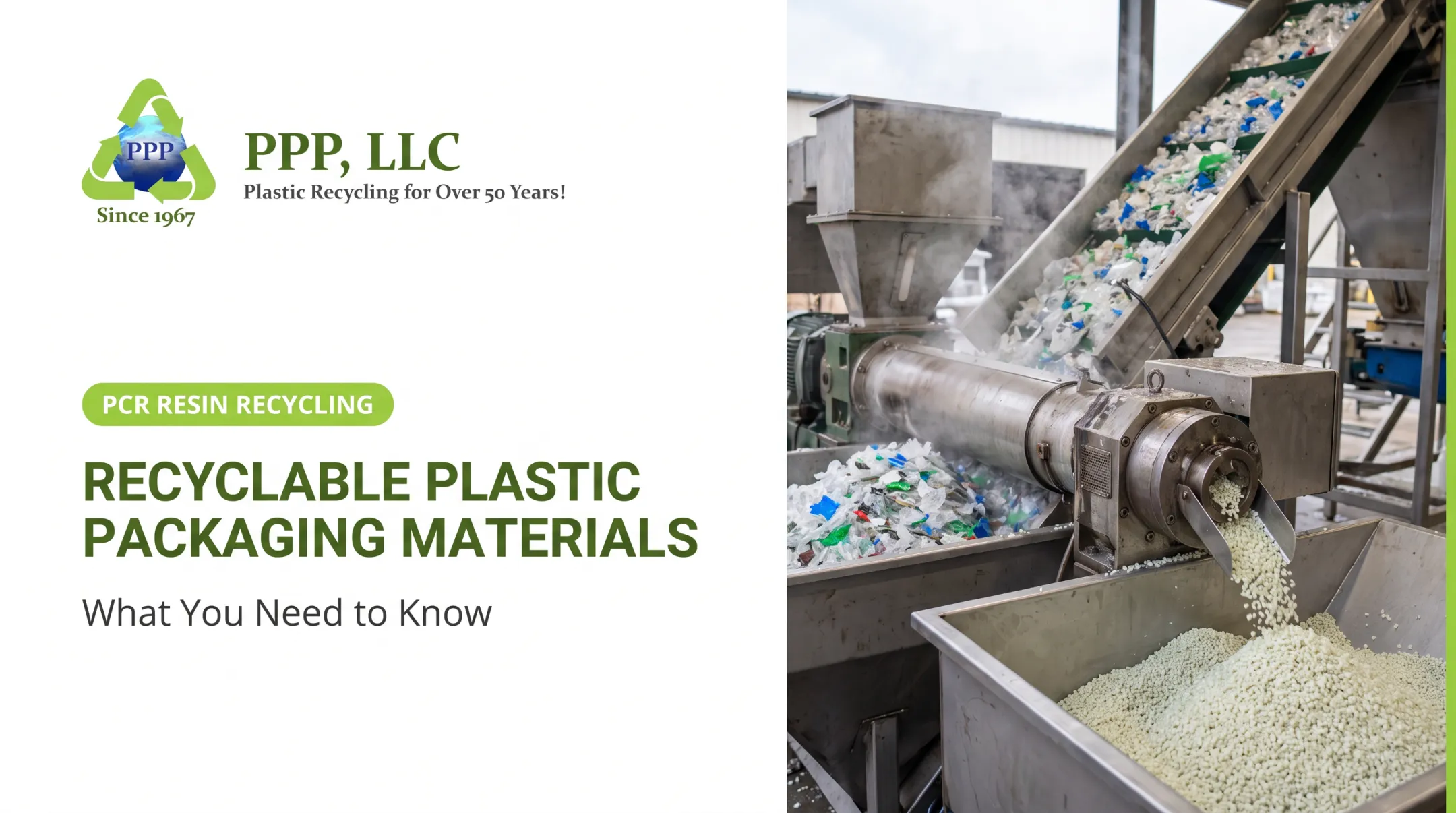
- Cleaning and shredding. Sorted plastic gets shredded into flakes or granules, then washed to remove labels, adhesives, food residue, and other contaminants.
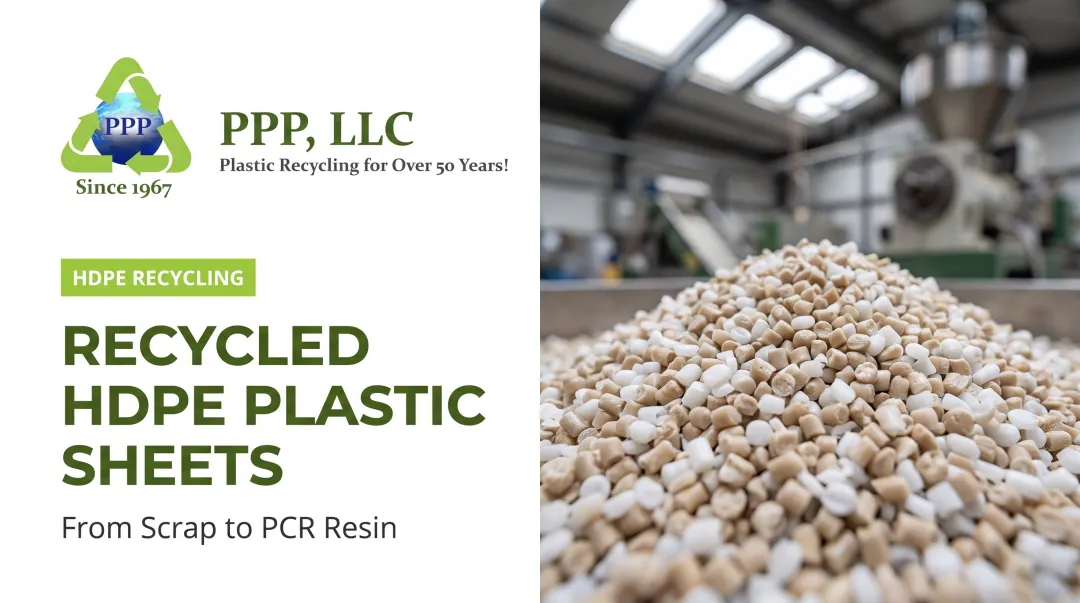
- Melting and pelletizing. The cleaned flakes are melted down and extruded into small, uniform resin pellets, ready for remanufacturing.
- Reintroduction to the supply chain. Manufacturers purchase the pelletized PCR resin and mold it into new bottles, bags, containers, or films.

How well those stages are controlled decides whether the finished resin meets packaging specs. Recyclers with deep process experience turn that sequence into consistent, manufacturing-ready material.
PPP has refined this work since 1967, processing HDPE, LDPE, and LLDPE scrap into PCR pellets that can be specified by size, shape, color, and finish. The company also offers toll processing, so manufacturers can convert their own scrap into resin without transferring ownership of the material.
PCR vs. Virgin Resin and PIR: What's the Difference?
Not all "recycled" claims mean the same thing. Getting this distinction wrong can create real compliance problems.
Virgin resin is plastic manufactured directly from petroleum or natural gas feedstocks. It has never been used or recycled. Producing it requires more energy and creates more emissions than reprocessing existing material.
The gap is substantial. A Franklin Associates study conducted for the Association of Plastic Recyclers found that recycled HDPE uses 88% less total energy and produces 71% fewer greenhouse gas emissions compared to virgin HDPE production.
PIR (post-industrial recycled) resin comes from manufacturing scrap: trimmings, rejected batches, or excess material generated during production. It never reached a consumer.
PCR (post-consumer recycled) resin is made from plastic that consumers or institutions already used and discarded—bottles, bags, packaging, and similar waste collected for recycling.
Side by side, the three materials differ on source, consumer use, and mandate eligibility:
| Material | Source | Reaches Consumer? | Counts Toward PCR Mandates? |
|---|---|---|---|
| Virgin resin | Raw feedstock | No | No |
| PIR | Factory scrap | No | Generally, no |
| PCR | Used consumer/institutional waste | Yes | Yes |
Laws like California's SB 54 specifically target post-consumer content. PIR, despite being "recycled" in a technical sense, typically doesn't satisfy those requirements. Manufacturers who blend in PIR and market it as PCR risk running afoul of truth-in-labeling rules.
Benefits of PCR Plastic Packaging
PCR packaging delivers measurable environmental, regulatory, and commercial gains—not just a greener label.
Waste diversion. Every ton of plastic reprocessed into PCR is a ton that doesn't end up in a landfill or waterway. The EPA reported that only 8.7% of U.S. plastics were recycled in 2018, while natural HDPE bottles hit a stronger 29.3% recycling rate, which leaves clear room to improve recovery rates.
Lower carbon footprint. Recycled HDPE production uses far less energy and generates fewer emissions than virgin resin. For manufacturers tracking Scope 3 emissions, switching to PCR is a practical way to cut those numbers.
Regulatory readiness. State recycled-content laws are multiplying:
- California's AB 793 requires beverage containers to reach 25% PCR by January 2025, climbing to 50% by 2030
- Washington's SB 5022 sets tiered minimums for beverage containers, trash bags, and personal-care packaging through 2031
Sourcing certified PCR now means you're not scrambling when the next threshold hits.
Consumer preference. Sustainability sells, particularly to younger buyers. McKinsey's 2025 global survey of over 11,000 consumers found that Gen Z and millennial shoppers report the highest willingness to pay more for sustainable packaging compared to older generations.
Performance parity. Properly processed PCR resin can match virgin resin in strength, durability, and barrier performance for most non-critical applications. Suppliers such as PPP, LLC produce HDPE PCR pellets to the same size, shape, color, and durability specs manufacturers expect from virgin material.
Challenges and Limitations of PCR Plastic
PCR isn't without trade-offs. A responsible packaging strategy accounts for these upfront.
- Color and clarity variability: Repeated reheating during reprocessing can dull color or reduce clarity. Manufacturers sometimes add dyes or blend in virgin resin to hit a specific aesthetic target.
- Supply dependency: PCR quality and availability hinge on consistent recycling participation and sorting infrastructure. When collection rates dip in a region, sourcing bottlenecks follow.
- Food-contact restrictions: Not all PCR qualifies for food-contact packaging. The FDA reviews each process case by case for contamination and migration risk and issues an informal purity opinion, not a formal approval.
None of these are dealbreakers—they're reasons to work with a recycler who understands the specs your application demands.
PCR Certification and California Recycling Regulations
Certification is what separates a genuine PCR claim from a marketing statement. Third-party verification confirms authentic post-consumer content and traceable chain-of-custody, and increasingly, it's a legal requirement rather than an optional badge.
PPP, LLC has operated as a full-service recycling facility since 1967, specializing in grinding, pelletizing, and recycling HDPE and LDPE plastic scrap.
It maintains PCR certification through quarterly reviews and annual re-certification and is a member of the Association of Plastic Recyclers (APR), which helps standardize what "recycled" means. That mix of longevity and ongoing verification gives manufacturers the documentation regulators and customers expect.
California's Key Packaging Laws
- AB 478: Recycled-content and commingled recycling rate rules for thermoform plastic containers
- SB 270: Earlier post-consumer content and durability rules for reusable plastic bags (largely superseded by SB 1053)
- SB 54: Extended producer responsibility with 10% source reduction by 2027, a 65% plastic packaging recycling rate by 2032, and penalties up to $50,000 per day per violation

Sourcing from a certified, compliant recycler gives manufacturers documentation for recycled-content claims and lowers exposure to compliance penalties.
This regulatory pattern isn't staying in California. New Jersey and Connecticut have both enacted their own recycled-content minimums for beverage containers and bags. Manufacturers operating outside California should treat certified PCR sourcing as a strategic move now, not a reaction later.
Frequently Asked Questions
What is PCR in plastic?
PCR stands for post-consumer recycled resin, plastic made from waste collected from households and businesses after use, then reprocessed into new packaging material. It's distinct from plastic that's merely labeled recyclable.
What is the difference between PCR and PIR plastic?
PCR comes from consumer-used waste, while PIR comes from manufacturing scrap that never reached a consumer. Regulations like California's SB 54 typically only recognize PCR toward compliance targets.
Is PCR plastic biodegradable?
No. PCR plastic doesn't decompose any differently than virgin plastic. Its environmental value comes from diverting waste from landfills and reducing demand for newly manufactured plastic.
Can PCR plastic be recycled multiple times?
Yes, PCR resin can typically be reprocessed several times before quality degrades noticeably, supporting a genuine circular use cycle for packaging materials.
Is PCR packaging safe for food-contact use?
Some PCR resin can meet FDA food-contact requirements after strict purification and contaminant testing. Not all PCR qualifies without this additional processing, so verification matters.
Does using PCR plastic help with California recycling compliance?
Yes. Sourcing certified PCR resin helps manufacturers document recycled content toward targets under California's SB 54, the state's primary packaging producer-responsibility law.