
Plastic grinding is the mechanical first step that stops that waste. It shreds bulky scrap, bottles, containers, film, and industrial offcuts, into uniform flakes or granules ready for washing, melting, and reuse.
This article breaks down how the grinding process actually works, what equipment and steps are involved, why it matters for your bottom line, and how to decide whether to grind in-house or partner with a specialized recycler.
Key Takeaways
- Most thermoplastics, including HDPE, LDPE, and PET, can be ground into flakes.
- Grinding is the gateway between plastic waste and usable PCR resin.
- Contamination from labels, adhesives, and moisture directly affects resin quality downstream.
- In-house grinding carries hidden costs in equipment, maintenance, and safety compliance.
- Partnering with a full-service recycler delivers better consistency at lower total cost.
What Is Plastic Grinding? (Directly Answering "Can You Grind Plastic?")
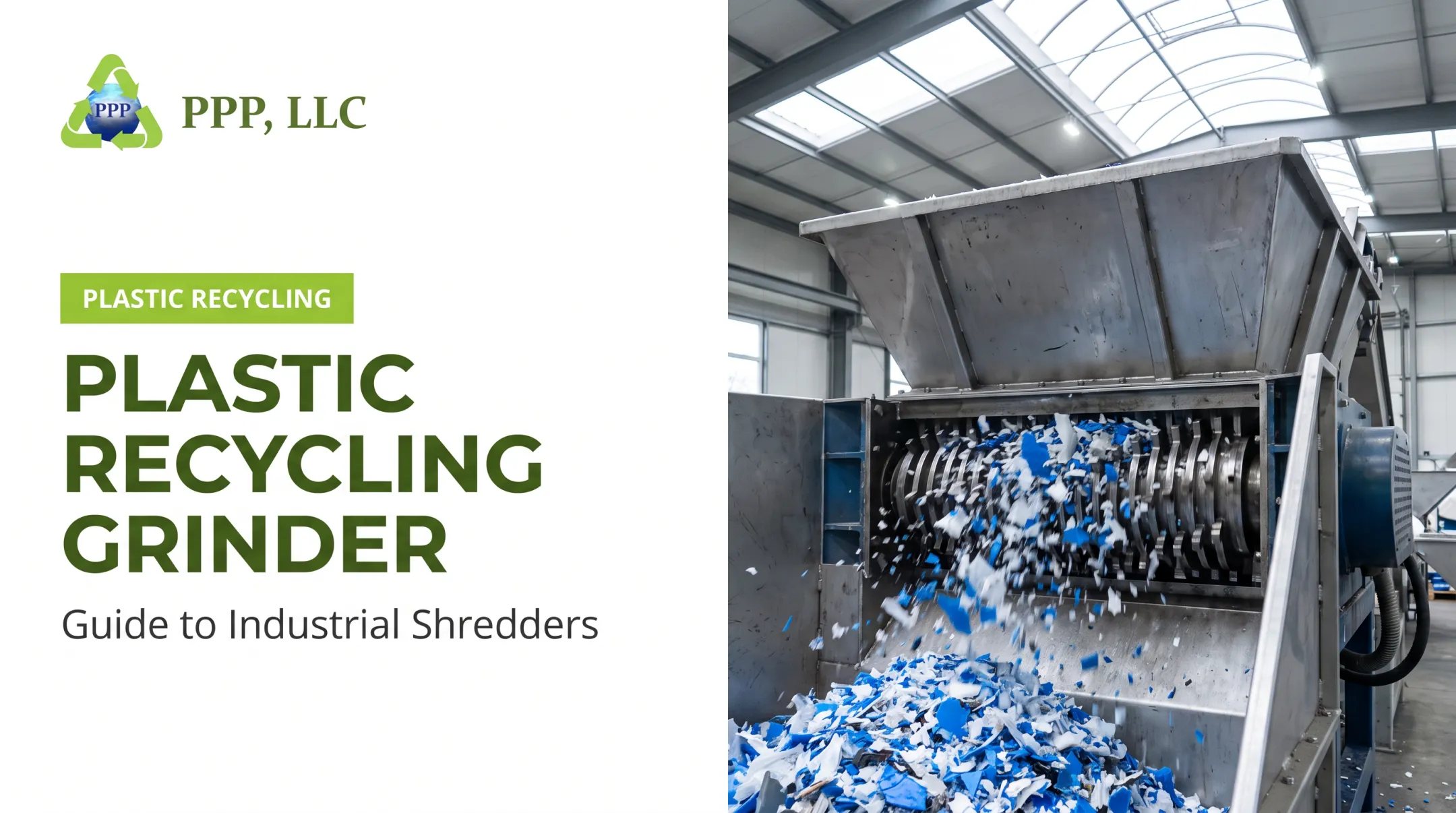
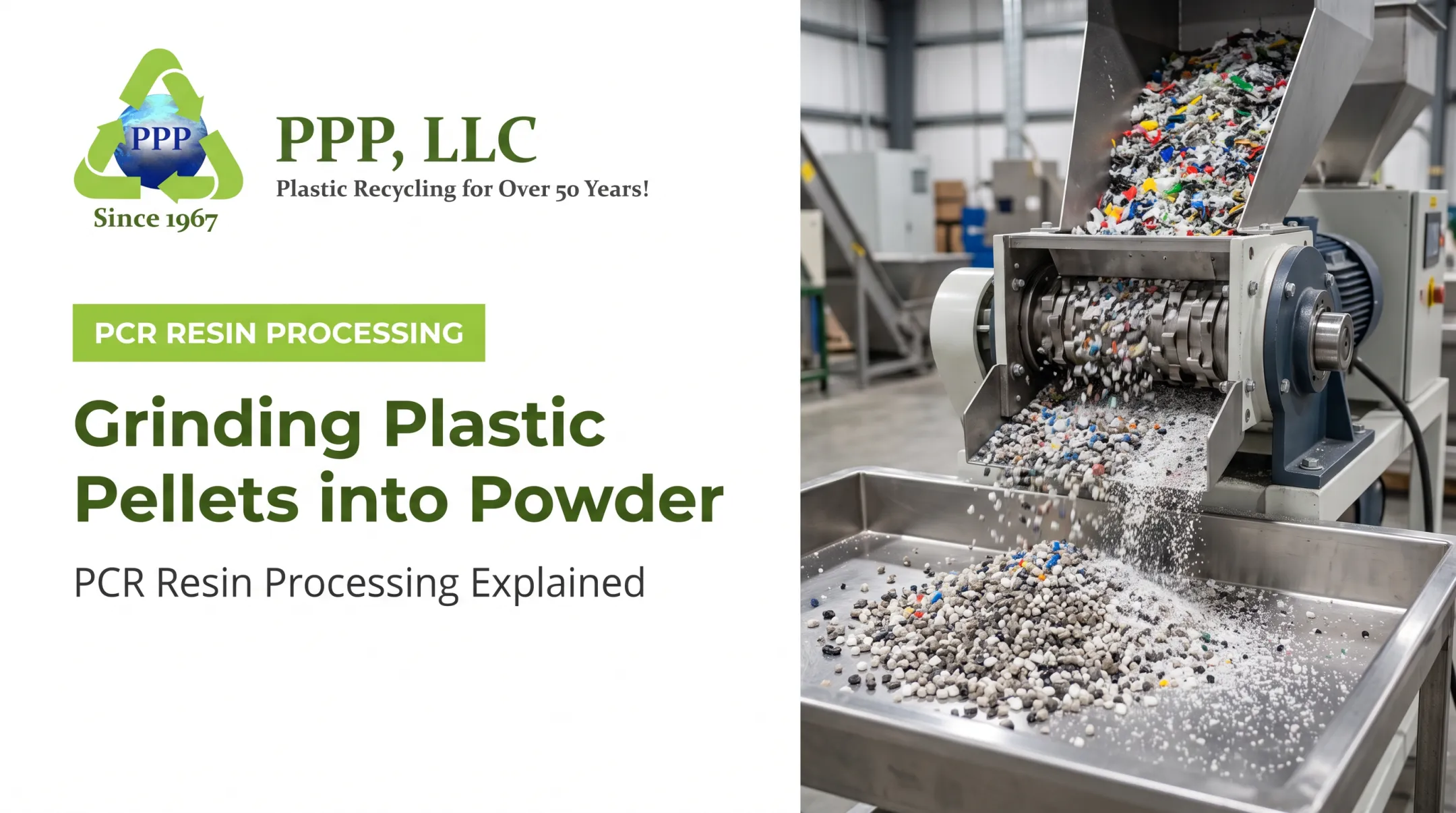
Grinding is a mechanical process. Rotating blades shear against fixed blades, cutting plastic into small, uniform pieces called flake or regrind. A screen at the bottom of the chamber controls the final particle size, letting properly sized flakes pass through while larger pieces get cut again.
This is different from two other terms people often confuse it with:
- Shredding produces coarser, irregular pieces as an upstream, rougher size-reduction step.
- Pelletizing melts and reforms material into small, uniform pellets ready for molding.

So, can you grind plastic? Yes, most thermoplastics qualify. Volume is dominated by polyethylenes:
- HDPE (high-density polyethylene): bottles, containers, pipe
- LDPE (low-density polyethylene): film, bags, flexible packaging
Other thermoplastics (PP, PS, PET) are ground in the broader industry, but many full-service recyclers focus on HDPE and LDPE rather than running every resin.
PVC needs extra handling. Room-temperature grinding is not the main risk. If PVC overheats in later thermal steps, it can release corrosive hydrogen chloride gas that damages equipment and needs dedicated neutralization systems. Most general-purpose grinding operations exclude it for that reason.
HDPE and LDPE dominate post-consumer grinding volume. Full-service recyclers such as PPP, LLC specialize in these two resins—grinding and related reprocessing—rather than trying to handle every plastic type.
Why Grinding Matters in the Recycling Supply Chain
Grinding does one thing well: it shrinks bulky, awkward scrap into a form that's actually processable. A bale of crushed bottles or a roll of film waste can't go straight into an extruder. Flakes can.
Mechanical recycling typically follows this sequence:
- Shredding
- Washing
- Milling or grinding
- Separation
- Drying
- Extrusion
Grinding sits in the middle of that chain. It exposes more surface area for cleaning and creates consistent feedstock for the separation and melting stages that follow.
Without this step, there's no clean path from waste to reusable raw material like PCR resin. Grinding is the mechanical gateway. Nothing downstream works without it.
The Plastic Grinding Process: Step-by-Step
Step 1: Collection and Sorting
Scrap comes from industrial production lines, municipal recycling programs, and household collection. Before anything gets ground, it's sorted by resin type and color.
Why does this matter so much? Mixing HDPE with PP, or clear material with colored, contaminates the batch and tanks the value of the output. A recycler that specializes in HDPE and LDPE—rather than juggling a dozen resin types—catches contamination faster because the team knows exactly what belongs in the stream.
Step 2: Cleaning and Drying
Labels, adhesives, and moisture all have to go before material moves further downstream. This isn't a cosmetic step.
The Association of Plastic Recyclers recommends label coverage stay under 55% for smaller containers and 75% for larger ones, because heavy coverage can block automated sorting systems from recognizing the resin type.
Incompatible adhesives and leftover paper labels that carbonize during extrusion cause splay, discoloration, odor, and lower impact strength in the finished resin. Clean input isn't optional if you want usable output.
Step 3: Grinding
Sorted, cleaned material feeds into the grinder, where rotating blades shear against fixed blades and cut the plastic into flake.
Two variables control the outcome:
- Blade type (claw vs. flat) affects how the material is cut and the resulting flake shape
- Screen mesh size determines the maximum particle size that exits the grinder
Get either wrong and you end up with excess fines, inconsistent flake shape, or material that flows poorly in later stages.
Step 4: Screening and Quality Control
Flakes pass through screens that filter by size, and operators check for purity before the batch advances. Oversized pieces get sent back for another pass. This checkpoint exists because feeding inconsistent material into an extruder later creates expensive problems.
Step 5: Pelletizing (Optional Next Step)
Many operations melt the screened flakes and reform them into pellets for reintroduction into manufacturing. A 2021 extrusion study found a 37% throughput difference between irregular regrind and virgin pellets when fed into a standard feed zone, purely because of shape and bulk-density inconsistency. Redesigning the feed-zone geometry closed that gap. Uniform, well-ground feedstock directly affects how smoothly downstream extrusion runs.

Key Benefits of Plastic Grinding and Recycling for Businesses
Cost Savings Grinding scrap for reuse cuts dependency on virgin resin. Every pound of ground and reprocessed HDPE or LDPE is a pound you're not buying at virgin resin pricing, which fluctuates with oil markets far more than recycled feedstock does.
Environmental Impact According to APR's lifecycle analysis, 100% post-consumer recycled HDPE pellets used 88% less total energy and produced 71% lower global-warming potential than virgin HDPE.
Water consumption dropped 59% and acidification fell 47%. Solid waste and eutrophication ticked up slightly, but the net energy and climate gains still dominate the footprint.
Regulatory Compliance California's plastics regulations keep shifting, and the current picture is:
| Law | Status | What It Means for You |
|---|---|---|
| SB 54 (2022) | Active, operative packaging EPR framework | Requires source reduction and a 65% recycling rate for plastic packaging by 2032 |
| AB 478 (2021) | Died in committee, never became law | Would have set PCR minimums for thermoform containers; worth watching for revival |
| SB 270 (2014) | Original bag content rules superseded by SB 1053, effective 2026 | Reusable bag requirements are changing; confirm current thresholds |
Working with a recycler that tracks these changes actively saves you from building compliance strategy around outdated rules.
Marketing and Brand Value Using ground, recycled resin lets manufacturers support sustainability claims with verifiable recycled content. Eco-conscious buyers increasingly check for substance behind the label.
Versatile End Uses Ground and pelletized HDPE/LDPE shows up in:
- Packaging (bottles, containers, film)
- Pipe and drainage products
- Irrigation and agricultural components
- Plastic lumber and outdoor products
In-House Grinding vs. Partnering with a Professional Recycler
Running your own grinding operation sounds straightforward until you total the real costs.
Hidden costs of in-house grinding:
- Equipment purchase, plus ongoing energy, cleaning, spare parts, and service labor
- Blade and screen wear requiring regular replacement to maintain flake quality
- OSHA-mandated safety controls: machine guarding, lockout/tagout, noise limits, and combustible dust management
- Inconsistent PCR-grade purity without dedicated sorting and testing
OSHA's general industry standards apply in full, from point-of-operation guarding to hazardous energy control during maintenance. Plastic dust is also a potential combustible hazard, so a site-specific assessment isn't optional.
Advantages of outsourcing:
- Consistent output quality from operators who process the same resin types daily
- Built-in regulatory compliance without building it yourself
- Zero capital tied up in machinery that depreciates
- One partner handling grinding through pelletizing—and scrap take-back—instead of juggling suppliers
Businesses with steady HDPE or LDPE scrap volumes usually save more over time by handing the process to a specialist. A full-service recycler such as PPP, LLC can grind and pelletize that material—or toll-process customer-owned scrap—without the capital, labor, and compliance burden of running equipment in-house.

Why PPP, LLC Is a Trusted Partner for HDPE and LDPE Grinding
PPP, LLC has processed HDPE and LDPE scrap since 1967, giving it more than 50 years of specialized experience in the two resins that drive most post-consumer grinding volume.
What separates a dedicated HDPE/LDPE grinder from a generalist scrap handler:
- Annually re-certified PCR (Post-Consumer Recycled) status with quarterly reviews, plus Association of Plastic Recyclers (APR) membership—ongoing quality assurance, not a one-time badge
- Active tracking of California's plastics rules, from SB 54 producer responsibility to bag-content requirements under SB 270, so partners build compliance on current law
- Recycled HDPE and LDPE resin matched to size, shape, color, finish, and performance specs
- Toll processing for companies that keep ownership of their scrap while PPP handles grinding, washing, and pelletizing
- Resin supply for bag manufacturers, food and pharma packaging, electronics packaging, and irrigation and agricultural products
Companies generating regular HDPE or LDPE scrap can request a quote for grinding, pelletizing, and resin supply under one roof.
Frequently Asked Questions
Can you grind plastic?
Yes, most thermoplastics can be mechanically ground into flakes for recycling. PVC can be ground too, but it needs extra caution because overheating in later thermal steps can release corrosive gas.
What types of plastic can be ground?
The most commonly ground plastics include HDPE, LDPE, LLDPE, PP, PS, and PET. Polyethylene resins—HDPE, LDPE, and LLDPE—often see the highest volume in post-consumer recycling.
Is grinding the same as shredding?
No. Shredding produces coarser, irregular pieces as a rougher first pass, while grinding creates finer, more uniform flakes suited for washing, melting, and pelletizing.
What happens to plastic after it's ground?
Ground flakes are typically screened for size and purity, then often melted and pelletized for reuse in manufacturing new products. Some flakes are sold directly without pelletizing, depending on the buyer's needs.
Can PVC be ground safely?
PVC can be mechanically processed, but it requires extra precautions because overheating during later thermal steps releases corrosive hydrogen chloride gas. Most standard grinding operations exclude it for this reason.
What's the difference between grinding and pelletizing?
Grinding mechanically cuts plastic into flakes without changing its chemical structure. Pelletizing melts that flake and reforms it into small, uniform pellets ready for manufacturing use.