
Manufacturers generating plastic scrap face a real fork in the road: buy equipment and run it in-house, or send that scrap to a certified recycler. Many don't know which shredder type fits their material stream, or whether the capital outlay even makes sense for their volume.
This guide breaks down grinder types, how to pick one, what they cost, and when outsourcing to a PCR-certified recycler beats owning the machine outright.
Key Takeaways
- Grinders and shredders turn plastic scrap into consistent flakes or granules ready for pelletizing.
- Match the machine to plastic type, scrap volume, and target output size.
- Expect industrial shredder cost to scale with motor size, throughput, and automation.
- Outsourcing to a PCR-certified partner like PPP, LLC removes equipment costs and compliance burden.
What Is a Plastic Recycling Grinder and How Does It Work?
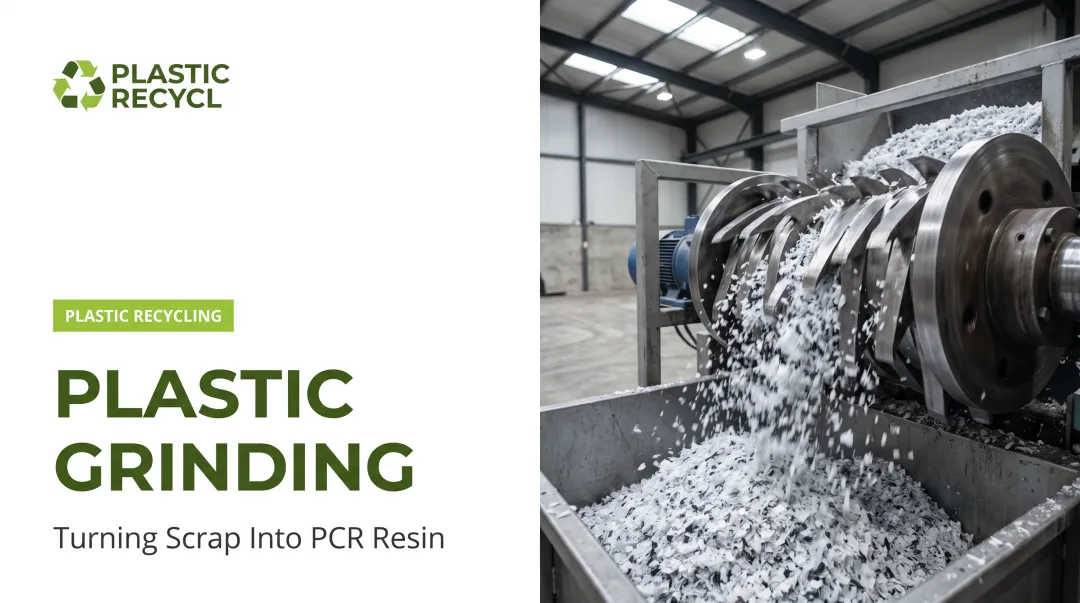
A plastic recycling grinder is an industrial machine that mechanically breaks down plastic scrap—bottles, film, and packaging trim—into flakes, granules, or shreds. The mechanism is straightforward: rotating blades or hammers cut material against a screen, and the screen's hole size determines the final particle size.
A typical processing line runs through five stages:
- Sorting — separating scrap by resin type and removing contaminants
- Feeding — loading material via hopper or conveyor
- Shredding/grinding — reducing bulk material into smaller pieces
- Screening — filtering output to a consistent size
- Pelletizing — melting and extruding flakes into resin pellets

Consistent particle size isn't a nice-to-have. Inconsistent feed can jam or damage downstream extrusion equipment, according to Plastics Technology's breakdown of granulator options. Screen size, rotor speed, and knife sharpness all affect throughput and fines.
Those controls matter most on everyday scrap streams. Common inputs include HDPE and LDPE bottles, caps, and packaging scrap—the same materials PPP, LLC has sorted, ground, and pelletized into finished resin since 1967.
Types of Industrial Plastic Shredders and Grinders
Not every machine handles every material. Matching the shredder to your scrap stream determines output quality and equipment lifespan.
Single-Shaft and Dual-Shaft Shredders
Single-shaft shredders use a rotating cutting rotor with a hydraulic pusher, suited to bulky items like large PE lumps, agricultural film, or HDPE pipe. Dual-shaft (twin-shaft) shredders use two counter-rotating shafts that grip and shear tougher materials such as drums, crates, and thick-walled containers. These typically skip the screen stage, so they're built for coarse pre-shredding rather than tight sizing.
Granulators and Speed Considerations
Granulators/grinders use fast blades and small-hole screens to produce precise, uniform granulate ready for extrusion or pelletizing. Speed matters here:
- Low-speed, high-torque shredders generate less heat, reducing material degradation risk
- High-speed, high-inertia grinders process faster but can raise material temperature during cutting
- Process match pairs coarse shredding for volume reduction with granulation when you need tight, extrusion-ready particle size

Feed Systems
Industrial lines typically use one of two feed setups:
- Hopper-fed systems for batch loading and flexible job changes
- Conveyor-fed systems for continuous, steady production flow
Choose based on whether you run intermittent batches or an ongoing scrap stream.
Commercial Shredder vs Industrial Shredder: What's the Difference?
This is one of the most common points of confusion for manufacturers shopping for equipment.
Commercial shredders are compact, lower-capacity units built for small businesses or workshops. They run lighter-duty motors and work fine for occasional, smaller batches.
Industrial shredders are engineered for high-volume, continuous operation. Per Genox's 2024 equipment comparison, industrial units can process thousands of pounds per hour. They feature heavier steel frames, higher-horsepower motors, and integrated safety systems.
A few things to check before assuming "industrial" fits your needs:
- Continuous-duty rating (not just peak capacity)
- Integration with screening and pelletizing lines, not standalone use
- Service access and parts availability
- Verified throughput on your actual material, not marketing specs
What Type of Machine Can Grind Plastic?
Several machine categories can reduce plastic size, but they're not interchangeable:
- Granulators: fast-blade units for uniform, small flake output
- Hammermills: impact-based reduction producing granules to elongated strips
- Single- or twin-shaft shredders: for bulky or tough plastic items
- Wood chippers modified for plastic: not a validated solution; requires manufacturer approval and plastic-rated testing
- Open-source/DIY shredder kits: small-batch builds for hobbyists, roughly 22 lb/hour capacity

The right machine depends on plastic hardness, wall thickness, and target flake size. DIY units work for prototyping or small operations, but they can't match the consistency or volume that certified recyclers deliver at scale.
How Much Does a Plastic Shredder Machine Cost?
Pricing here is all over the map, and for good reason. Key cost drivers include:
- Motor size and horsepower
- Throughput capacity (lb/hour processed)
- Automation level (manual feed vs. automated conveying)
- Screen and blade configuration Beyond the purchase price, factor in:
- Routine maintenance and blade replacement
- Energy consumption (these machines are motor-intensive)
- Facility space for the unit plus screening and pelletizing equipment
- Installation and electrical integration One transparent benchmark: an open-source small-batch shredder runs around $999 for roughly 22 lb/hour—useful scale context, but nowhere near industrial throughput. Industrial-grade equipment requires a manufacturer quote based on your specific material and volume. For lower-volume operations, the math often favors outsourcing. Buying a shredder that sits idle half the week rarely pencils out against a full-service recycling facility already running grinding and pelletizing at scale.
Why Partner With a Certified Recycler Instead of Buying Your Own Equipment
Owning grinding equipment means more than a purchase order. It means capital investment, hiring or training operators, ongoing maintenance, and staying current with state recycling law, all before you process a single pound of scrap.
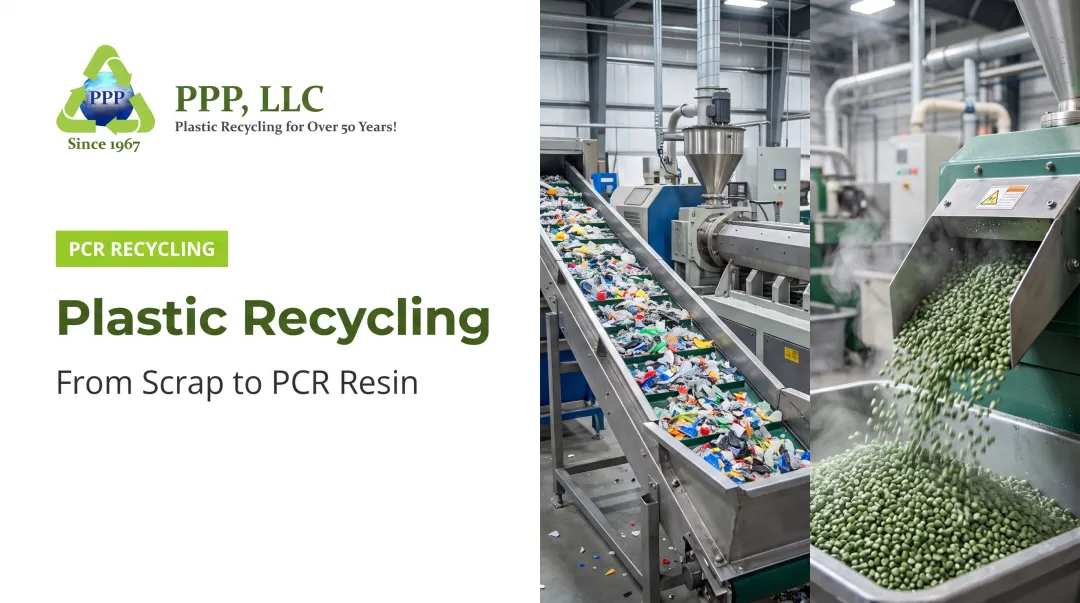
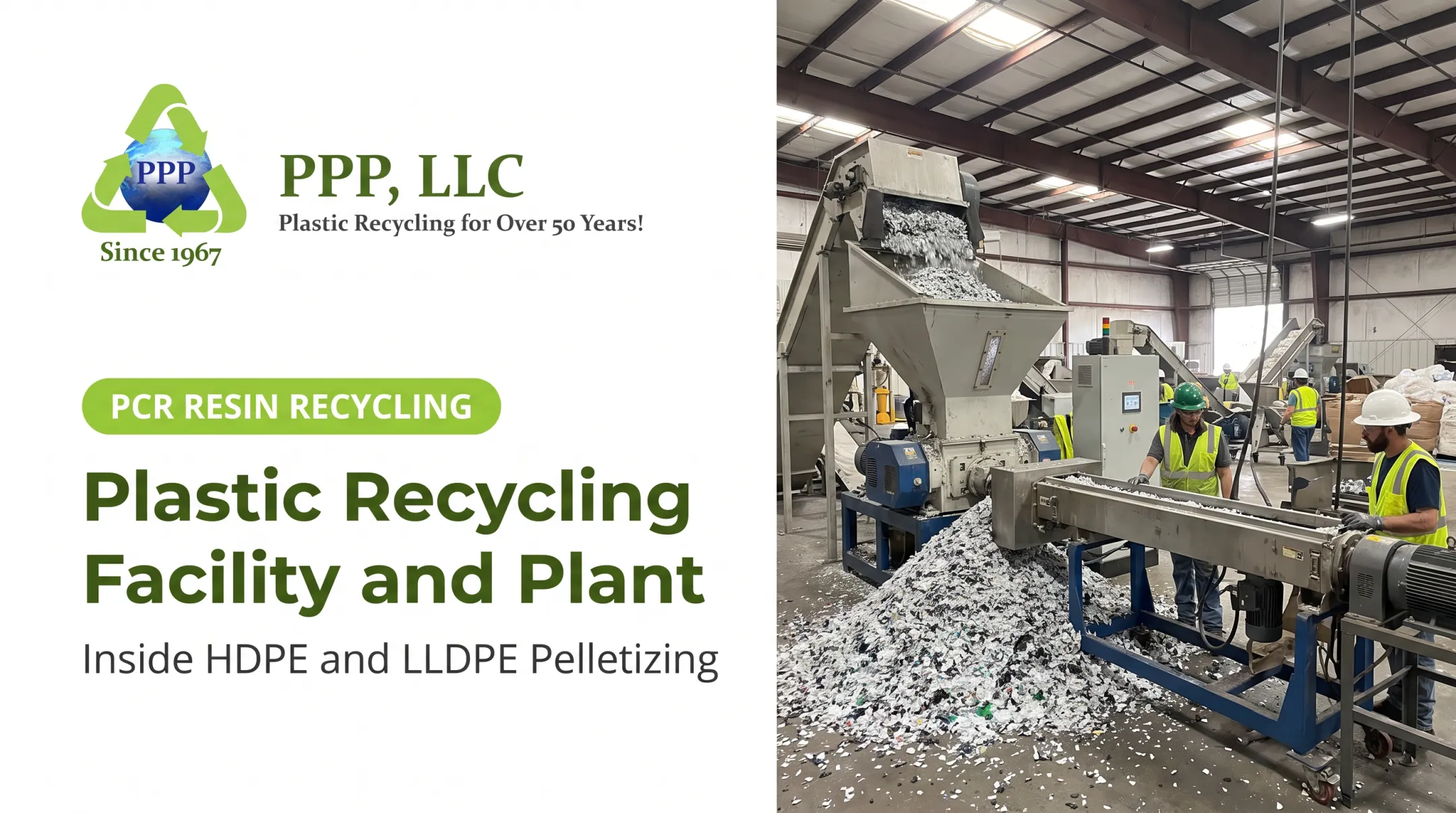
PPP, LLC offers an alternative: full-service grinding, pelletizing, and recycling of HDPE and LDPE scrap under one roof, with operations running since 1967. The process covers:
- Scrap sourcing and purchasing from manufacturers, processors, and converters
- Sorting, shredding, grinding, and washing
- Extrusion and pelletizing into finished resin
- Toll processing — converting customer-owned scrap into resin while the customer retains ownership, no in-house equipment required

Certification That Backs the Output
PPP maintains PCR certification through quarterly reviews and annual re-certification, and holds APR membership to stay current with industry standards. That combination gives manufacturers documented assurance that the resin meets quality and regulatory expectations.
Meeting California Compliance Without Building It Yourself
California's regulatory landscape for plastics has gotten complicated fast:
- AB 478 requires thermoformed containers to contain at least 20% PCR content
- SB 270 bans most single-use plastic carryout bags at retail
- SB 54 sets recycled-content and reporting obligations for packaging producers
Rather than building compliance expertise from scratch, manufacturers working with a PCR-certified, APR-member recycler get resin that already meets these thresholds. Outsourcing brings the compliance documentation along with the resin.
Frequently Asked Questions
How much does a plastic shredder machine cost?
Costs vary widely based on motor size, throughput capacity, and automation level. Commercial units cost far less than continuous-duty industrial systems, which require a manufacturer quote based on your specific application.
What type of machine can grind plastic?
Granulators, hammermills, and single- or twin-shaft shredders are the main options. Selection depends on plastic hardness and the flake size your process requires.
What is the difference between a commercial shredder and an industrial shredder?
Commercial shredders are lower-capacity units for small businesses. Industrial shredders handle high-volume, continuous operation with heavier steel components and integrated safety systems, and they typically tie into full production lines rather than running standalone.
Can any plastic be recycled through a grinder or shredder?
Most thermoplastics like HDPE and LDPE process well through grinders. Contamination and mixed-material scrap, however, can jam equipment or degrade output quality.
Is it cheaper to recycle in-house or outsource to a recycling facility?
It depends on your scrap volume. Lower-volume operations often save money by outsourcing to a toll processor, avoiding equipment costs, maintenance, and staffing while still recovering usable material.
What safety precautions are needed when operating an industrial plastic shredder?
OSHA requires guarding at points of operation and nip points, plus a documented lockout/tagout program for clearing jams or servicing equipment. Operators need training on hazardous-energy isolation before working near the machine.