
Results vary widely. Particle size, purity, and consistency all hinge on the equipment you use, the resin type you're processing, and how tightly you control heat and speed during the run.
This guide walks through whether pellet-to-powder grinding fits your operation, what setup you need, the actual step-by-step process, the variables that make or break powder quality, and the mistakes that trip up even experienced operators.
TL;DR
- Grinding pellets to powder needs specialized mills (pulverizers, granulators, or cryogenic systems), not standard grinders
- Success depends on resin type, target particle size, heat control, and screen/blade selection
- Common applications: rotomolding, 3D printing, coatings, recycled resin production
- PCR-certified recyclers like PPP, LLC can supply pre-processed HDPE/LDPE resin, skipping in-house grinding
- Poor setup causes clumping, melting, or inconsistent powder that tanks end-product quality
How to Grind Plastic Pellets Into Powder
Step 1: Sort and Prepare the Pellets
Confirm your resin type first. HDPE, LDPE, PP, and PS all behave differently under mechanical stress. Some fracture cleanly; others resist fine grinding entirely. Softer resins like LDPE typically need more aggressive conditioning than brittle ones.
Before feeding anything into a mill:
- Remove contaminants and foreign material
- Confirm pellets are completely dry (moisture is the leading cause of clumping)
- Sort by resin type and never mix grades in one batch
Step 2: Select the Right Mill or Pulverizer
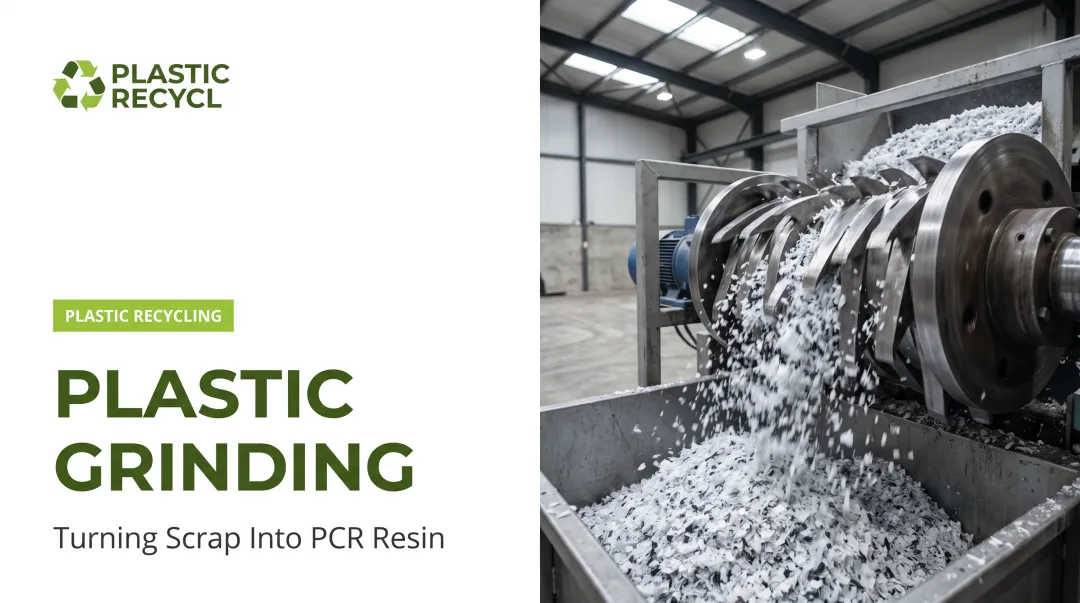
Herbold, a major equipment manufacturer, defines fine grinding as pulverization to particles under 1 mm. Knife-based granulators and impact-disc pulverizers handle that job differently depending on your target output.
Match equipment to the goal:
- Rotary knife granulators for pre-sizing and controlled regrind
- Impact-disc pulverizers for true fine powder, especially sub-1 mm
- Cryogenic mills for heat-sensitive or brittle feedstock
Confirm the machine has an active cooling system. Without one, friction heat can re-fuse material mid-process.
Set screen mesh before you start. Finer mesh yields finer powder, with slower throughput and more heat buildup.

If your target particle size, cooling needs, or volume exceed in-house capability, a grinding or toll-processing partner can run the material to spec.
Step 3: Feed and Process the Pellets
Load the hopper at a controlled rate. Dumping pellets in too fast stalls the motor and produces wildly inconsistent particle sizes.
For fine grinding, pre-size feed material to roughly 6–8 mm. Neue Herbold's technical guidance treats that range as ideal before the fine-grinding stage.
While the mill runs:
- Watch blade speed (too fast builds heat; too slow cuts output)
- Monitor temperature at the feed point, chamber, and discharge
For brittle or heat-sensitive resin that must reach a genuinely fine powder, switch to cryogenic cooling with liquid nitrogen.
Step 4: Screen, Collect, and Store the Powder
Run the ground material through a classifier or screen. This confirms particle size distribution.
- Test a sample for particle size distribution before a full run
- Collect finished powder into sealed, moisture-resistant containers right away
- Keep powder covered; exposed material picks up moisture and can clump within hours

When Should You Grind Plastic Pellets Into Powder?
Grinding pellets into powder isn't always the right call. It's a useful step for:
- Rotational molding (fine, even particle distribution)
- Powder coatings (uniform film and finish)
- 3D printing feedstock (controlled particle morphology)
- Specialty compounding (fine particle size specs)
In-house grinding becomes an expensive detour at small scale, or when standard pellet or flake form already fits the end application. Equipment, maintenance, and dust control simply don't pay off below a certain volume.
If you need recycled resin input—not powder specifically—sourcing pre-processed PCR resin from a PCR-certified recycler is usually smarter than buying and running a mill yourself.
What You Need Before Grinding Plastic Pellets Into Powder
Preparation and equipment readiness directly determine your final powder quality. Skip a step here, and it shows up in every batch you run afterward.
Equipment Requirements
At minimum, your setup should include:
- A pulverizer or mill with adjustable screen size
- A working cooling system to control heat during grinding
- Dust collection built into the line, not added as an afterthought
Inputs and Material Conditions
Before pellets reach the hopper, confirm they are:
- Sorted by resin type
- Free of contaminants
- Completely moisture-free
Safety Readiness
Fine plastic dust is a documented combustible-dust hazard. OSHA's guidance specifically lists plastic and rubber dust among combustible dust materials. Polyethylene pellets themselves rarely pose this hazard; the downstream grinding process creates the dust and the risk.
Operators need training on:
- Blade handling and lockout procedures
- Static discharge prevention during powder transfer
- Dust and fire hazard controls, including grounding and bonding of equipment
Key Parameters That Affect Powder Quality
Four variables drive nearly every quality issue in pellet-to-powder grinding.
Resin Type and Brittleness
Softer resins like LDPE resist fine grinding at ambient temperature. Brittle resins fracture more easily under mechanical stress, so resin type decides whether cryogenic cooling is required or optional.
Blade/Rotor Speed and Sharpness
Dull blades don't cut cleanly. They generate excess friction heat, which softens material and causes clumping. A 2021 Plastics Technology maintenance review identifies dull blades as the most common granulator problem, directly linked to dusty, non-uniform output and higher energy use.
Sharp blades at the correct speed produce clean, uniform powder run after run.
Screen Mesh Size
Screen-hole diameter controls the maximum particle size that passes through for collection. Finer mesh yields finer powder, but it also slows throughput and raises heat buildup. That trade-off is real: finer is not a free upgrade.
Temperature Control
Excess heat softens plastic mid-process, causing fusion or re-agglomeration before material reaches the screen. Ambient, water, or cryogenic cooling keeps particles from fusing so size and shape hold through the full run.

Common Mistakes When Grinding Pellets Into Powder
Most quality problems trace back to one of these four errors:
- Skipping pellet drying or sorting: leads directly to clumped or contaminated powder
- Using the wrong mesh size for the application: wastes time and material on full-batch reprocessing
- Overloading the hopper: stalls motors and produces inconsistent particle sizes across the batch
- Ignoring blade wear: generates excess heat and steadily degrades powder quality without a clear warning sign
Alternatives to In-House Pellet Grinding
Grinding equipment requires real capital, floor space, and ongoing maintenance. For a lot of businesses, that investment simply doesn't pencil out.
Outsourcing to a Recycling/Processing Partner
When it's better: Ideal for manufacturers who need consistent, certified recycled resin without operating grinding equipment themselves.
Key trade-offs: Less control over exact particle specs, but you eliminate equipment investment and ongoing compliance burden entirely.
Key trade-offs: Less control over exact particle specs, but you eliminate equipment investment and ongoing compliance burden entirely.
Many partners handle intake, grinding, and documentation end to end—useful when volumes are steady but you don't have dedicated recycling staff.
Purchasing Pre-Ground PCR Resin
When it's better: Best for companies prioritizing speed, sustainability compliance, and consistent quality without capital investment.
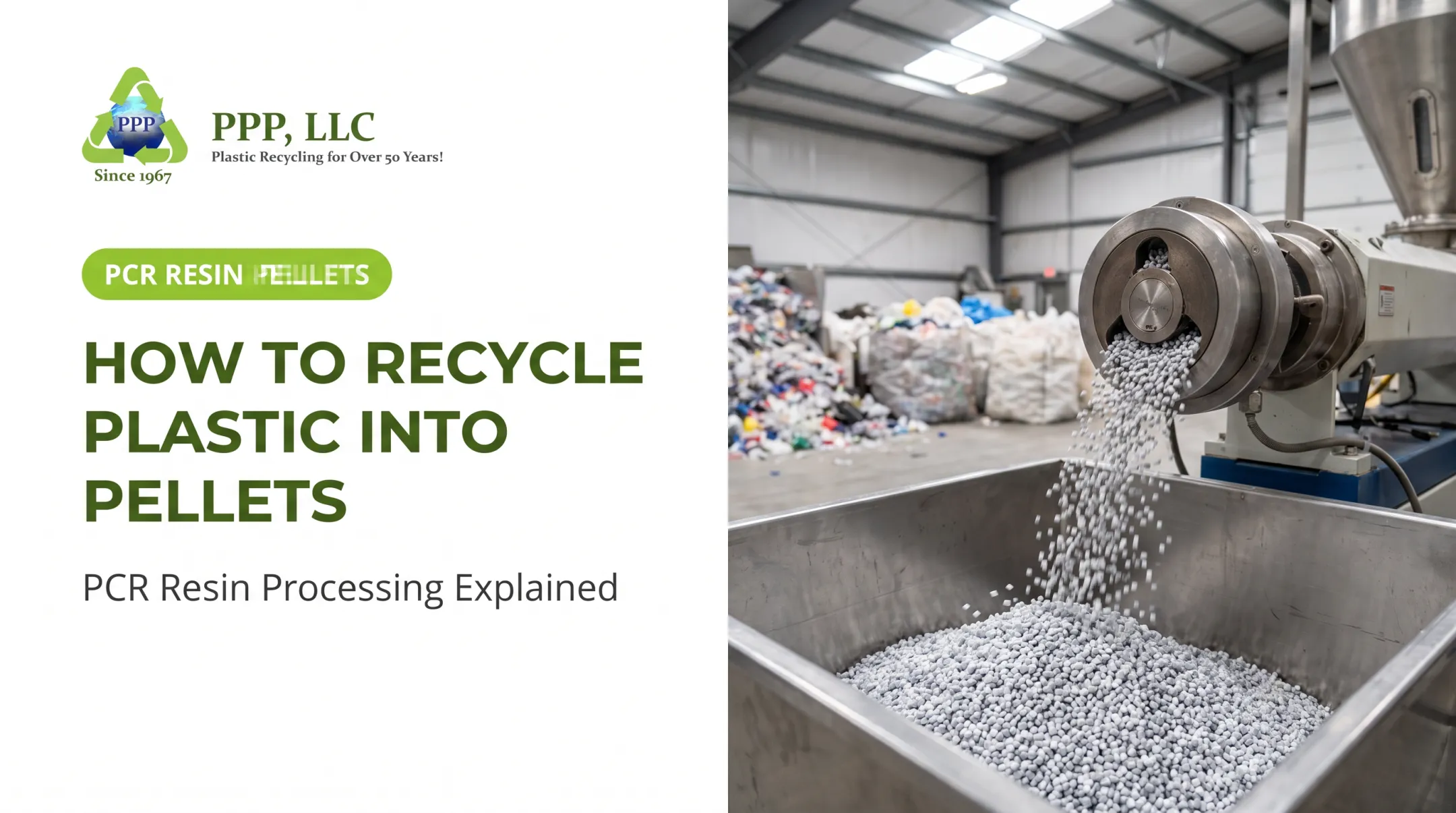
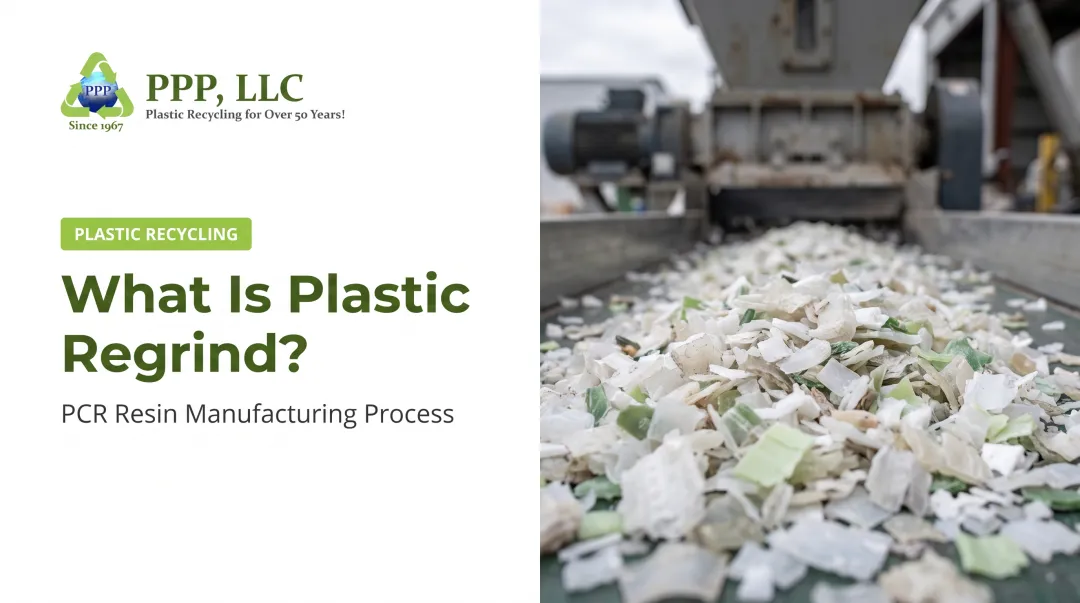
PPP, LLC has processed HDPE and LDPE plastic scrap since 1967, supplying PCR-certified recycled resin that can meet customer specifications for size, shape, color, finish, and performance. PPP maintains that certification through quarterly compliance reviews and a formal annual re-certification.
For manufacturers subject to California packaging rules, this matters beyond quality control. AB 478 requires at least 20% PCR content in covered thermoformed containers, while the state's RPPC program requires 25% postconsumer content for applicable rigid plastic packaging. Sourcing certified PCR resin directly addresses these requirements without adding grinding infrastructure to your own facility.
Key trade-offs: Slightly less customization than fully in-house processing, but faster turnaround and guaranteed certification.

Using a Toll Processing Service
When it's better: Suitable for occasional or lower-volume grinding needs where owning equipment doesn't make sense.
When it's better: Suitable for occasional or lower-volume grinding needs where owning equipment doesn't make sense.
You keep ownership of the scrap; the processor grinds or pelletizes it to agreed specs and returns the material.
Key trade-offs: Turnaround time depends on the processor's scheduling and current workload.
Conclusion
Grinding plastic pellets into powder works best when resin type, equipment, and cooling are matched deliberately to the application. Treat those choices as core process decisions, not afterthoughts. Most quality problems trace back to poor pellet preparation or unmonitored heat and blade wear rather than exotic equipment failures.
If your business needs recycled resin as an input rather than powder specifically, the operational burden of running your own mill often isn't worth it. Certified partners like PPP, LLC can supply compliant, ready-to-use PCR material without the capital investment, dust-hazard management, or compliance overhead of in-house grinding.
Frequently Asked Questions
How does the plastic grinding process work?
Pellets feed into a mill or pulverizer where rotating blades shear the material into smaller pieces. A screen then filters ground particles to a target size before collection.
What types of plastic pellets can be ground into powder?
Thermoplastics like HDPE, LDPE, and PP are commonly ground into powder. Heat-sensitive or brittle resins may require cryogenic grinding to reach a usable fine particle size.
Can regular grinders be used to turn pellets into powder?
Standard industrial grinders can process plastic to some degree, but purpose-built pulverizers with cooling systems and proper screening are needed for consistent, fine powder output.
Why does plastic powder clump during grinding?
Clumping typically results from residual moisture, excess heat, or dull blades causing partial melting. All three issues are preventable with proper preparation and maintenance.
Is cryogenic grinding necessary for all plastic powder production?
No. Cryogenic grinding is only needed for heat-sensitive or very brittle resins that require ultra-fine, heat-free particle sizes standard mills can't achieve.
What is plastic powder used for after grinding?
Common uses include rotational molding, powder coatings, 3D printing, and as feedstock for recycled resin manufacturing.