
That confusion isn't harmless. Picking the wrong polyethylene type can affect product durability, cost, and how easily the material gets recycled at end of life. A stretch wrap that tears too easily or a liner that cracks under stress usually traces back to a material selection mistake made months earlier.
This article breaks down what LLDPE actually is, how it's made, how it stacks up against HDPE and LDPE, and what you need to know about its safety and recyclability.
Key Takeaways
- LLDPE blends ethylene with alpha-olefins (butene, hexene, or octene) into a linear backbone with short branches
- Outperforms LDPE in tensile strength, puncture resistance, and flexibility—ideal for thin films
- Generally food-safe and non-toxic, yet harder to recycle at scale than rigid HDPE or LDPE
- Choose HDPE, LDPE, or LLDPE based on rigidity, flexibility, or strength-in-flexibility needs
What Is LLDPE Plastic?
LLDPE stands for Linear Low-Density Polyethylene, one of the main polyethylene classifications alongside LDPE, HDPE, and UHMWPE. It carries a density of roughly 0.916 to 0.940 g/cm³, placing it in a similar range to LDPE but with a very different internal structure.
Related polyethylene types include:
- LDPE — long-branched, flexible films
- HDPE — higher density, stiffer parts
- UHMWPE — ultra-high molecular weight grades
That structure is what sets LLDPE apart. Instead of the long, tangled branches found in LDPE, LLDPE has a linear backbone with many short, uniform branches. According to Britannica's overview of polyethylene, this is a direct result of copolymerizing ethylene with alpha-olefins rather than relying on the high-pressure, free-radical process used for LDPE.
The practical effect: LLDPE molecules pack together more efficiently than LDPE's tangled chains, while still retaining enough branching to stay flexible. That combination is why LLDPE films can be thinner and stronger at the same time.
How Is LLDPE Manufactured?
LLDPE is produced by copolymerizing ethylene with alpha-olefins using Ziegler-Natta or metallocene catalysts, most commonly through the gas-phase UNIPOL process.
- Ziegler-Natta catalysts remain popular for their cost-effectiveness and reliable plant performance
- Metallocene catalysts offer tighter control over molecular weight distribution and microstructure
- The gas-phase process skips the solvent recovery systems required in solution-based production, which helps keep costs down
This lower-cost, lower-pressure route is a big reason LLDPE has become such an economical option for high-volume film production compared to solution-processed alternatives.
Common Comonomers Used in LLDPE
The comonomer choice shapes performance more than most buyers realize. Three options dominate the market:
- Butene (C4) — most economical; shortest branches; standard-tier performance
- Hexene (C6) — mid-tier option with improved toughness over butene
- Octene (C8) — highest-performing option; longer branches that boost strength
Hexene- and octene-based films typically beat butene in high-speed puncture resistance and key impact measures, even at matched density. Many producers blend comonomers to hit a price-performance target instead of relying on a single grade.

Properties & Characteristics of LLDPE
Grade-specific data matters more than generic ranges. Here is typical performance data for a common LLDPE blown-film grade (ExxonMobil LL 1201), sourced from the manufacturer's technical datasheet:
| Property | Typical Value | Test Method |
|---|---|---|
| Density | 0.925 g/cm³ | ASTM D1505 |
| Tensile strength at break (MD/TD) | 60 / 42 MPa | ASTM D882 |
| Elongation at break (MD/TD) | 620% / 910% | ASTM D882 |
| Peak melting temperature | 123°C | Internal method |
Treat these numbers as representative of one grade, not universal constants. Every LLDPE resin varies depending on comonomer type and density.
What makes LLDPE valuable in practice:
- High puncture resistance, even in thin-gauge films
- Excellent flexibility without sacrificing strength
- Strong environmental stress-crack resistance
- Good impact strength that holds up under repeated flexing
Where it falls short:
LLDPE has clear trade-offs next to its strengths:
- Little elastic "memory" after stretching — it won't fully snap back (useful in stretch wrap, limiting elsewhere)
- Higher shear sensitivity during processing
- Narrower heat-sealing window than LDPE, so lines need tighter temperature control
Common Uses of LLDPE Plastic
LLDPE's linear structure makes it a natural fit for thin-gauge, high-strength films. Because it holds up so well under stress, manufacturers can "downgauge" it: less material by weight, same durability.
Typical applications include:
- Stretch and pallet wrap — resists tearing at thinner gauges
- Garbage bags and industrial liners — carries heavier loads without failure
- Shopping and retail bags — balances strength and flexibility for repeated handling
- Pond and containment liners — puncture-resistant geomembranes for containment
- Cable jacketing — Ziegler-Natta grades for power and telecom coverings
- Food packaging films — bread bags, produce bags, and pouches

LLDPE is frequently blended with LDPE in commercial products. The blend pairs LLDPE's strength with LDPE's easier processability and clearer optics, so converters get film that runs smoothly on existing equipment.
The same film and bag uses increasingly call for post-consumer recycled LLDPE to hit sustainability and regulatory targets.
LLDPE vs HDPE vs LDPE: Which Is Right for Your Application?
Here's how the three main polyethylene types compare side by side:
| Factor | LLDPE | LDPE | HDPE |
|---|---|---|---|
| Density | 0.916–0.940 g/cm³ | 0.910–0.940 g/cm³ | 0.940–0.970 g/cm³ |
| Structure | Linear with short branches | Long and short branches (tangled) | Minimal branching, tightly packed |
| Strength/impact | Higher tensile and puncture strength than LDPE | Lower strength, very ductile | Highest tensile strength and stiffness |
| Flexibility | Flexible and tough | Most flexible, easiest to process | Least flexible, most rigid |
| Typical uses | Stretch film, bags, liners, cable jackets | Flexible film, heat-seal applications | Rigid containers, structural parts |
HDPE wins on rigidity, chemical resistance, and UV stability. That makes it the go-to for heavy-duty containers, drums, and secondary containment liners where structural integrity matters most.
LDPE is the cheapest and most flexible option, but it trades away strength and puncture resistance. It works well for basic film applications where cost matters more than toughness.
LLDPE sits in between: LDPE-like flexibility with higher tensile and puncture strength. That balance is why it leads in stretch film, bags, and liners—jobs where the film must flex without tearing.
Which is right depends on the job:
- Rigidity, chemical resistance, or structural parts → HDPE
- Lowest cost and maximum flexibility → LDPE
- Strength plus flexibility in thin film → LLDPE
Is LLDPE Safe and Recyclable?
LLDPE is generally considered BPA-free and non-reactive. Certain LLDPE compositions are permitted for food-contact use under 21 CFR 177.1520, which covers specified olefin copolymers under defined composition and extractive limits. That approval is grade-specific, not a blanket clearance, so manufacturers should confirm food-contact compliance for the exact resin they're using.
Processing safety matters too. Fine LLDPE particles can form an explosible dust-air mixture, and combustion releases hydrocarbons, carbon oxides, smoke, and fumes. Standard industrial handling precautions apply during grinding and melt processing.
Recyclability is where LLDPE gets complicated. Technically, it's recyclable. In practice, its thin-film form makes it far harder to collect and process than rigid HDPE or LDPE.
A 2024 industry report found that film and flexible packaging saw less than 1% residential recycling, compared with 26% for natural HDPE bottles and 22% for colored HDPE bottles. Contamination and collection logistics, not the material itself, are the bottleneck.
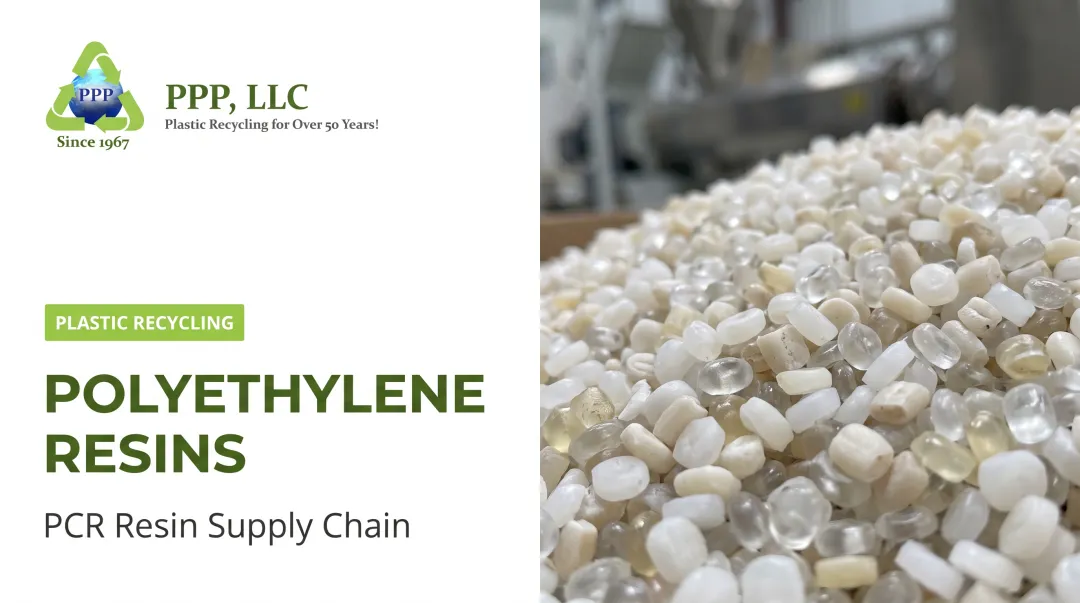
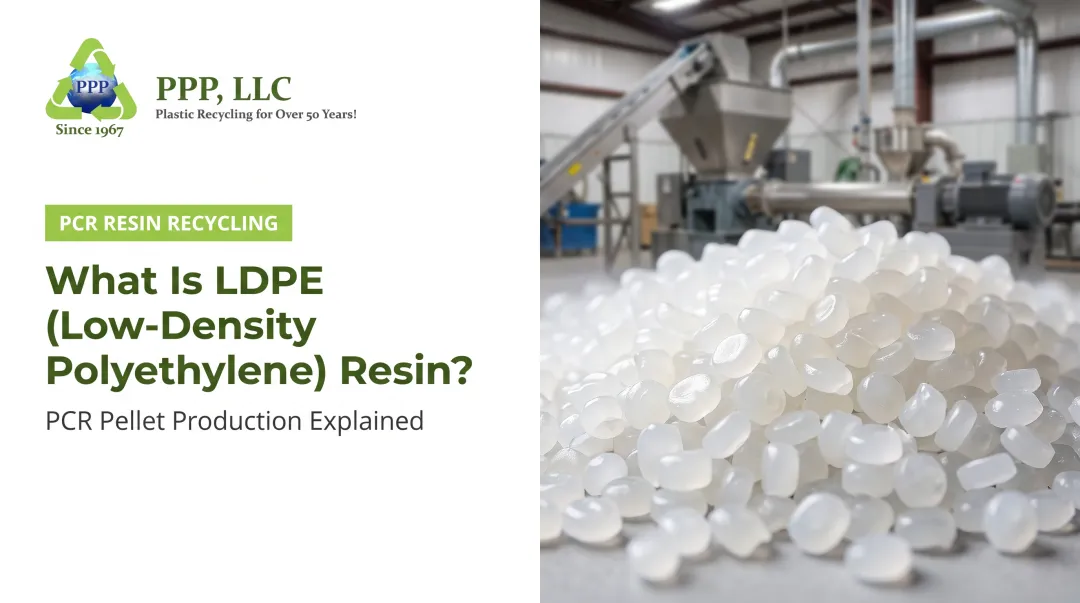
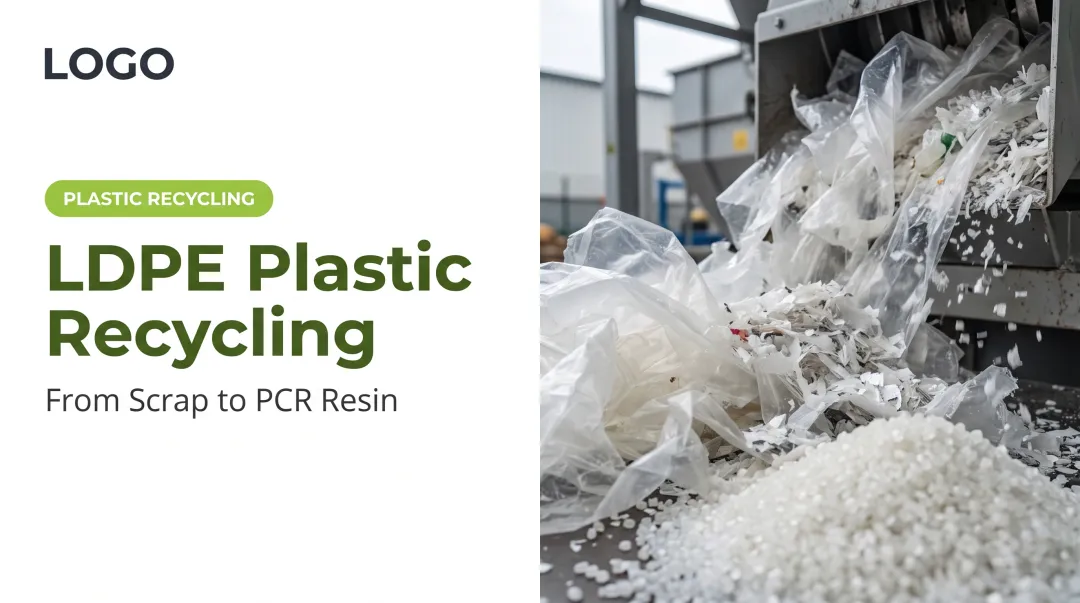
That collection gap is why a reliable PCR supply matters for bag and film producers. PPP, LLC supplies LLDPE post-consumer recycled resin pellets—PCR certified and produced through shredding, granulation, melting, and reprocessing—for retail, grocery, and industrial bag production.
With more than 50 years grinding, pelletizing, and recycling polyethylene scrap, PPP also helps manufacturers divert HDPE and LDPE from landfills while meeting California requirements such as AB 478, SB 270, and SB 54.

Frequently Asked Questions
Which is better, HDPE or LLDPE?
Neither is universally "better." HDPE offers superior rigidity and chemical resistance for containers and liners, while LLDPE delivers better flexibility and puncture resistance for films. The right choice depends on your application's structural needs.
Is LLDPE plastic safe for food use?
Yes, many LLDPE grades are BPA-free, non-reactive, and approved for direct food contact under FDA regulations covering specified olefin copolymers. Always confirm food-contact clearance for the specific grade you're sourcing.
What is LLDPE plastic used for?
Common uses include stretch and pallet wrap, garbage bags, shopping bags, pond and industrial liners, cable jacketing, and food packaging films. Its strength-to-thickness ratio makes it ideal for downgauged, high-performance film.
What is the difference between LLDPE and LDPE?
LLDPE is a copolymer with a linear backbone and short branches, giving it higher tensile and impact strength. LDPE is a homopolymer with long, tangled branches, making it more flexible but noticeably weaker.
Is LLDPE plastic recyclable?
Yes. LLDPE is recyclable, though thin flexible film is harder to collect and sort than rigid containers. Manufacturers can route post-industrial and post-consumer LLDPE scrap to certified recyclers for reprocessing into PCR resin.