
Introduction
Manufacturers generate an enormous volume of plastic scrap every year. In 2022 alone, U.S. reclaimers recovered just over 5 billion pounds of post-consumer plastic for recycling, according to APR's 2024 industry survey.
That figure only counts material that actually made it into the recycling stream.
For eco-conscious manufacturers, recycled repro resin offers a practical way to close that loop, turning plastic scrap back into usable raw material instead of landfill filler.
But the terminology gets confusing fast. Repro, regrind, PCR, PIR, wide-spec: these terms get used interchangeably, even though they describe genuinely different materials with different origins and processing methods.
This guide breaks down what recycled repro resin actually is, how it's produced, and why it matters for your production line. It also covers how supplier certification and compliance—areas where PPP, LLC focuses—shape the quality you can expect.
Key Takeaways
- Recycled repro resin is plastic scrap ground, cleaned, and pelletized for reuse in manufacturing
- Repro differs from regrind, PCR, and PIR by feedstock origin and processing depth
- Switching to repro lowers costs, cuts landfill waste, and supports California recycling compliance
- PCR and APR supplier certification drives consistent resin performance batch after batch
What Is Recycled Repro Resin?
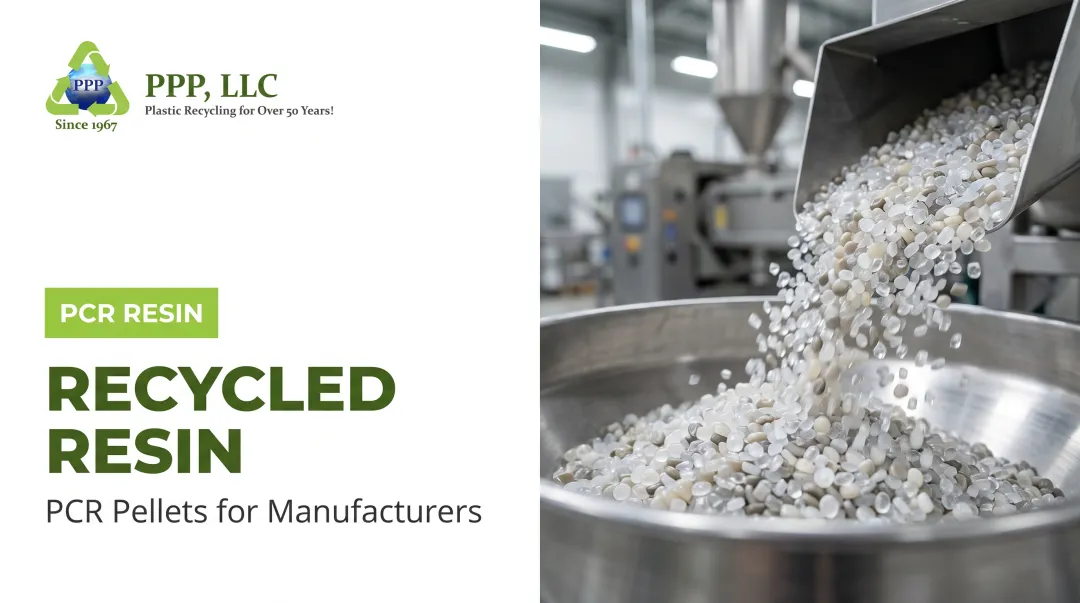
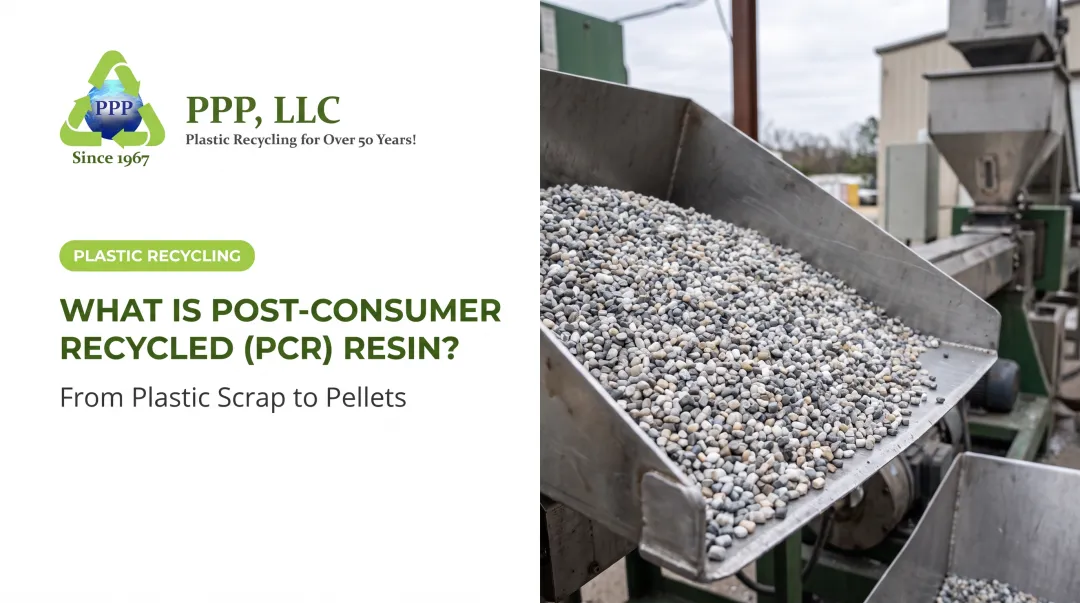
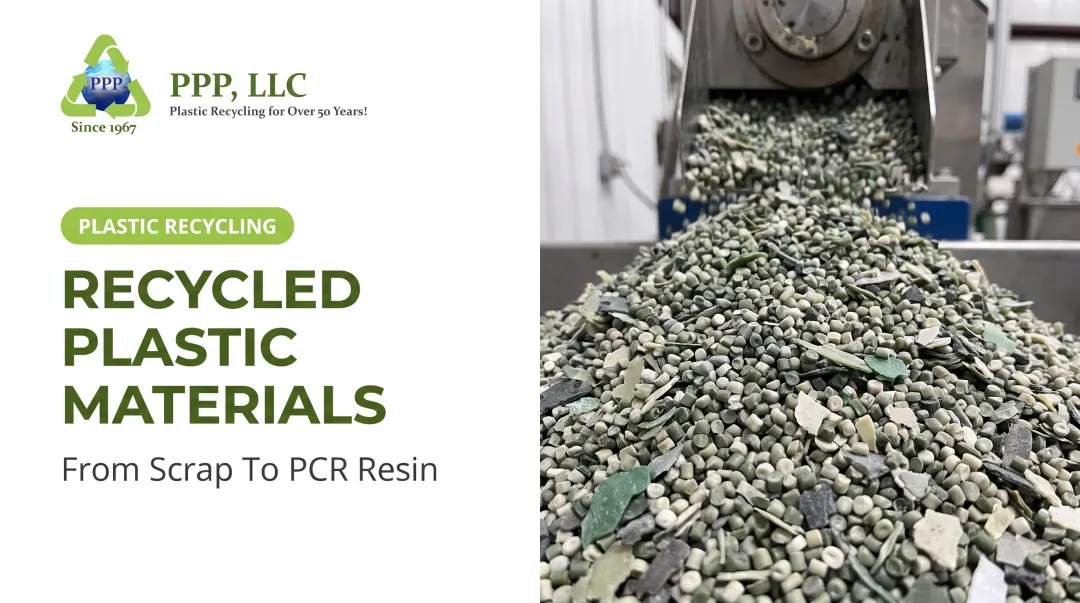
Recycled repro resin starts as plastic scrap or defective parts: the trim, off-cuts, and rejected pieces that never leave a factory floor as finished product. Instead of landfilling it, processors grind the scrap into flakes, melt it down, filter out contaminants, and extrude it into pellets that behave like standard resin.
The result is a raw material manufacturers can drop straight into their molding or extrusion lines. PPP, LLC applies this grind-melt-pelletize sequence across both post-industrial and post-consumer HDPE and LDPE streams, producing repro and PCR pellets in clear and mixed-color options.
| Material | Origin | Processing | Externally Sourced? |
|---|---|---|---|
| Repro | Industrial scrap or defective parts | Ground, melted, filtered, pelletized | Often |
| Regrind | In-house manufacturing scrap | Ground only, no re-melt | Rarely |
| PCR | Post-consumer products | Collected, cleaned, repelletized | Yes |
| PIR | Industrial scrap, excludes same-process rework | Diverted before it hits the landfill | Sometimes |
| Wide-spec | Off-spec virgin material | Not recycled at all | N/A |
Repro vs. Regrind
Regrind is the simplest form of reprocessed plastic. A manufacturer grinds its own scrap, such as runners, flashing, or rejected parts, and feeds it straight back into the same production line, usually without melting it separately or reselling it externally.
Repro takes that scrap further:
- Regrind stays in-house and skips the pelletizing step
- Repro can come from multiple suppliers and gets fully re-melted
- Repro's broader sourcing can introduce more batch-to-batch variation than regrind
Both keep material out of the trash, but they solve different problems for different operations.
Repro vs. PCR (Post-Consumer Recycled) Resin
Post-consumer recycled resin comes from products that already served their purpose with a consumer—water bottles, shopping bags, or shampoo containers collected, cleaned, and repelletized after use.
Repro typically originates from industrial scrap that never reached a store shelf. PPP, LLC's PCR resin lines are made from 100% post-consumer material, while the company's Repro product line draws on a wider mix of HDPE and LDPE scrap. Which one you need depends on what your sustainability claims or regulatory filings require.
Repro vs. PIR & Virgin/Wide-Spec Resin
Post-industrial resin (PIR) is closely related to repro, but industry terminology draws a narrower line: it's scrap diverted from the waste stream during manufacturing, excluding material that gets reused in the same process it came from.
Wide-spec or off-spec resin is something else entirely. It's virgin material that failed to meet product specifications, never used, never recycled, just rejected. It doesn't belong in the recycled category at all.
Repro is distinct from both. Its supply is less predictable than PCR's steady consumer waste stream, but every pound still diverts scrap from a landfill.
How Recycled Repro Resin Is Made
Turning plastic scrap into usable pellets follows a consistent three-stage process, regardless of the supplier.
- Collection and grading: Processors gather post-industrial and post-consumer HDPE (Grade 2) and LDPE/LLDPE (Grade 4) scrap, then separate it into clear and colored streams. This step matters because mixed colors limit which end products the resin can go into later.
- Grinding: Sorted scrap gets shredded into plastic flakes. Grade 2 scrap tends to yield a higher-density resin, while Grade 4 scrap produces a lower-density material—a difference that shows up in the finished pellet.
- Pelletizing: Cleaned flakes are melted, filtered to remove contaminants, and extruded into uniform pellets ready to feed a manufacturing line.
PPP, LLC handles grinding and pelletizing of HDPE and LDPE scrap under one roof, which keeps the reprocessing chain short and cuts down on handling steps between raw scrap and finished repro pellets.

Types of Plastic Reprocessing
Not all plastic reprocessing works the same way. It falls into three categories.
Primary reprocessing turns scrap back into the exact same product. It's less common than you'd expect, mainly because plastic is heat-sensitive: repeated heat exposure weakens polymer chains through a process called chain scission, making the material brittle over multiple cycles.
Secondary reprocessing converts scrap into new applications—or into resin pellets manufacturers use for packaging, film, and other products. Some outputs, such as plastic lumber or synthetic textiles, are harder to recycle again. This is the most common form of plastic reprocessing today and where most repro resin production fits, including PPP, LLC's grinding-and-pelletizing operation.
Tertiary reprocessing breaks plastics down chemically or thermally. Pyrolysis, for example, heats material to roughly 300-800°C without oxygen, converting it into fuels or feedstock. This method suits LDPE and LLDPE well, though it's a different pathway than mechanical grinding and pelletizing.
Benefits of Using Recycled Repro Resin
Switching to repro resin delivers measurable business and environmental returns.
Environmental impact. Every ton of repro resin used is a ton of scrap that stays out of the landfill. It is also a ton of virgin plastic that never needs to be made from crude oil feedstock.
Energy and cost savings. According to APR's 2018 life-cycle assessment, recycled HDPE processed under a cut-off allocation model used 88% less total energy than virgin HDPE production, with greenhouse gas impact dropping 71%. Even under a more conservative open-loop allocation, energy use still fell by 44%.
Lower processing energy means lower variable production costs for manufacturers running high resin volumes.
Regulatory compliance. California has stacked several recycled-content requirements on manufacturers in recent years:
- AB 478 sets postconsumer recycled content thresholds for thermoform plastic containers
- SB 270 established recycled-content standards tied to reusable grocery bags
- SB 54 creates extended producer responsibility targets for packaging and food-service plastics
- The Rigid Plastic Packaging Container program requires at least 25% postconsumer material, 10% source reduction, or qualifying reuse
Working with a PCR-certified, APR-member supplier like PPP, LLC simplifies compliance documentation, since PPP's resin undergoes quarterly reviews and annual recertification to confirm postconsumer content claims.
Marketing and brand value. That same documentation supports a genuine sustainability story—whether a zero-waste pledge or a recycled-content percentage printed on the packaging.
Performance flexibility. Quality repro resin can match the specs manufacturers already run. PPP, LLC produces HDPE and LDPE repro pellets customized for size, shape, color, finish, and performance, comparable to virgin-resin requirements.

Common Challenges & Quality Considerations
Repro resin isn't automatically uniform. Quality varies based on the source scrap, and that variability creates real headaches on a production line if you're not prepared for it.
Where quality problems show up:
- Mixed pellet sizes that feed inconsistently into hoppers
- Contamination that causes black specks in finished parts
- Inconsistent melt index or density that throws off processing settings
- Clogging in extrusion or molding equipment from unfiltered debris
Supply consistency is another common pain point. Repro sourcing depends on how much qualifying scrap is available in a given period, which fluctuates more than steady post-consumer waste streams.
Before committing to a repro resin batch, request from your supplier:
- Melt index data
- Density specifications
- Ash content results
These three data points tell you whether a batch will behave the way your equipment expects before it ever hits the hopper.
The real fix is supplier selection. Partnering with a certified recycler minimizes these risks.
PCR certification requires recurring third-party review of sourcing and processing controls. That gives manufacturers more predictable batch-to-batch performance than working with an uncertified reprocessor.
Industries That Rely on Recycled Repro Resin
Recycled repro resin is already embedded in several high-volume manufacturing sectors, with adoption still expanding in others.
Confirmed heavy users:
- Bag and film manufacturers — recovered PE film feeds directly back into new bag and film lines
- Corrugated HDPE pipe producers — major scrap buyers (one purchased 540 million pounds in 2023 alone)
- Packaging producers — HDPE and LDPE remain the largest packaging application categories overall
Growing adoption in:
- Injection molding — repro pellets used where specs allow partial PCR content
- Bottle manufacturing — HDPE bottles and containers with recycled content targets
- Irrigation and ag components — pipe, fittings, and molded parts built for durability
Those same sectors need consistent pellet quality—not just available scrap. PPP, LLC has processed HDPE and LDPE for over 50 years, supplying clear and mixed-color repro pellets for bag, food, pharma, electronics, retail packaging, and irrigation applications.

Specs can be matched for size, shape, color, finish, and performance so recycled content fits the line you already run.
If your production line is ready to incorporate recycled repro resin, request a quote from PPP, LLC or reach out directly to discuss your specifications.
Frequently Asked Questions
What is plastic resin used for?
Plastic resin, virgin or recycled, is the raw pellet material manufacturers use to produce packaging film, containers, bags, and pipes through molding and extrusion.
What is repro resin made of?
Repro resin is made primarily from reclaimed plastic scrap, like HDPE and LDPE, ground into flakes, cleaned, melted, and pelletized into reusable raw material.
Is repro resin the same as recycled plastic?
Repro resin is one specific category within recycled plastic. It's distinct from regrind, PCR, and PIR based on where the scrap comes from and how it's processed.
How much repro resin can be used in a manufacturing blend?
Blend ratios depend on your application, desired performance, and the cleanliness of the repro resin. Test any blend against your virgin-resin benchmarks before committing to full production runs.
Does resin degrade in water?
HDPE and LDPE are highly water-resistant and don't chemically degrade from water exposure. Prolonged UV or heat exposure, however, can affect long-term durability.
What happens to epoxy resin after 5 years?
Epoxy is a thermoset resin, not a thermoplastic like repro resin. Over 5+ years it can yellow, turn brittle, or lose strength. HDPE and LDPE repro resin can be reprocessed repeatedly without that same pattern.