
Introduction
Americans generate a staggering amount of plastic waste every year. According to the EPA's most recent complete data, the U.S. produced 35.68 million tons of plastic waste in 2018 alone. Of that, only 8.7% was recycled, while roughly 75.6% ended up in landfills.
Many households struggle to figure out what actually belongs in the recycling bin. The little triangle with a number inside it looks like an official recycling stamp, but it often isn't. Inconsistent local program rules only add to the confusion.
Manufacturers face a parallel challenge: sourcing recycled resin that meets strict quality, compliance, and performance standards.
This article breaks down the resin codes behind the confusion, walks through how plastic actually gets recycled, and outlines what manufacturers should look for in a certified recycled resin partner.
Key Takeaways
- Only about 8.7% of U.S. plastic waste gets recycled; most ends up in landfills.
- Curbside programs generally accept #1 PET, #2 HDPE, and increasingly #5 PP rigid containers.
- Bags, film, foam, and mixed #7 plastics typically don't belong in curbside bins.
- Recycled HDPE uses less energy than virgin resin production.
- Certified PCR resin helps manufacturers meet California's recycled-content laws.
Why Plastic Recycling Matters
The Environmental Case
Recycling plastic keeps material out of landfills and waterways, but the energy savings are where the real impact shows up. Producing resin from recycled plastic instead of raw petroleum dramatically cuts the energy and emissions tied to manufacturing.
The Association of Plastic Recyclers' life cycle assessment found that recycled HDPE requires just 8.7 MJ/kg of total energy, compared to 75.3 MJ/kg for virgin HDPE. Emissions tell a similar story:
- Recycled HDPE: 0.56 kg CO2e/kg
- Virgin HDPE: 1.89 kg CO2e/kg
That's a substantial reduction, pellet for pellet.
The Economic Case
Plastics recycling is an economic sector as well as an environmental one. It supports thousands of American jobs in collection, sorting, and reprocessing, and generates billions in activity nationwide.
For manufacturers, PCR resin pricing can also come in lower than virgin resin, though the gap depends heavily on polymer type, color, and quality grade. We'll cover specific pricing later in this article.
Rising Regulatory and Consumer Pressure
California has moved aggressively on plastic packaging laws:
- AB 478 requires certain thermoformed plastic containers to contain at least 20% post-consumer recycled content.
- SB 54 sets producer responsibility targets, including a 65% plastic recycling rate by 2032.
- SB 343 restricts recyclability claims and symbols to products meeting strict criteria.
At the same time, consumer demand for sustainable packaging keeps climbing, pushing brands toward verified recycled content rather than vague green claims.

Understanding Plastic Types: Which Plastics Can Be Recycled?
Every plastic item carries a resin identification code (RIC), a number from 1 through 7 stamped inside a triangle. This code identifies the polymer, but it is not a promise that the item is recyclable in your area.
The Resin Identification Code System
| Code | Resin | Common Uses |
|---|---|---|
| #1 | PET (Polyethylene Terephthalate) | Water and soda bottles |
| #2 | HDPE (High-Density Polyethylene) | Milk jugs, detergent bottles |
| #3 | PVC (Polyvinyl Chloride) | Pipes, some packaging |
| #4 | LDPE (Low-Density Polyethylene) | Bags, squeeze bottles, film |
| #5 | PP (Polypropylene) | Yogurt cups, bottle caps |
| #6 | PS (Polystyrene) | Foam cups, packaging |
| #7 | Other/Mixed | Multi-layer or unidentified resins |
Which Plastics Can Be Recycled Curbside?
Most curbside programs are built around three resin types:
- #1 PET — water bottles, soda bottles
- #2 HDPE — milk jugs, detergent and shampoo bottles
- #5 PP — increasingly accepted, includes yogurt cups and some caps
What the bin accepts and what reprocessors want are not always the same. HDPE and LDPE are especially valuable industrially—they regrind cleanly into flake and pellets for new packaging—yet LDPE film usually needs store drop-off, not the residential cart.
Acceptance still varies by municipality. Check your local program's guidelines or a zip-code lookup tool before assuming an item is accepted; two neighboring cities can have completely different rules for the same item.
What Should Stay Out of the Curbside Bin?
Several items consistently jam sorting equipment or contaminate material streams:
- Plastic bags and film — tangle rotating equipment at material recovery facilities
- Polystyrene foam — lightweight, breaks apart, contaminates bales
- PVC (#3) — chemically incompatible with other resin streams
- Straws and utensils — too small for sorting screens to catch
- Multi-layer pouches — impossible to separate into a single resin
Flexible plastics like bags and film generally need dedicated store drop-off programs instead of the curbside bin. Code #7 ("Other") is rarely accepted because mixed or unidentified resins cannot be sorted into one sellable stream.
The Plastic Recycling Process: From Bin to New Product
Once plastic leaves the curbside bin, it goes through a multi-stage journey before it becomes usable resin again.
- Collection: Curbside bins, public drop-off points, and haulers move material to a Material Recovery Facility (MRF).
- Sorting at the MRF: Optical sorters, screens, and manual quality control separate plastics by resin type, then bale each type for sale to reclaimers.
- Reclaiming: Reclaimers open the bales, pull contaminants, grind clean material into flake, wash off dirt and labels, and use float/sink tanks to separate resins by density (HDPE caps, for example, float off PET bottle flake).
- Pelletizing: Clean flake is melted, filtered, and extruded into pellets—food-grade PCR needs extra decontamination to meet FDA rules before it can contact food packaging.

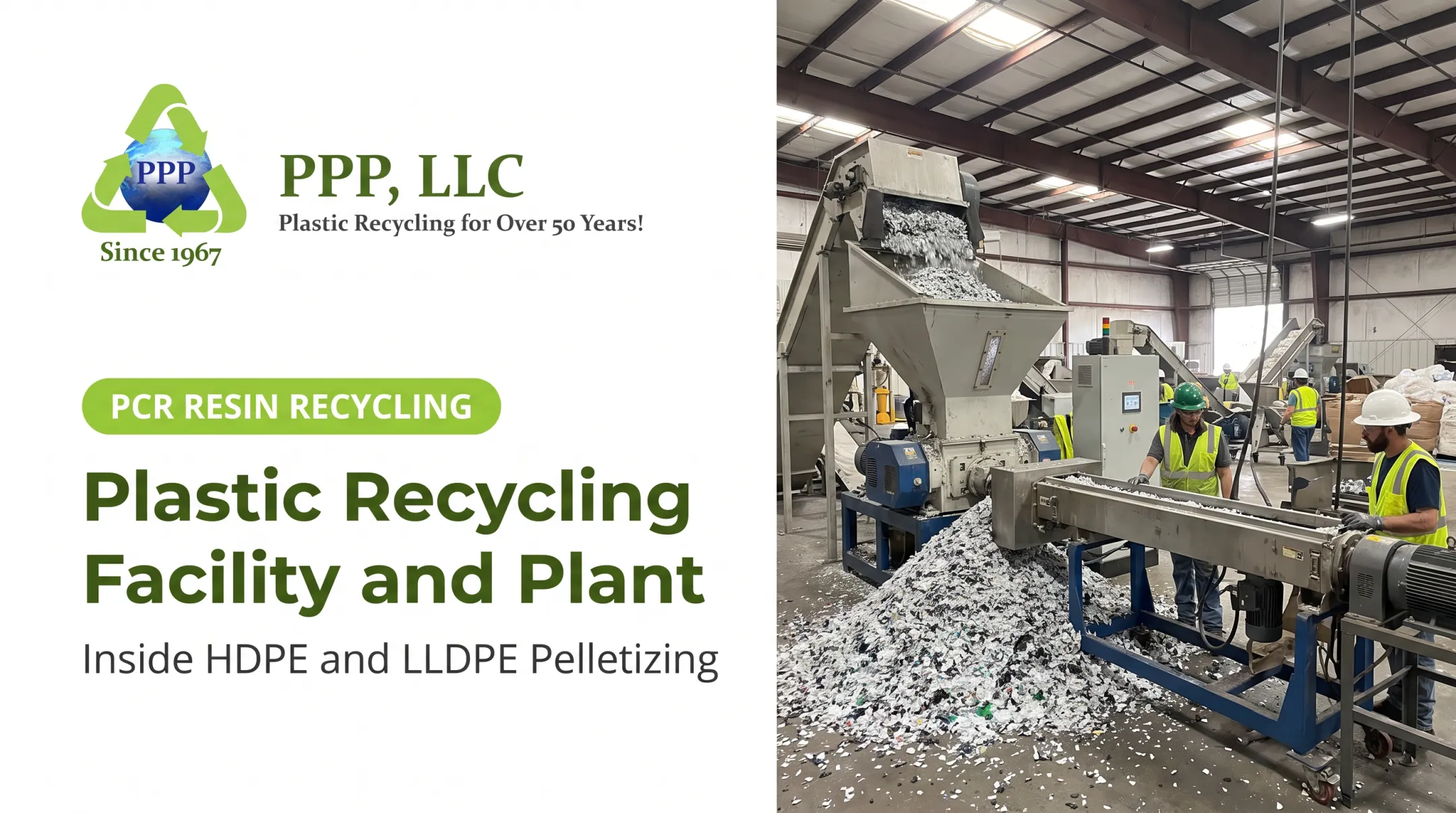
Full-service recyclers handle several of these stages in-house rather than outsourcing them. PPP, LLC, a full-service plastic recycling facility operating since 1967, manages grinding and pelletizing of HDPE and LDPE scrap under one roof, delivering PCR resin matched to a manufacturer's required size, shape, color, and performance specs.
Once the pellets are finished, they head back into manufacturing lines to be remolded into new bottles, bags, or containers. That closed loop is how a discarded milk jug becomes next year's packaging.
Benefits of Plastic Recycling for Manufacturers and Businesses
Switching to post-consumer recycled resin is more than a sustainability story. Manufacturers also gain leverage on cost, compliance documentation, and brand claims when PCR is sourced and verified correctly.
Cost Considerations
PCR resin pricing doesn't always undercut virgin plastic, but it often does. A NIST market snapshot from February 2024 showed overlapping ranges and, in some cases, lower recycled pricing:
| Resin | Recycled Price Range | Virgin Price Range |
|---|---|---|
| HDPE | $580–$2,120/ton | $1,200–$1,660/ton |
| LDPE | $340–$1,560/ton | $1,340–$1,600/ton |
Pricing shifts by polymer, color, certification, and volume, so getting a current quote matters more than assuming a fixed discount.
Regulatory Compliance
Sourcing certified PCR resin helps document compliance, though it doesn't replace every reporting step. For example:
- AB 478 sets a 20% PCR minimum for certain thermoformed containers.
- SB 54 ties producer responsibility to recycled-content and recycling-rate targets through 2032.
- SB 343 limits recyclability marketing claims to products meeting defined criteria.
Manufacturers still need to verify finished-product percentages and maintain their own compliance records, but starting with certified resin makes that documentation far easier.
Brand and Marketing Advantage
Verified recycled content gives manufacturers something concrete to cite. Brands can back zero-waste or eco-friendly claims with certified PCR percentages instead of vague sustainability language. That proof holds up with buyers and retailers who check the numbers.
How to Choose a Certified Plastic Recycling Partner
Not every "recycled resin" supplier can back up that claim with paperwork. Two credentials separate serious partners from the rest.
- PCR certification with chain-of-custody verification: confirms the resin genuinely contains the post-consumer content claimed, not just a marketing label.
- APR membership: signals alignment with industry standards and ongoing regulatory awareness.
Beyond credentials, a partner needs to consistently deliver resin in the exact size, shape, color, and resin type your production line requires. Inconsistent flake quality or unreliable supply volumes can shut down a run fast.
PPP, LLC meets these criteria:
- Full-service recycler since 1967 (50+ years)
- PCR-certified with quarterly reviews and annual re-certification
- APR member
- Compliant with California AB 478, SB 270, and SB 54
- Specialized in HDPE and LDPE grinding and pelletizing
- Serves manufacturers across California, Arizona, and the broader U.S.
For manufacturers weighing a switch, requesting a quote is usually the fastest way to compare current PCR pricing against a virgin resin baseline for a specific spec.

Frequently Asked Questions
Which plastics can be recycled?
Most curbside programs accept #1 PET and #2 HDPE bottles and jugs, along with an increasing number of #5 PP rigid containers. Acceptance still depends on your local facility's capabilities.
What types of plastic cannot be recycled?
Plastic bags and film, polystyrene foam, PVC (#3), and mixed #7 "other" plastics typically aren't accepted curbside. They either jam sorting equipment or can't be separated into a sellable material stream.
What do the numbers 1-7 on plastic mean?
They're resin identification codes showing which polymer was used to make the item, such as PET, HDPE, or PVC. The number helps sorters and consumers identify material type, but it doesn't guarantee curbside recyclability.
Can plastic bags be recycled in curbside bins?
No. Bags and film should stay out of curbside bins because they jam sorting equipment at material recovery facilities. Most can still be recycled through store drop-off programs instead.
What is post-consumer recycled (PCR) resin?
PCR resin is plastic that's been collected after consumer use, cleaned, melted, and pelletized so it can be reused in new products. It's distinct from post-industrial scrap, which never reaches consumers at all.
How does California's SB 54 affect plastic manufacturers?
SB 54 requires producers to fund and manage packaging recovery, hitting a 65% plastic recycling rate by 2032 with earlier interim benchmarks. Sourcing certified PCR resin helps manufacturers document progress toward these recycled-content obligations.