
Recycled LDPE resin is exactly what it sounds like: low-density polyethylene that has already lived a life as a bag, film, or bottle before being reprocessed into pellets. It's become a go-to alternative to virgin plastic for manufacturers making bags, films, and flexible packaging who want to cut costs without cutting corners on performance.
This article breaks down how recycled LDPE resin is made, what properties to expect, where it's used, whether it's safe, and how to vet a certified supplier before you commit to a large production run.
Key Takeaways
- Recycled LDPE (resin code 4) from film, bags, and packaging costs less and cuts environmental impact versus virgin resin.
- Melt index and processability shift with recycled content, so test each lot instead of assuming consistency.
- California's SB 54 is the packaging law to track today, not AB 478 or the original SB 270.
- PCR certification and APR membership give independent proof of recycled content and quality.
- A full-service recycler with in-house grinding, pelletizing, and re-certification lowers supply-chain risk.
What Is Recycled LDPE Resin?
Recycled LDPE resin is low-density polyethylene reprocessed from used film and flexible packaging into pellets manufacturers can run again. Virgin and recycled LDPE both carry resin code #4, which sorting facilities use to separate it from HDPE, PP, and other plastics.
The resin’s branched molecular structure is what gives bags and films that stretchy, pliable feel.
Not all recycled LDPE comes from the same place. There are two main categories:
- Post-consumer recycled (PCR) LDPE: material collected after a household or business has finished using the product for its intended purpose.
- Post-industrial recycled (PIR) LDPE: manufacturing scrap, trim, or rework diverted before it ever reached a consumer.
Buyers should specify which type they need on a purchase order, since sourcing, contamination levels, and consistency can differ between the two.
Common Feedstock Sources
Most recycled LDPE resin traces back to a handful of familiar sources:
- Retail and shopping bags
- Shrink wrap
- Stretch and pallet film
- Agricultural film
- Flexible packaging and shipping mailers
LDPE vs. LLDPE vs. HDPE
Manufacturers sometimes confuse these three resins, but they behave quite differently in production:
| Resin | Density | Structure | Typical Use |
|---|---|---|---|
| LDPE | 0.910–0.925 g/cm³ | Branched chains | Shrink wrap, bags |
| LLDPE | 0.910–0.940 g/cm³ | Linear with short branches | High-strength film, stretch wrap |
| HDPE | 0.941–0.965 g/cm³ | Linear, minimal branching | Bottles, rigid containers |
If your application needs more puncture resistance than standard LDPE offers, LLDPE is usually the better fit. If you need rigidity, you're in HDPE territory instead.
How Recycled LDPE Resin Is Made: From Scrap to Pellet
Turning used bags and film into usable pellets isn't a single step. It's a sequence, and skipping any part of it shows up later as inconsistent melt flow or contaminated product.
Collection, Sorting, and Contamination Removal
Businesses and municipal programs collect LDPE bags and film, then compress the material into bales for transport to a recycling facility. From there, workers and equipment sort the bales and pull out contaminants that would otherwise ruin a batch:
- Paper labels and adhesive residue
- Dirt, food residue, and other debris
- Multilayer or non-LDPE materials mixed into the load
Grinding, Washing, and Melt Filtration
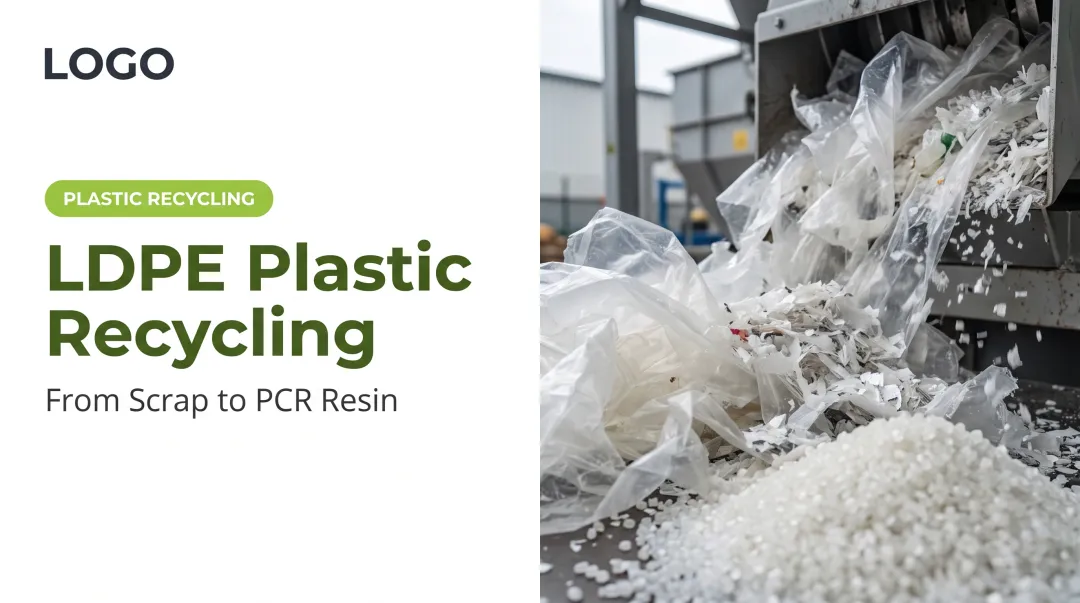
Once contamination is reduced, the cleaned material is shredded into flake. That flake is washed to strip remaining residue, then melted and pushed through filtration screens that catch impurities the earlier steps missed.
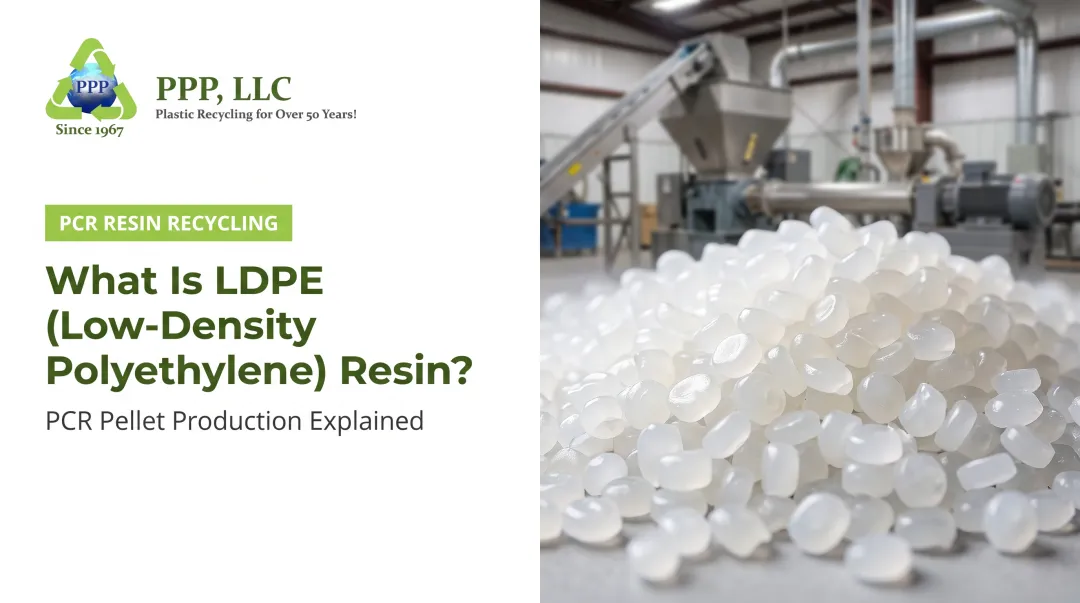
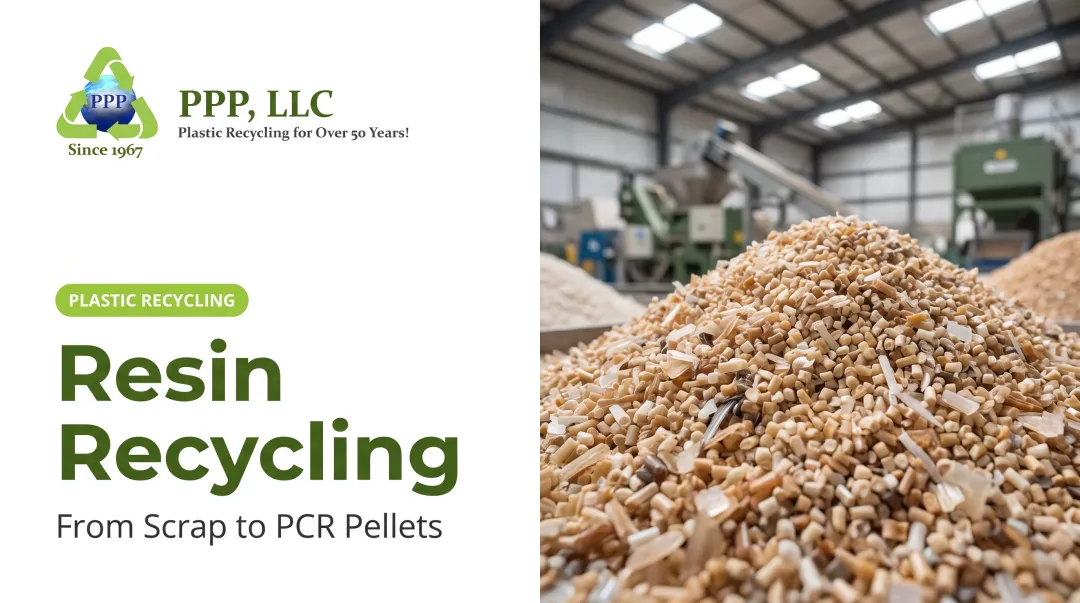
The filtered melt is extruded into strands, cooled, and cut into pellets.
A full-service recycler runs this entire chain under one roof instead of passing material between vendors. PPP, LLC, for example, manages sourcing, sorting, shredding, washing, melting, extrusion, and pelletizing in-house, which cuts the handoff points where quality can slip.
The company also offers toll processing: it converts a customer's own LDPE scrap into resin without transferring ownership. That option suits manufacturers who generate post-industrial scrap and want it returned as usable pellets.
Quality Testing and Re-Certification
Pelletizing isn't the finish line. Reputable recyclers put output through ongoing certification review. PPP maintains PCR certification through quarterly reviews and an annual re-certification process, confirming pellets meet agreed specs for size, shape, color, finish, and performance before they ship.

Properties & Quality Considerations of Recycled LDPE Resin
Recycled LDPE retains much of what makes virgin LDPE useful: flexibility, resistance to moisture and many chemicals, and a lower density than HDPE or PP. Those traits carry over well, but recycled grades still differ from virgin resin in ways that affect processing and finished-part consistency.
Melt Index and Processability
Recycled content can shift melt flow characteristics batch to batch, sometimes causing melt fracture or uneven extrusion. Blends of virgin and recycled LDPE can still fall within acceptable extrusion ranges, but stable results usually depend on process adjustments. Shops commonly need:
- Fluidizing additives to correct differing melt flow rates
- Compatibilizers when multilayer materials are present in the mix
- Antioxidants to preserve mechanical properties through reprocessing
Color, Appearance, and Documentation
Recycled LDPE comes in both natural (uncolored) and pigmented forms, and the clarity you get depends heavily on how well the input material was sorted and washed before processing. Mixed-color loads with inconsistent washing tend to produce more visible variability from batch to batch.
Before a large production run, request PCR certification and supporting documentation. Paperwork confirms the resin meets spec instead of leaving quality to assumption.
Quality assurance matters more because so much recyclable material still goes uncaptured. The EPA's most recent figure for bags, sacks, and wraps put the national recycling rate at just 10% as of 2018.
With that much feedstock still landfilled instead of reprocessed, a supplier with documented, consistent inputs is how you avoid inheriting someone else's contamination problem.
Business & Environmental Benefits of Choosing Recycled LDPE Resin
Switching to recycled LDPE resin pays off on cost, compliance, and carbon — and the environmental case has solid data behind it.
Environmental Impact
Every ton of recycled LDPE used is a ton that didn't need to be manufactured from virgin, non-renewable feedstock, and a ton of plastic scrap that stayed out of a landfill.
A 2026 peer-reviewed life cycle comparison found that recycled polyethylene consistently showed a lower global-warming potential than virgin polyethylene. Mechanical recycling remains the lower-carbon path, even without a single universal percentage to quote.
Cost and Compliance Advantages
Recycled resin often costs less than virgin material, though the gap varies by form and color.
NIST pricing data from February 2024 put recycled LDPE at $340 to $1,560 per ton compared to $1,340 to $1,600 per ton for virgin LDPE, with colored postconsumer flake at the lower end and clear recycled pellets closer to virgin pricing. The spread depends on contamination levels, color, and pellet quality, so treat these as reference ranges, not guaranteed savings.
Beyond material cost, manufacturers get:
- Reduced waste disposal expenses through toll processing or scrap resale
- A documented path toward meeting recycled-content mandates
- Marketing proof points for zero-waste and sustainability pledges
Why the Recycler You Choose Matters
Credentials protect that upside. PPP, LLC has processed HDPE and LDPE scrap since 1967, holds PCR certification with annual re-certification, and maintains APR membership. Those credentials matter whether the end product is food packaging, pharmaceutical film, or electronics packaging.

Common Products & Applications Made from Recycled LDPE Resin
Recycled LDPE shows up in more everyday products than most people realize:
- Trash bags and shopping bags
- Shrink wrap and stretch film
- Irrigation tubing and agricultural film
- Squeeze bottles and packaging film
Industry-specific uses span food, pharmaceutical, electronics, and general consumer packaging. Direct food-contact applications carry additional regulatory requirements covered in the next section.
Manufacturers don't grab just any rLDPE off the shelf. The right grade depends on what the end product needs to do:
- Bags and film need higher elongation and minimal stiffness
- Clarity-sensitive packaging film needs cleaner, better-sorted natural feedstock with less pigment contamination
- Irrigation tubing prioritizes tensile strength and weather resistance over optical clarity
PPP, LLC customizes pellets for size, shape, color, finish, and performance. A direct conversation about your end-use specs, rather than assuming one rLDPE fits every application, tends to save headaches downstream.
Is Recycled LDPE Resin Safe? Quality, Compliance & California Regulations
Yes, with a caveat. PCR-certified recycled LDPE that meets industry testing standards is safe for most approved consumer and packaging applications. Direct food-contact use is a separate conversation that requires additional FDA-related evidence, since FDA evaluates recycled food-contact plastics case by case rather than issuing a blanket approval.
What Certifications Actually Verify
PCR certification and APR membership provide independent assurance , but they verify different things than people often assume:
- PCR certification confirms recycled content, chain of custody, and sourcing accuracy.
- APR membership confirms the recycler meets industry operational standards.
- FDA food-contact clearance still requires separate migration testing and process documentation; neither credential replaces it.
California's Regulatory Landscape
California's rules here have shifted more than many buyers realize:
| Law | Current Status | What It Means |
|---|---|---|
| AB 478 | Died in 2022; never enacted | No operative PCR mandate for thermoformed containers |
| SB 270 | Original bag PCR requirements repealed | No longer an active recycled-content rule |
| SB 54 | Enacted, phasing in through 2032 | Requires producer responsibility programs and 25% recycled content in covered plastic packaging |
The law manufacturers actually need to plan around today is SB 54, not the earlier bills that circulate in outdated blog posts. Sourcing from a recycler that actively tracks these changes (rather than citing rules that no longer apply) reduces your own compliance exposure.
Before committing to any recycled resin partnership, verify a supplier's current certifications, re-certification history, and whether their compliance claims reflect today's regulations or yesterday's.

Frequently Asked Questions
Is recycled LDPE resin safe to use?
PCR-certified recycled LDPE that meets industry testing standards is safe for most consumer and packaging uses. For direct food contact, confirm the grade has the extra FDA documentation your application requires—standard PCR certification alone is not enough.
What products can be made from recycled LDPE resin?
Common products include trash bags, shopping bags, shrink wrap, squeeze bottles, agricultural film, and irrigation tubing. The specific grade needed depends on whether the application prioritizes flexibility, clarity, or durability.
What is the difference between recycled LDPE and virgin LDPE?
Recycled LDPE typically costs less and reduces environmental impact, but it can show more batch-to-batch variability in melt flow and appearance. Virgin LDPE offers more predictable, uniform performance at a higher price point.
Can recycled LDPE be used for food packaging?
Yes for many secondary or non-contact uses (overwrap, crates, outer film). Direct food-contact grades need supplier test data and FDA-related documentation matched to your specific packaging application.
How is recycled LDPE resin graded or certified for quality?
Buyers typically look for PCR certification, APR-aligned practices, and batch checks on pellet size, color, and melt performance. Strong suppliers re-certify on a set schedule and share lot-level consistency data—not a one-time certificate.
What does PCR certification mean and why does it matter?
PCR certification is a third-party verification that resin actually contains the recycled content claimed, with full chain-of-custody documentation. That paperwork lets you substantiate recycled-content claims and meet retailer or state reporting requirements with confidence.