
That confusion has real consequences. Manufacturers now face new labeling laws in California and beyond that penalize inaccurate recyclability claims. Meanwhile, actual recycling rates lag far behind what consumers expect. NAPCOR's 2024 PET Recycling Report puts the U.S. PET bottle recycling rate at just 30.2% — even for one of the most recyclable plastics available.
This guide breaks down the resin codes, which plastics actually get recycled, and how manufacturers can stay compliant by working with certified recyclers like PPP, LLC.
Key Takeaways
- The chasing-arrows symbol identifies resin type — it's not proof of recyclability
- HDPE (#2) and PET (#1) are the most widely recycled packaging plastics
- LDPE (#4) typically needs store drop-off or special collection programs
- California SB 343, SB 54, and RPPC Law restrict when manufacturers can claim packaging is "recyclable"
- PCR-certified recyclers help close the loop and support compliance with recycled-content mandates
Understanding Plastic Resin Codes and What They Mean
The resin identification code (RIC) system, governed by ASTM D7611, exists to identify what a plastic item is made of — not whether your city will recycle it. ASTM is explicit on this point: the code is for material identification only.
Here's what each number actually means:
| Code | Resin | Common packaging uses |
|---|---|---|
| 1 | PET/PETE | Beverage bottles |
| 2 | HDPE | Milk jugs, detergent bottles |
| 3 | PVC (Vinyl) | Specialty rigid containers |
| 4 | LDPE | Film, bags, flexible wraps |
| 5 | PP | Tubs, cups, caps |
| 6 | PS | Foam and rigid polystyrene |
| 7 | Other | Multilayer, composite, mixed resins |

The gap between "recyclable" and "recycled" is significant. EPA's most recent material-specific data shows only 29.1% of PET bottles and jars and 29.3% of natural HDPE bottles actually get recycled — and those figures are from 2018, so newer rates are unlikely to look much stronger. There's no reliable national PP recycling rate published; the Association of Plastic Recyclers says consistent denominator-based rates for PP can't currently be calculated.
Those recovery gaps are why resin choice and local acceptance matter as much as the number stamped on the package.
Which Resin Codes Are Most Recyclable
Not all seven codes are created equal. In practice:
- PET (#1) and HDPE (#2) are the most widely accepted in curbside programs and form the backbone of household rigid packaging streams.
- LDPE (#4) is recyclable through Store Drop-off, not curbside. How2Recycle limits this stream to pure polyethylene films, not mixed materials.
- PVC (#3), PS (#6), and Other (#7) are rarely recycled. For sustainability-minded packaging design, avoid these resins.
This isn't a hard national rule. Acceptance still depends on your local program, so a manufacturer shipping PP tubs nationwide can't assume every market handles them the same way. For recyclable rigid and film packaging, polyethylene streams—especially HDPE (#2) and LDPE (#4)—remain the most practical path into real recovery.

Common Recyclable Plastic Packaging Materials (and What Isn't)
Some packaging formats are dependable recycling performers. Others create headaches for sorting facilities and consumers alike.
Reliably recyclable formats:
- HDPE bottles and jugs (milk, detergent, shampoo)
- PET bottles and clamshells
- PP tubs, cups, and rigid containers (check local acceptance)
- LDPE film, bags, and poly mailers (via store drop-off, not curbside)
Problematic or non-recyclable formats:
- Multi-layer or composite plastics (chip bags, some pouches)
- Polystyrene foam (rarely accepted curbside, per the EPA)
- Plastic bags and films tossed loose into curbside bins (they jam sorting equipment)
- Heavily contaminated packaging (grease, food residue, mixed materials)
What About Old Tupperware?
That drawer full of aging plastic containers raises a common question. Many older containers were made before resin codes were standardized, or they've degraded past what curbside programs accept.
Before tossing them, flip the container over and confirm the resin code is still readable and intact. Degraded plastic sometimes can't be identified at all.
Quick reference: common packaging vs. recyclability
| Item | Resin Code | Curbside Recyclable? |
|---|---|---|
| Water bottle | #1 PET | Yes |
| Milk jug | #2 HDPE | Yes |
| Shampoo bottle | #2 HDPE | Yes |
| Bread bag | #4 LDPE | No — store drop-off only |
| Yogurt tub | #5 PP | Check locally |
| Foam takeout container | #6 PS | Rarely |
| Chip bag (multilayer) | #7 Other | No |
Why Recyclability Alone Isn't Enough: The Role of PCR Resin
Designing a package to be recyclable is only half the equation. True circularity means manufacturers actually buy back and use recycled material, not just make packaging that theoretically could be recycled.
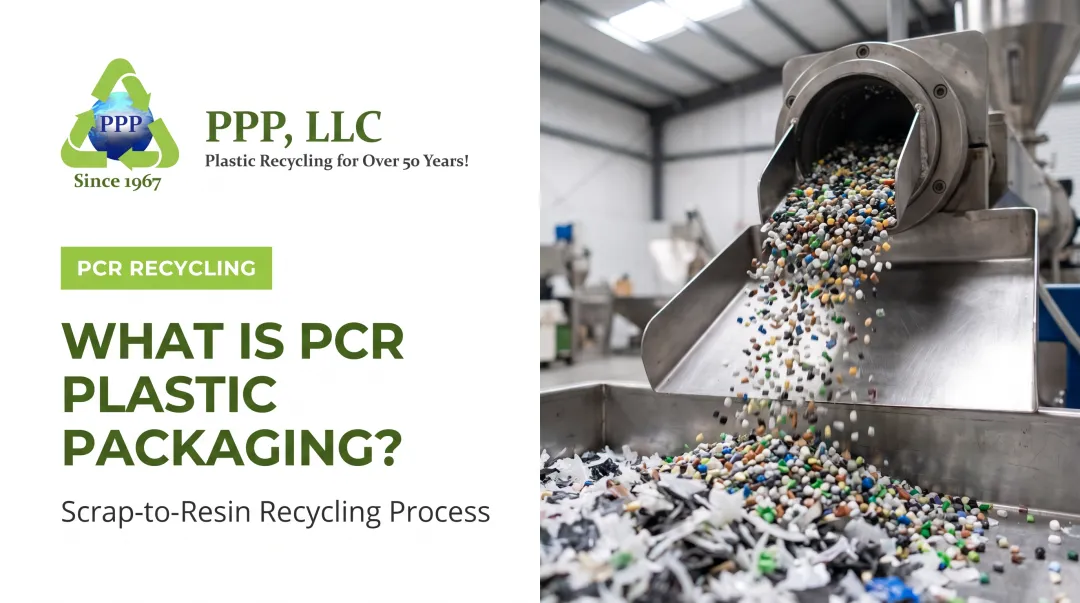
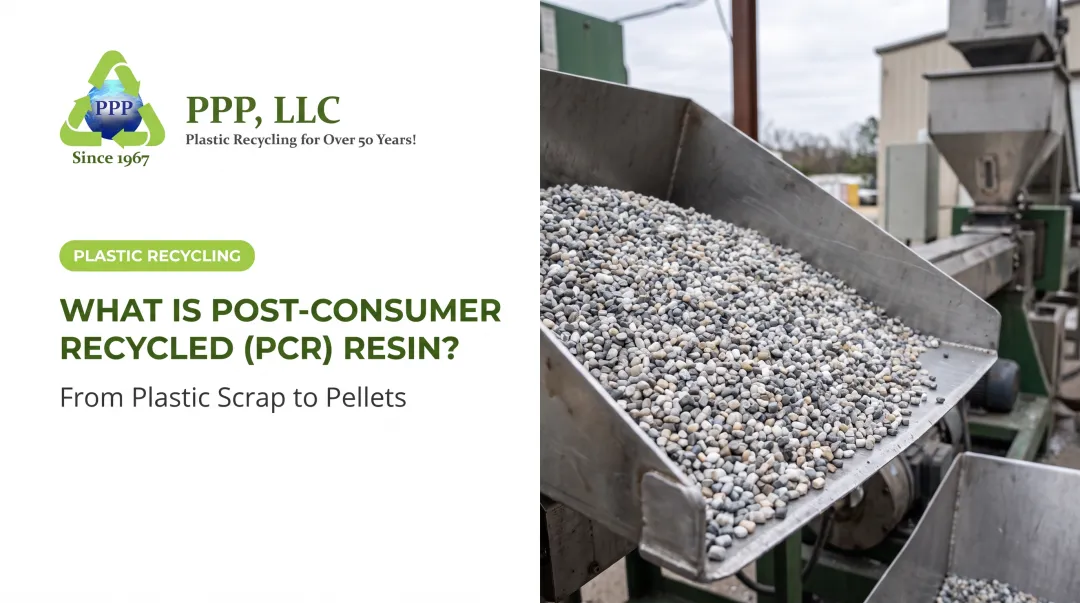
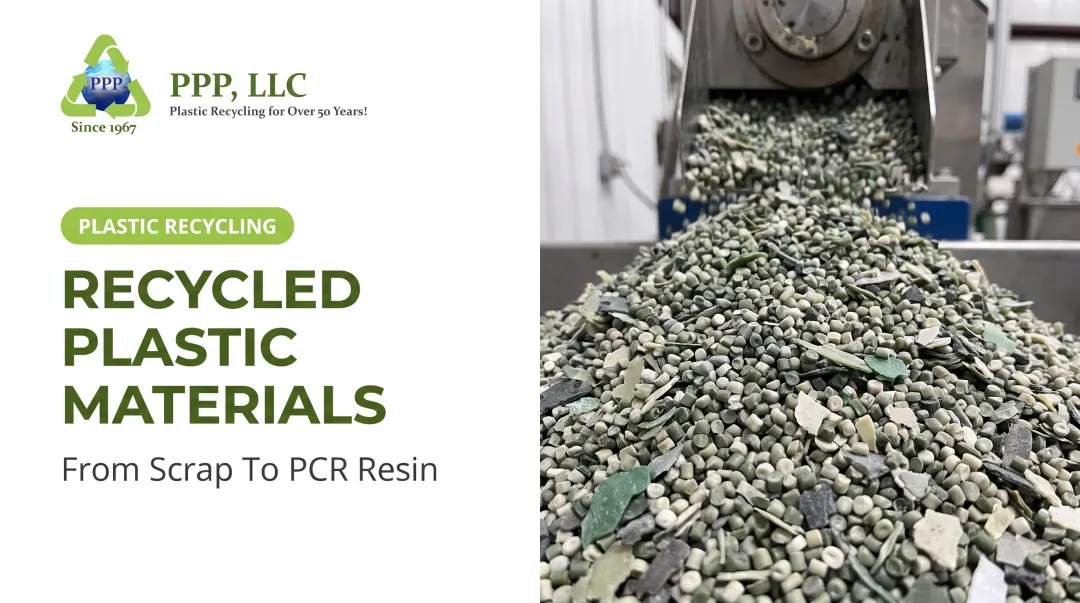
That's where post-consumer recycled (PCR) resin comes in. It's the mechanism that turns collected HDPE and LDPE scrap — milk jugs, film packaging, and containers — into pellets manufacturers can run through their existing equipment.
PPP, LLC has processed HDPE and LDPE scrap into PCR resin since 1967. As a PCR-certified, APR-member facility, the company sources qualifying scrap and converts it into resin customized for size, shape, color, finish, and performance:
- Sorts and shreds incoming HDPE and LDPE scrap
- Cleans, melts, and extrudes the material
- Pelletizes finished PCR resin to spec

PPP also offers toll processing for manufacturers who want their own scrap converted without transferring ownership.
The environmental case is clear. A 2020 life-cycle study by APR and Franklin Associates compared virgin resin pellets to recycled resin pellets and found:
- Recycled HDPE reduces total energy use by 88% and cuts global-warming potential by 71%
- Recycled PET showed similar gains: 79% lower energy use and 67% lower emissions
These figures apply to resin pellet production, not a finished package, but they show why recycled content matters beyond the recycling bin.
Navigating California and National Recycling Regulations
California has moved faster than almost any other state on packaging law, and manufacturers selling nationally need to pay attention.
Key California rules include:
- SB 343: Limits the chasing-arrows symbol on packaging made after October 4, 2026, unless the material is collected and processed for recycling in California. CalRecycle's summary confirms the RIC alone is not enough.
- SB 54: Requires a 25% cut in single-use plastic packaging by 2032, plus 65% recycling and 100% recyclable-or-compostable coverage. Interim targets are 30% by 2028 and 40% by 2030.
- AB 478: Proposed a minimum 20% post-consumer recycled content for thermoformed containers. PPP supports manufacturers working toward this threshold with certified PCR resin.
- RPPC Law: Sets a 25% post-consumer content minimum for rigid plastic packaging containers.

Nationally, five states (California, Colorado, Maine, Maryland, and Oregon) have enacted Extended Producer Responsibility (EPR) laws for packaging as of NCSL's 2023 tracking.
These laws generally require producers to fund recycling infrastructure based on how much packaging they put on the market and how recyclable it actually is.
Working with a compliant, certified recycling partner helps manufacturers meet these shifting requirements without redesigning packaging from scratch every time a new law passes.
Best Practices for Choosing Recyclable Plastic Packaging Materials
A few practical moves make the biggest difference for manufacturers in this space:
- Design with mono-materials. Avoid mixing plastics or combining plastic with paper or foil layers. Single-resin packaging sorts and reprocesses far more reliably.
- Source PCR-certified resin. Reducing virgin plastic use is increasingly a legal requirement under California laws such as AB 478 and the RPPC Law. PPP supplies PCR-certified HDPE, LDPE, and LLDPE resin for packaging and industrial manufacturing.
- Label accurately. Match your resin code and recycling instructions to what's actually collected in your target markets — don't rely on the RIC symbol alone to imply recyclability.
Frequently Asked Questions
Which packaging materials are recyclable?
HDPE (#2) and PET (#1) are the most widely accepted in curbside programs. LDPE (#4) is recyclable through store drop-off, and PP (#5) acceptance varies by location.
What plastic packaging is not recyclable?
PVC (#3), polystyrene (#6), multi-layer laminates, and most #7 "other" plastics are rarely accepted by any recycling program, curbside or otherwise.
Should I throw away my old Tupperware?
Check the resin code on the bottom first. Many older containers lack a readable code or have degraded plastic that curbside programs won't accept. Reuse them or take them to a specialty recycler.
What are some examples of plastic packaging materials?
Common examples include bottles, jugs, poly bags, mailers, clamshells, and tubs. These span resin types from PET and HDPE to LDPE and PP.
How can manufacturers verify their packaging is truly recyclable?
Partner with APR members and PCR-certified recyclers such as PPP, LLC. They understand current collection streams and can confirm recycled-content compliance for California and national laws.