
This explanation is written for manufacturers, packaging companies, and sustainability teams who need to understand the process at an operational level, not just the marketing pitch. Compliance deadlines, resin costs, and product performance all depend on getting this right.
Industrial resin recycling gets referenced constantly in sustainability reports, but the mechanics behind it, collection, washing, extrusion, testing, rarely get explained. This article covers how the process actually works, why manufacturers rely on it, and when it fits into a production line.
Key Takeaways
- Industrial resin recycling turns scrap (regrind, purge, rejects) into reuse-ready resin pellets
- California laws (SB 54, RPPC) are making recycled-content requirements standard practice
- Staged collection, washing, and pelletizing—with testing at each step—keeps recycled resin consistent
- PCR certification and APR membership flag reliable recycled resin versus inconsistent scrap
- Recycled HDPE can use up to 88% less energy than virgin resin
What Is Industrial Resin Recycling?
Industrial resin recycling is the mechanical process of collecting industrial plastic scrap and reprocessing it into clean, standardized resin pellets suitable for reuse in manufacturing. The goal is simple: turn scrap that would otherwise go to a landfill into resin that performs comparably to virgin material, or blends with it seamlessly.
The output only counts as usable feedstock if it's consistent and free of contaminants batch to batch. A manufacturer buying recycled resin needs pellets that melt at predictable temperatures, hold color, and mold the same way every time.
Industrial vs. post-consumer recycling. The two get lumped together, but the scrap source is different:
- Industrial (post-industrial) scrap comes from the factory floor: purge, trim, defective parts, and off-spec batches that never reach a consumer
- Post-consumer scrap comes from products a consumer bought, used, and discarded, and typically carries more contamination and mixed material types
Why this isn't the same as regrinding in-house. Plenty of manufacturers run their own scrap back through a grinder and call it recycling. That's regrinding, not industrial resin recycling. A dedicated recycler adds steps an in-house grinder usually skips:
- Washing to strip adhesives, labels, and residue
- Filtration to catch contaminants before the melt stage
- Batch testing and certification records that prove what's actually in the pellet
Without those steps, regrind quality swings from batch to batch—fine for internal scrap reuse, risky for resale or compliance claims.
Common resin types. Polyethylene resins—especially HDPE, LDPE, and LLDPE—make up the bulk of what industrial recyclers process. Output typically ships in the form the customer's line needs:
- Regrind
- Granulate
- Finished pellets
PPP, LLC focuses on HDPE, LDPE, and LLDPE, supplying pellets and granules matched to a customer's size, shape, color, finish, and performance specs.

Why Industrial Resin Recycling Matters for Manufacturers
Manufacturers don't adopt recycled resin because it sounds good in a sustainability report. Four forces are pushing it into standard operating procedure.
Regulatory pressure is real and growing. California's SB 54 requires 65% of covered single-use packaging to be recycled by 2032, with a 25% reduction in single-use plastic sales against a 2023 baseline, backed by permanent regulations that took effect in 2026. The state's Rigid Plastic Packaging Container Law separately requires at least 25% post-consumer material unless a manufacturer qualifies for another compliance path.
Rules keep tightening around SB 54, RPPC, and related California requirements. Manufacturers are increasingly expected to prove recycled content, not just claim it.
Cost control works in the manufacturer's favor. Recycled resin pricing moves with supply, demand, and virgin-resin trends rather than sitting at a fixed discount. Outsourcing scrap processing still does two things directly: it cuts landfill and disposal fees, and it turns waste that used to be a cost center into material with resale value.
PPP, LLC prices HDPE, LDPE, and LLDPE resin by quote and volume rather than a flat rate, so manufacturers can match sourcing to actual production needs.
Environmental impact shows up in the numbers. A Franklin Associates life-cycle analysis for the Association of Plastic Recyclers found that recycled HDPE requires 88% less energy and produces 71% fewer greenhouse gas emissions than virgin HDPE on a cradle-to-gate basis.
Market demand keeps climbing. Among consumer packaged goods companies with public recycled-content goals, average PCR content in plastic packaging rose from 5.3% in 2019 to 10.7% in 2023. Brands need verifiable numbers to back zero-waste pledges, not vague claims.
What goes wrong without a structured process. Manufacturers who regrind scrap in-house or sell to unverified buyers often end up with:
- Inconsistent material quality
- No documentation to support a recycled-content claim
- Exposure to penalties when state audits catch up
A full-service, certified recycler closes those gaps. PPP, LLC has processed HDPE and LDPE scrap since 1967, holds PCR certification with quarterly reviews and annual re-certification, and is an APR member—giving manufacturers a paper trail regulators and customers can both verify.
How Industrial Resin Recycling Works (Conceptual Flow)
Industrial resin recycling moves through six stages. What goes in is a mix of purge, regrind, off-spec parts, production trim, and sometimes end-of-life industrial products. What comes out is uniform, tested pellets ready to re-enter a manufacturing line.
The stages are:
- Scrap intake
- Sorting
- Size reduction
- Washing
- Melt filtration and extrusion
- Pelletizing
The core transformation happens in the middle: processors mechanically and thermally separate contaminants from the plastic before reforming it. Melt filters, screens, and periodic testing—melt index, FTIR (Fourier-transform infrared spectroscopy), and mechanical property checks—keep batches consistent.
Those six stages typically group into three practical phases:
Step 1: Collection & Sorting
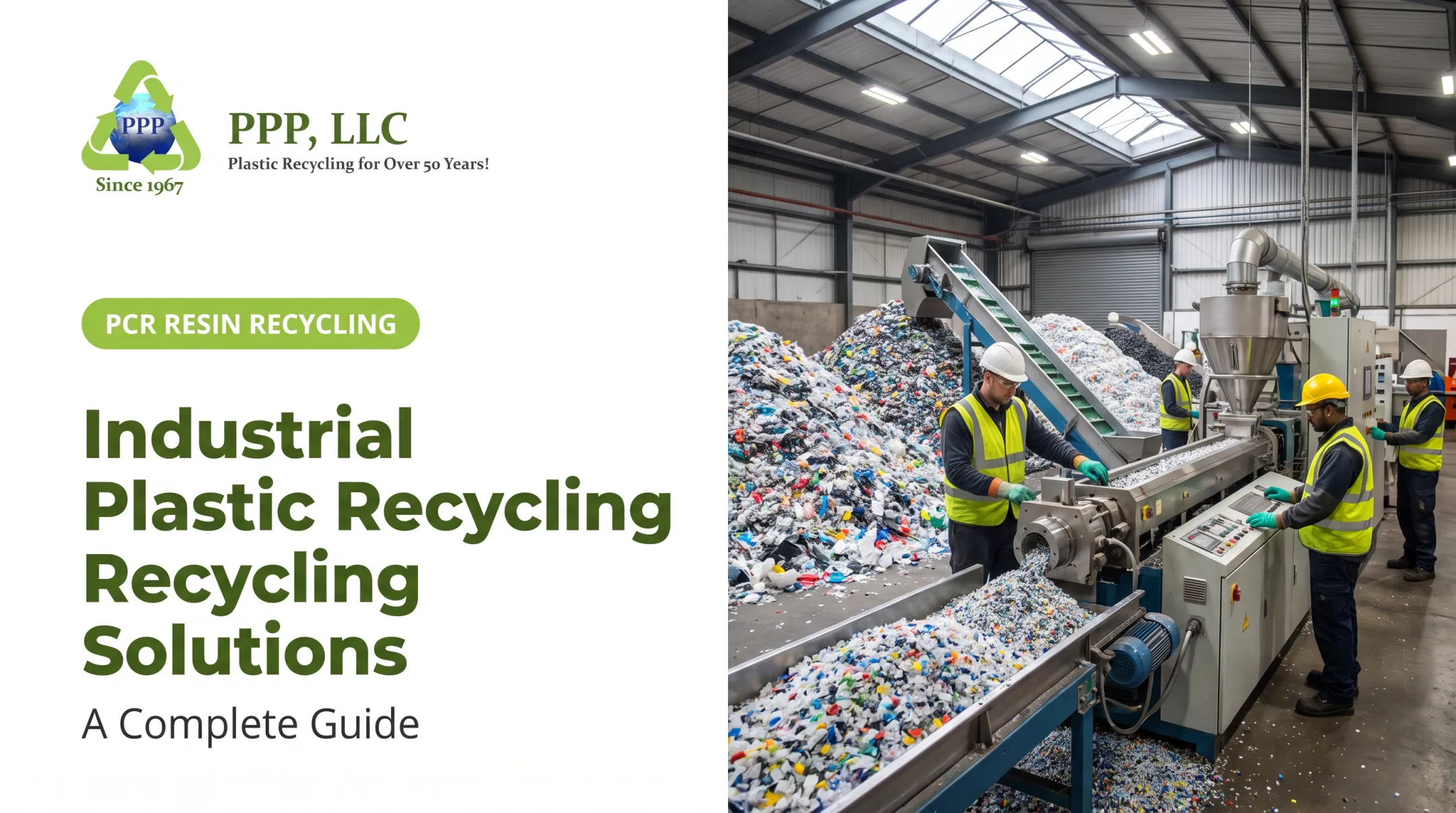
Scrap arrives from manufacturing partners through scheduled pickups or on-site collection. Before processing starts, crews sort it by resin type, color, and contamination level. This step matters more than it sounds: mixing HDPE with even small amounts of PP or PVC can wreck an entire batch's melt properties.
Step 2: Size Reduction & Washing
Processors shred or granulate sorted scrap into smaller, uniform pieces, then wash it to strip dirt, adhesives, labels, and other foreign material. Skipping or rushing this step is usually where quality problems start—trapped contaminants show up later as weak spots or discoloration.
Step 3: Extrusion, Filtration & Pelletizing
Washed material is melted and pushed through filtration systems that catch contamination the wash missed. From there, processors extrude it and cut it into uniform pellets. Reputable operations sample every batch before shipping, confirming melt index and mechanical properties fall within spec.

Where Industrial Resin Recycling Is Applied
Industrial resin recycling shows up anywhere polyethylene scrap is generated in volume. Common applications include:
- Automotive components, where trim and off-spec parts get reprocessed into resin for non-structural parts
- Food and pharmaceutical packaging, where PCR-certified resin blends with virgin material to meet recycled-content targets
- Irrigation systems and agricultural piping, a natural fit since these products already use HDPE and LDPE
- Electronics packaging, where consistent, contaminant-free resin protects sensitive products during shipping
- General consumer goods packaging, including bags, film, and retail containers
It also enters the manufacturing lifecycle at several points: right after production scrap is generated, when defective batches are pulled in quality control, and sometimes through end-of-life product take-back programs.
Common triggers include:
- Production overruns that leave excess material with no other use
- Quality-control rejects that fail spec but are still chemically clean
- Regulatory mandates requiring a minimum percentage of recycled content
- Internal sustainability commitments tied to a brand's public goals
In high-volume manufacturing, resin recycling is a recurring loop, not a one-off cleanup. PPP, LLC works with bag manufacturers, food and pharmaceutical packaging producers, electronics packagers, and irrigation component makers on that ongoing supply relationship.
The company purchases qualifying HDPE and LDPE scrap, or runs toll processing for customers who want to keep ownership of their material.
Key Factors That Affect Recycling Quality
Not all recycled resin performs the same, and the difference usually traces back to one of four variables:
- Input material purity. Mixed resins, metal fragments, and adhesive residue raise the washing and filtration load needed for a usable pellet.
- Equipment capability. Stronger extrusion, filtration, and washing lines handle imperfect scrap without losing throughput or consistency.
- Resin-specific processing needs. HDPE, LDPE, and LLDPE each need distinct temperature and filtration settings. Wrong parameters show up as inconsistent melt behavior downstream.
- Certification and regulatory standards. PCR certification and APR guidelines set clear benchmarks for quality and traceability. Without third-party verification, quality claims stay unproven.
PPP, LLC's focus on HDPE, LDPE, and LLDPE—built over more than five decades—exists to control these variables. A narrower resin range allows tighter temperature and filtration settings for each material, which supports more consistent pellet quality.
Common Misconceptions and Choosing the Right Recycling Fit
Misconception 1: Recycled resin is inherently lower quality. This was truer a decade ago than it is today. PCR certification and regular batch testing close most of the performance gap with virgin resin. The FDA even evaluates recycled plastics for food-contact use case by case, rather than ruling them out entirely.
Misconception 2: All industrial scrap can be recycled together. Resin type separation isn't optional. Mixing HDPE with PP or PVC degrades melt consistency and mechanical properties in the finished pellet, which is why sorting happens before anything gets shredded.
When it's not the right fit:
- Virgin-grade purity requirements (certain medical devices or food-contact uses where approval hinges on exact resin history)
- Extremely low or inconsistent scrap volumes, where dedicated processing costs more than it recovers
A warning sign worth noting: if a company is regrinding scrap in-house with no batch testing, no certification, and no traceability records, it isn't really recycling in any verifiable sense. It's reprocessing scrap and hoping the output holds up.
The fix is partnering with a certified, full-service recycler that can hit specific size, shape, color, and performance specifications, rather than guessing.
PPP, LLC offers this either by purchasing qualifying HDPE and LDPE scrap outright or through toll processing, which lets a customer keep ownership of its material while still getting certified, tested resin back. Requests go through PPP's quote process, where specifications get worked out directly.

Knowing how the process works, and choosing a partner that can prove it, is what turns scrap into compliance, cost savings, and real sustainability gains.
Frequently Asked Questions
What is the difference between industrial and post-consumer resin recycling?
Industrial resin recycling processes factory scrap, regrind, purge, and rejects that never reached a consumer. Post-consumer recycling processes plastic collected after a product was sold, used, and discarded, which typically carries more contamination.
What types of plastics are commonly recycled through industrial resin recycling?
HDPE and LDPE are the most commonly processed resins, since they're widely used in packaging, bags, and rigid containers. PP and PS also get recycled, depending on a facility's equipment and specialization.
Is industrial resin recycling required by law?
Not universally, but California laws like SB 54 and the Rigid Plastic Packaging Container Law require specific recycled-content percentages for covered products. Manufacturers selling into California increasingly need documented recycled content to stay compliant.
What is PCR certification and why does it matter?
PCR certification verifies recycled content claims through third-party audits of material flow and chain of custody. It gives manufacturers a way to prove their resin actually contains what the supplier says it does.
How can manufacturers verify the quality of recycled resin before using it?
Lab tests like melt index, FTIR, and mechanical property checks confirm a resin batch meets spec before it ships. Working with a certified, regularly audited recycler adds another layer of assurance beyond a single test result.
Does using recycled resin reduce a manufacturer's carbon footprint?
Yes. Recycled HDPE requires roughly 88% less energy and produces about 71% fewer greenhouse gas emissions than virgin HDPE, according to an Association of Plastic Recyclers life-cycle study.