
This matters most to manufacturers, packaging companies, and eco-conscious brands trying to hit sustainability targets without gambling on inconsistent material. "Recycled content" gets thrown around a lot in marketing copy, but few people outside the plant floor understand how the pellets themselves are made.
This article breaks down what pelletizing actually is, how the process works step by step, what determines pellet quality, and where these pellets end up in the supply chain.
TL;DR
- Pelletizing converts sorted, cleaned scrap into uniform pellets through shredding, melting, and extrusion
- The process cuts landfill waste, reduces virgin material costs, and supports compliance with California laws like SB 54
- Pellet quality depends on contamination control, moisture removal, and equipment calibration
- PCR-certified processors like PPP, LLC deliver pellets matched to manufacturing specs for size, shape, and performance
What Is Plastic Pelletizing?
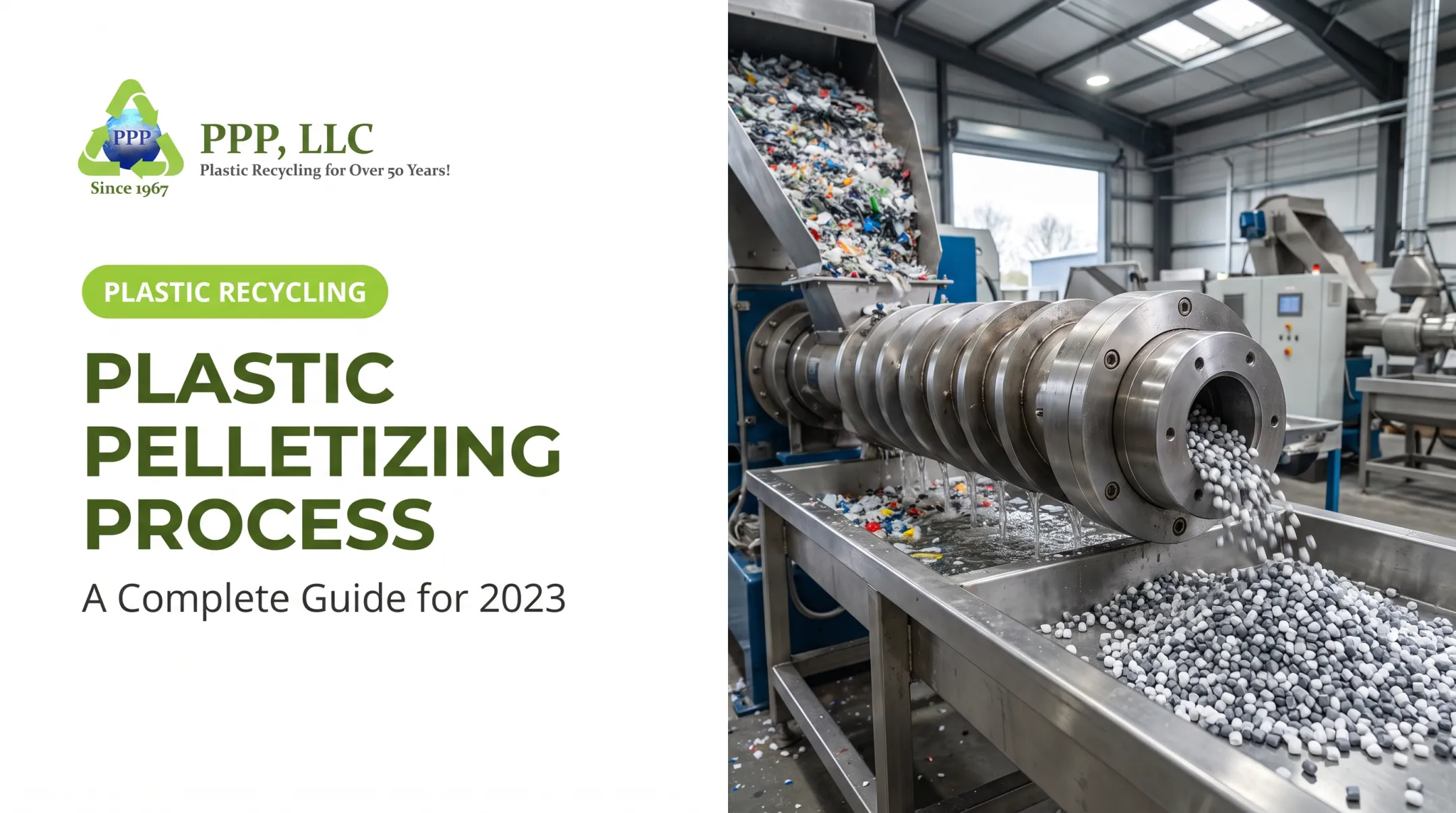
Plastic pelletizing is the process of turning sorted, cleaned plastic scrap into small, uniform pellets by melting it and forcing it through an extruder die. The result is consistent, production-ready feedstock that injection molders and extrusion lines can run predictably, batch after batch.
Pelletizing isn't the same as granulating or regrinding. The two produce different materials:
- Granulate (regrind): Shredded plastic only — irregular flakes, no melting involved
- Pellets: Melted, filtered, and cut into a uniform shape for reliable machine feed
That consistency is why pellets typically command more value and run more cleanly in production equipment.
Why Plastic Is Recycled Into Pellets
Manufacturers turn to recycled pellets because they offer a consistent, lower-cost alternative to virgin resin — without the raw-material price swings tied to oil markets.
The EPA reported 27.0 million tons of plastic sent to US landfills in 2018 alone, representing 18.5% of all landfilled municipal solid waste.
Demand is rising just as fast. A 2024 peer-reviewed study found that demand for recycled HDPE has outpaced availability, driven largely by manufacturer sustainability goals and recycled-content mandates.
Pellets also solve a shop-floor problem regrind cannot. Without pelletizing, manufacturers are stuck with irregular regrind, which causes:
- Inconsistent feeding into extruders and molding machines
- Unpredictable melt behavior on the production line
- Higher scrap rates from failed runs
Regulation is pushing the same direction. California's SB 54 sets packaging recycling targets of 30% by 2028, 40% by 2030, and 65% by 2032, so manufacturers need documented, certified recycled content—not vague "recycled" claims.
How Plastic Is Recycled Into Pellets (Step-by-Step Process)
Scrap plastic moves through six stages: collection, sorting, cleaning, shredding, melting, and cutting into pellets. Feedstock is typically post-consumer and post-industrial HDPE/LDPE scrap—bottles, bags, packaging film, and industrial trim—with varying contamination levels.
The process usually follows this path:
- Collect and sort by resin type and color
- Shred into flakes
- Wash and dry
- Extrude and melt with filtration
- Cool, cut, and ship as pellets
The core transformation happens during extrusion, where the plastic is melted and homogenized before being forced through a die. Temperature, screw speed, and filtration settings all determine how consistent the final pellet turns out. Wrong settings produce brittle, discolored, or unevenly sized pellets.

Step 1: Collection and Sorting
Scrap is separated by resin type (HDPE vs. LDPE) and color. Mixing resins or colors at this stage causes melt inconsistency later, so this step sets the ceiling on final pellet quality.
Step 2: Shredding/Granulation
Sorted scrap gets shredded into small flakes. Smaller flakes mean more surface area, which means faster, more even melting during extrusion.
Step 3: Washing and Drying
Flakes are washed to strip away labels, dirt, and adhesive residue, then dried. Leftover moisture causes bubbling, degradation, and off-gassing during the melt stage — a common cause of poor pellet quality.
Step 4: Extrusion and Melting
Dried flakes feed into an extruder, where controlled heat melts the material. Filtration screens catch any remaining contaminants before the melt moves forward.
Step 5: Cooling and Cutting
Molten plastic is pushed through a die into strands, cooled in a water bath, then chopped into uniform pellets ready for shipment.

Where Recycled Pellets Are Used
Recycled pellets enter the supply chain at the raw material stage, replacing or supplementing virgin resin. Industries relying on them include:
- Bag manufacturing (grocery, retail, industrial)
- Food and pharmaceutical packaging
- Irrigation and agricultural components
- Electronics packaging
- General retail and consumer goods packaging
Manufacturers in these sectors often source PCR resin from specialized recyclers. PPP, LLC has pelletized HDPE and LDPE for more than 50 years and supplies PCR-certified HDPE, LDPE, and LLDPE pellets into these same markets.

The company also offers toll processing: customers send their own scrap and receive finished pellets without transferring ownership of the material.
Key Factors That Affect Pellet Quality
Several variables determine whether a batch of pellets performs well on a production line:
- Contamination level of input scrap — dirt, labels, adhesives, and mixed resins all degrade output
- Moisture content prior to extrusion, which can cause bubbling or polymer degradation
- Equipment calibration, including screw speed, temperature zones, and filtration settings
- Batch consistency and throughput, which drive pellet-to-pellet uniformity across a run
- Regulatory PCR targets under laws like California's SB 54, which set the specs each batch must meet

Managing these variables keeps output stable on the line. PPP, LLC supplies pellets customizable for size, shape, color, finish, and performance, backed by quarterly compliance reviews and annual PCR re-certification.
Common Issues, Misconceptions, and When Pelletizing May Not Be Ideal
Not all "recycled plastic" is pelletized. A lot of what's marketed as recycled is actually just regrind or flake — shredded, but never melted or extruded. That distinction matters for anyone buying material and expecting pellet-grade consistency.
Passing material through an extruder doesn't guarantee quality either. Contamination control upstream matters more than the extrusion step itself. Dirty input produces dirty pellets, regardless of how well-tuned the equipment is.
Pelletizing also isn't always the right call:
- Small scrap volumes are often better sold as regrind than run through a full pelletizing line
- Mixed or heavily contaminated streams can cost more to clean than the finished pellets return
- Shops without in-house equipment should partner with a certified processor or use toll processing rather than improvised setups that risk contamination and inconsistent output
Conclusion
Recycling plastic into pellets transforms scrap HDPE and LDPE into a consistent, reusable manufacturing material: through sorting, shredding, washing, drying, and extrusion. Pellet quality directly affects manufacturing performance, cost control, and regulatory compliance.
For businesses that need pellets matching precise size, shape, and performance specs, partnering with a PCR-certified, APR-member facility like PPP, LLC helps you source recycled resin that meets those requirements with less trial and error.
Frequently Asked Questions
How much are plastic pellets worth?
Pellet value depends on resin type, purity, and market demand. PCR-certified pellets typically command a premium over uncertified regrind, with exact pricing set by quote and contract terms.
What types of plastic can be turned into pellets?
HDPE and LDPE are the most commonly pelletized resins, along with LLDPE, PET, and PP depending on the processor. PPP, LLC focuses primarily on HDPE, LDPE, and LLDPE.
What is the difference between plastic pellets and granules?
Pellets are uniform pieces created by melting and extruding plastic through a die. Granules are irregular fragments produced by shredding alone, without any melting involved.
Do I need to wash plastic before pelletizing it?
Yes. Washing removes dirt, labels, and adhesive residue that would otherwise cause odor, discoloration, and equipment damage during extrusion. Skipping this step usually shows up as visible defects in the finished pellets.
Is recycling plastic into pellets required by law in California?
No. Pelletizing itself is not mandated by law. California rules like SB 54 set packaging recycling targets, while SB 270 and RPPC address recycled content in specific packaging categories—pushing manufacturers toward certified PCR pellets.
How can a business start using recycled plastic pellets in manufacturing?
Partner with a PCR-certified recycler like PPP, LLC. They can supply pellets matched to your size, shape, and performance needs, or convert your own scrap through toll processing.