
Not all resins perform the same way. Manufacturers and recyclers need to know the differences to pick the right material for durability, cost, and recyclability. Choose wrong, and you risk product failure or a compliance headache down the road.
This guide breaks down the seven main types of plastic resin, where each one fits best, and how to choose wisely, including when recycled resin makes sense.
TL;DR
- Plastic resin is the raw polymer molded into finished products, sorted by 7 standard resin codes
- The main types are PET, HDPE, PVC, LDPE, PP, PS, and "Other," each with distinct properties
- HDPE and LDPE rank among the most versatile, recyclable resins for packaging, agriculture, and consumer goods
- Match resin to durability, chemical resistance, flexibility, and sustainability goals
- A certified recycler supplies quality post-consumer recycled (PCR) resin that meets performance specs
What Is Plastic Resin?
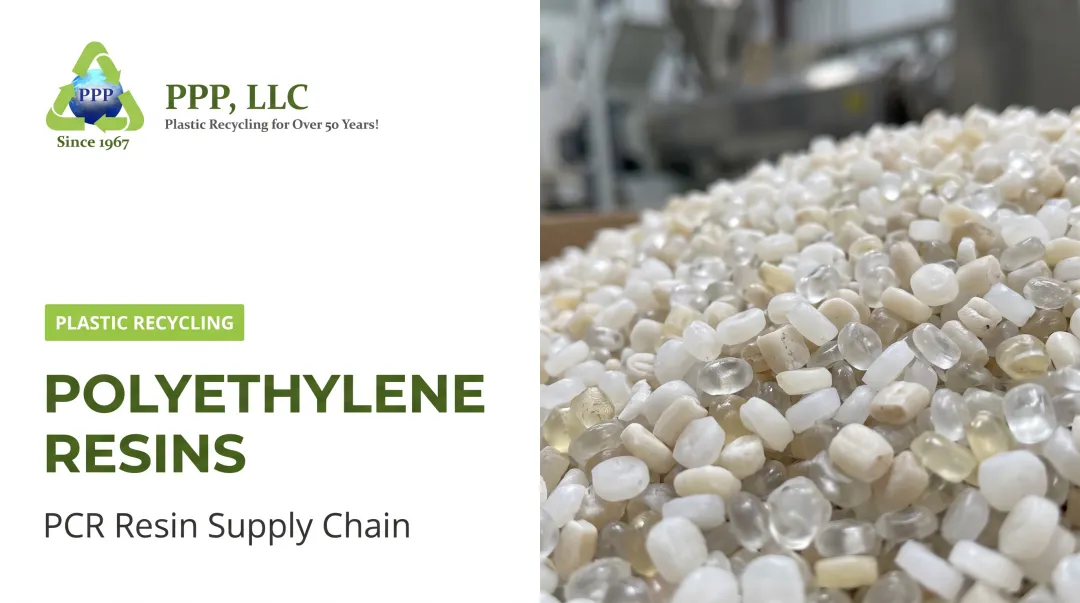
Plastic resin is the polymer-based raw material, typically shaped as pellets or granules, used to manufacture plastic products. Think of it as the starting point before a bottle, bag, or pipe ever takes shape.
Resin comes in two forms:
- Virgin resin: made directly from petrochemicals
- Post-consumer recycled (PCR) resin: reprocessed from plastic scrap that's already been used once
Manufacturers feed resin into processes like injection molding, extrusion, and blow molding. Those pellets become packaging, bottles, pipes, and other finished plastic goods.
Why Understanding Resin Types Matters
Getting the resin wrong isn't a small mistake. Different resins affect:
- Durability and chemical resistance
- Flexibility and end-use performance
- Material cost
- Regulatory compliance exposure
Picking the wrong one can lead to product failure or regulatory trouble.
Contamination carries real cost. The Association of Plastic Recyclers notes that even a small amount of PVC mixed into an HDPE stream can render large batches of recycled resin unusable. PVC degrades at temperatures lower than HDPE processing requires.
Polypropylene fares better in HDPE streams but is still capped at 10% of total package weight before it weakens impact properties.
Regulatory pressure is rising as well. California's SB 54 requires plastic packaging to hit a 65% recycling rate by January 1, 2032. Covered materials must be recyclable or compostable by that date. Manufacturers who don't understand their resin's recyclability and PCR content requirements risk falling out of compliance without realizing it.
The 7 Main Types of Plastic Resin
The Society of the Plastics Industry created seven resin identification codes in 1988 to sort plastics by chemical composition. These are the numbers inside the recycling triangle. They help consumers, recyclers, and manufacturers identify and sort materials correctly, though the code itself isn't a guarantee of recyclability.

Type 1: PET (Polyethylene Terephthalate)
PET is a lightweight, rigid-to-semi-rigid polyester resin that's naturally transparent and strong.
- Best for: beverage bottles, food containers, jars
- Strengths: excellent barrier properties, impact resistance, widely recyclable
- Limitations: not heat-resistant, degrades with repeated reuse
The EPA reported a 29.1% recycling rate for PET bottles and jars in 2018, one of the stronger figures among common resins.
Type 2: HDPE (High-Density Polyethylene)
HDPE is dense, opaque, and has high tensile strength. Its intermolecular bonds are tighter than LDPE's, making it more rigid and better able to withstand heat.
- Best for: milk jugs, detergent bottles, grocery bags, irrigation piping
- Strengths: chemical resistance, durability, strong recycling infrastructure
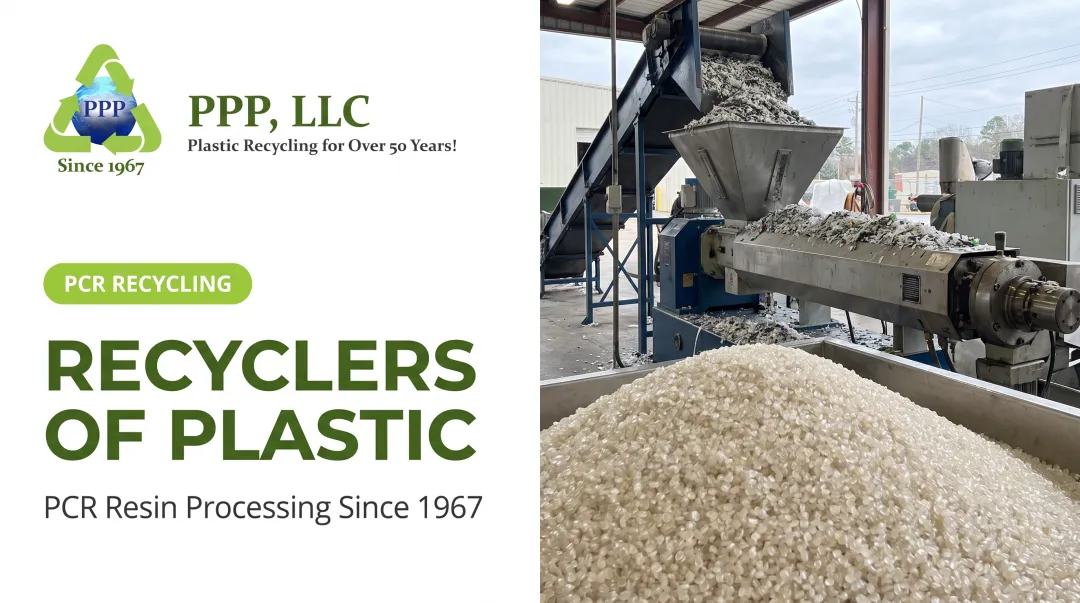
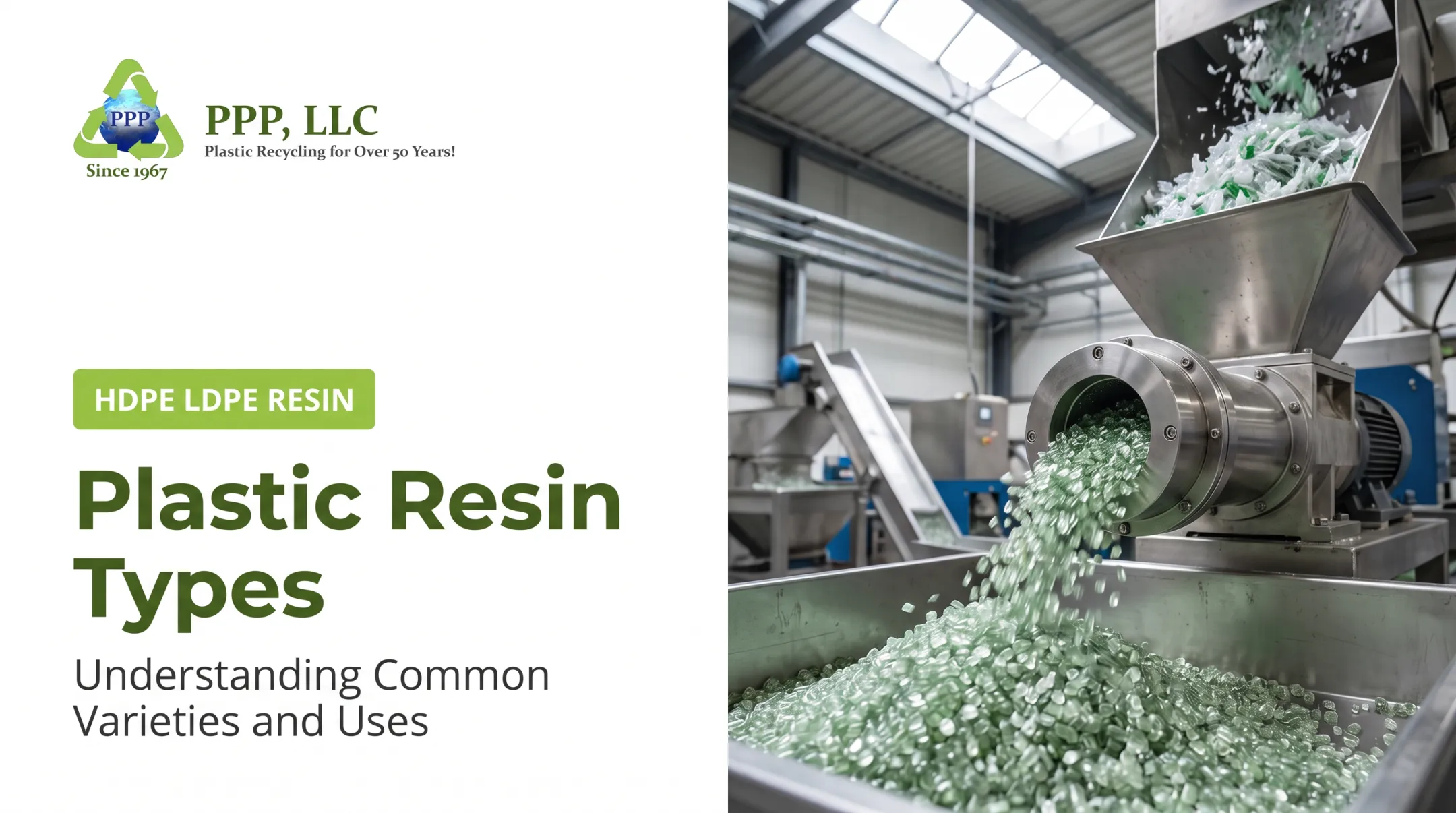
PPP, LLC specializes here. For over 50 years, the company has ground, pelletized, and reprocessed HDPE scrap—from jugs and bottles to packaging—into PCR-certified resin. Processing covers sorting, shredding, cleaning, melting, extrusion, and pelletizing. Manufacturers can specify pellets by size, shape, color, finish, and performance.

Type 3: PVC (Polyvinyl Chloride)
PVC is a chlorine-based resin known for chemical and biological resistance, and it requires less petroleum than many other plastics.
- Best for: pipes, wire insulation, flooring, tubing
- Strengths: durability, long service life
- Limitations: harder to recycle; even trace amounts can contaminate other plastic streams
Type 4: LDPE (Low-Density Polyethylene)
LDPE is flexible and tough, with lower tensile strength than HDPE but excellent resilience under stress.
- Best for: bread bags, produce bags, food storage containers, six-pack rings
- Strengths: flexibility, moisture resistance, near-unbreakable in everyday use
PPP, LLC recycles LDPE alongside HDPE, converting scrap into high-quality resin for bag manufacturers, food packaging producers, and agricultural equipment makers. The company supplies both materials to sectors including electronics, pharmaceuticals, and irrigation.
Type 5: PP (Polypropylene)
PP sits between LDPE and HDPE in stiffness. It's stiffer than LDPE but less brittle than HDPE, with strong fatigue resistance.
- Best for: bottle caps, straws, dairy tubs, hinged containers
- Strengths: heat resistance, dishwasher and hot-fill safe
Type 6: PS (Polystyrene)
PS is petroleum-based and can be produced rigid or foamed, making it ideal for fine-detail molds.
- Best for: disposable cutlery, cups, food trays, egg cartons
- Limitations: brittle and hard to recycle; U.S. collection for expanded polystyrene is limited, and cost-to-value economics are poor
Type 7: Other
This catch-all category covers resins developed after the original six codes, including bioplastics and blended materials.
- Best for: specialty applications with unique performance needs
- Limitations: highly variable properties; generally not curbside recyclable
How to Choose the Right Resin Type
Picking a resin shouldn't come down to familiarity or the lowest sticker price. It comes down to what the application actually demands.
Consider these factors:
- Intended use and exposure — Will the product face chemicals, UV light, or physical stress?
- Flexibility vs. rigidity — Does the application need a bag that bends or a container that holds shape?
- Temperature tolerance — Will it face heat during use, shipping, or hot-fill processing?
- Budget — What's the real cost difference between resin options at your volume?
- Recyclability and compliance — Does your target market require specific PCR content?

That last factor is carrying more weight every year. Eco-conscious manufacturers now weigh PCR availability alongside performance. With California's recycling mandates tightening, sourcing resin from a supplier who already tracks compliance saves headaches later.
What to Check Before Finalizing Your Resin Choice
Before you commit, run through this checklist:
- Don't default to familiar resins if performance requirements point elsewhere. What worked for your last product might not fit this one.
- Verify recyclability and PCR availability if sustainability or compliance with laws like California's SB 54 matters to your business or customers.
- Confirm supplier certification status — PCR certification and APR membership signal consistent quality batch after batch, not a one-time claim.
PPP, LLC's PCR certification involves quarterly reviews and annual re-certification, with continued status approved or denied each year. That ongoing scrutiny carries more weight than a certificate earned once and never checked again.
Conclusion
Plastic resin types differ in clarity, strength, heat tolerance, and recyclability, so the right choice depends on performance needs and end-use demands. Knowing those tradeoffs—PET for clarity, HDPE for durability, PP for heat resistance—helps manufacturers make stronger material and sustainability decisions.
For HDPE or LDPE work, a certified recycler turns scrap into usable supply and supports compliance goals. PPP, LLC has processed polyethylene scrap since 1967 and supplies PCR-certified resin that meets performance specs and California requirements, including AB 478, SB 270, and SB 54.
Frequently Asked Questions
Are resin and plastic the same?
Resin is the raw polymer material used to make plastic products, so the terms often get used interchangeably. Technically, though, resin refers to the pre-formed material before it becomes a finished plastic item.
Will resin stick to plastic?
It depends on the resin type and the plastic surface involved. Some resins bond well naturally, while others require primers or specific surface preparation to adhere properly.
Can I mix resin with plastic?
Only when the materials are compatible. Mixing incompatible resin types during manufacturing or recycling weakens material properties and can contaminate recycling streams—even a small amount of PVC in an HDPE batch can ruin an entire load.
What is the most commonly recycled plastic resin?
HDPE and PET rank among the most widely recycled resins in the U.S., each with recycling rates of roughly 29% per EPA 2018 data. Established collection infrastructure and strong secondary markets drive those numbers.
How do I know what resin type a product is made from?
Check the resin identification code, numbered 1 through 7, found inside the recycling triangle symbol on most plastic products. That number tells you the resin composition, though not necessarily whether it's recyclable locally.
What does PCR-certified resin mean?
PCR certification verifies that a resin is made from post-consumer recycled plastic and meets quality and traceability standards. Certification isn't permanent; it's re-verified through periodic audits, such as quarterly and annual reviews.