
For manufacturers, understanding resin types isn't optional. Choosing wrong means product failures, higher costs, or falling out of step with recycling regulations. This guide breaks down the seven major plastic resin types, their properties, and how to pick the right one for your application.
TL;DR
- Plastic resin is the polymer base material behind nearly all plastic products
- Seven main resin types exist, each identified by a numbered recycling code (1-7)
- Resins vary widely in flexibility, heat resistance, and recyclability
- HDPE and LDPE rank among the most widely recycled and reused resins in manufacturing
- The right resin choice depends on application needs, durability, and sustainability goals
What Is Plastic Resin?
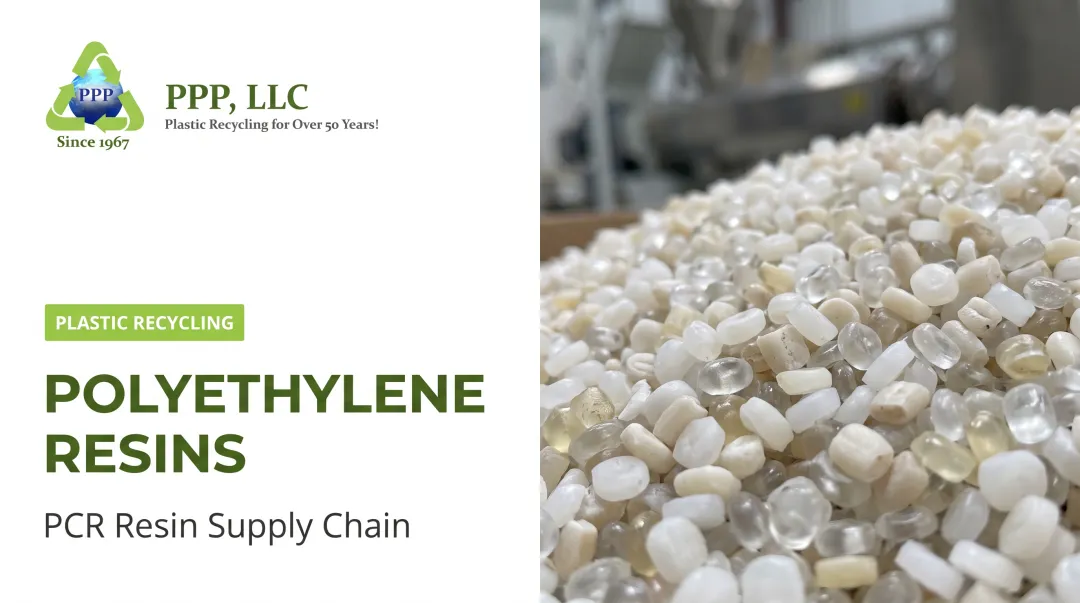
Plastic resin is the polymer material, usually shipped as small pellets or granules, that gets melted, molded, or extruded into finished plastic products. Think of it as the flour in a recipe: everything downstream depends on its quality and type.
Resin comes in two main forms:
- Virgin resin — made directly from raw petrochemical feedstock
- Post-consumer recycled (PCR) resin — reprocessed from plastic waste that's already been used and discarded
This distinction has real commercial weight. The EPA identifies plastic resins as core materials in packaging products, including the PET bottles and HDPE jugs found in nearly every American kitchen.
Resin choice directly shapes a product's cost, durability, and environmental footprint.
Why Understanding Resin Types Matters
Each resin type carries distinct strength, flexibility, and heat tolerance characteristics. Pick the wrong one, and you risk product failure, ballooning costs, or regulatory headaches.
California has raised the stakes considerably. Manufacturers selling into the state now face several overlapping recycled-content laws:
- AB 478 — sets escalating post-consumer recycled (PCR) requirements for thermoformed containers, starting at 10% and climbing toward 20–30% by 2030
- SB 270 — requires reusable plastic bags to contain recycled material
- SB 54 — establishes extended producer responsibility for single-use packaging, with 2032 targets for recyclability
- SB 343 — restricts recyclability labeling to materials actually processed in California
These aren't abstract mandates. They require manufacturers to track and disclose resin recyclability data, turning resin knowledge into a compliance necessity. Consumer demand for sustainable packaging also pushes businesses toward PCR resins to cut their carbon footprint.
The 7 Main Types of Plastic Resin
Plastic resins fall into seven categories, classified under a numbering system the Society of the Plastics Industry established in 1988. Each number represents distinct chemical properties and recycling pathways. The number on a container identifies the resin — it doesn't guarantee a local recycling program accepts it.

Type 1: PET (Polyethylene Terephthalate)
PET is lightweight, transparent, and rigid to semi-rigid. It's the resin behind beverage bottles, food containers, and cooking oil bottles.
PET is one of the most widely recycled plastics, largely because of its clarity and natural carbon-dioxide barrier properties. The EPA reported a 29.1% recycling rate for PET bottles and jars in 2018.
Type 2: HDPE (High-Density Polyethylene)
HDPE is stiff, opaque, and tough, with strong chemical resistance. You'll find it in:
- Milk jugs and detergent bottles
- Irrigation piping
- Industrial containers and pails
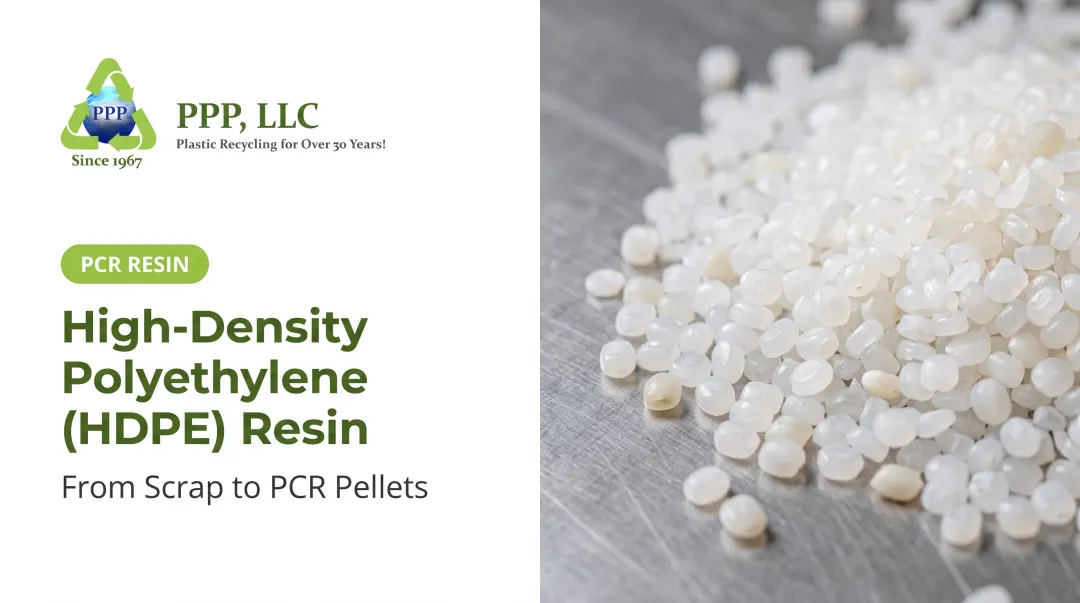
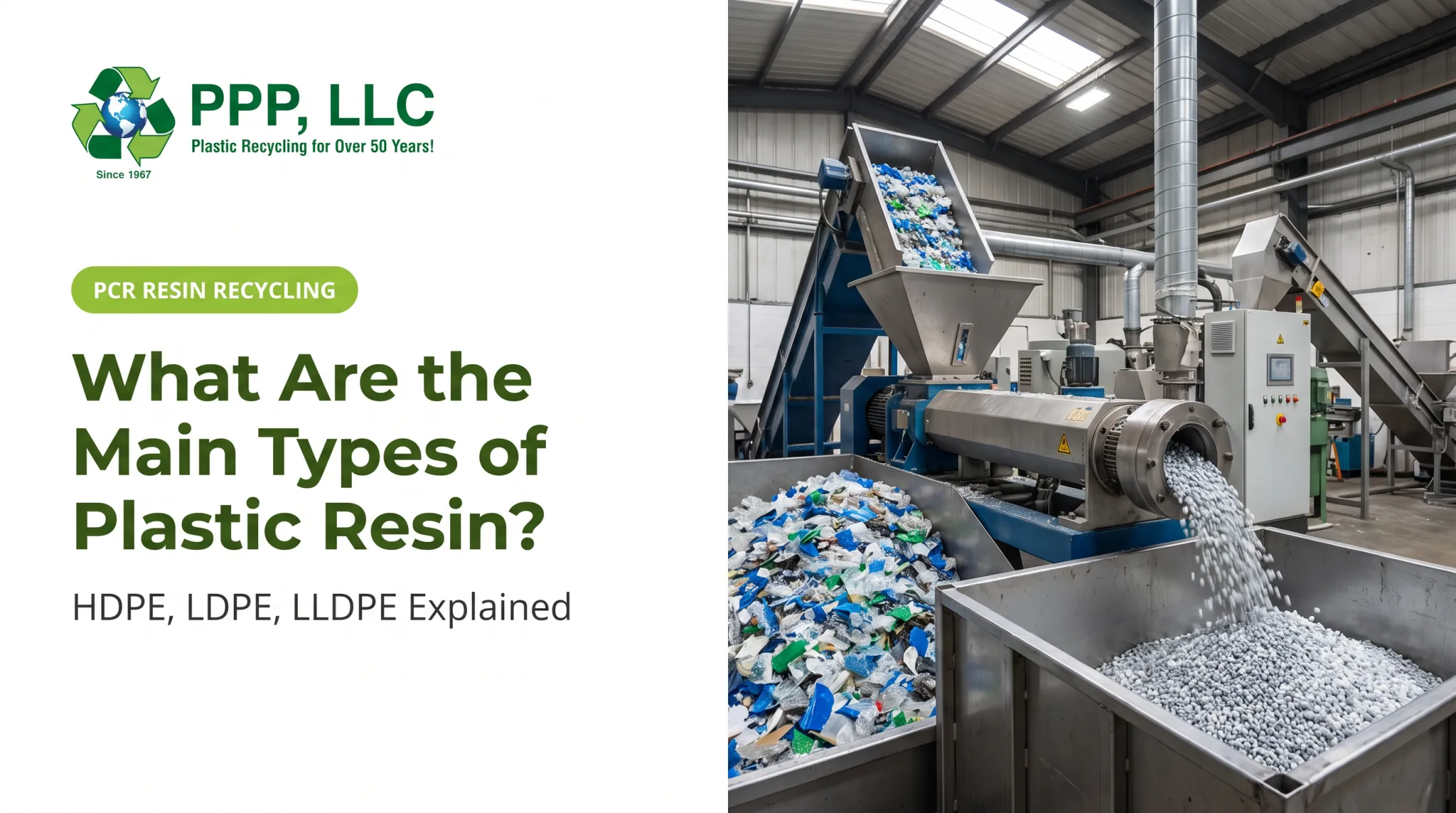
HDPE floats in water (its density runs 0.94–0.97 g/cm³), and it's one of the most recycled resins on the market. This is a core focus for PPP, LLC: grinding, cleaning, extruding, and pelletizing HDPE scrap from bottles and packaging into PCR-certified resin. That resin returns to agricultural piping, food and pharmaceutical packaging, electronics packaging, and industrial supply chains.

Type 3: PVC (Polyvinyl Chloride)
PVC comes in rigid or flexible forms, used in piping, flooring, and insulation. It's durable and chemical-resistant, but generally not recyclable through standard channels.
On flammability, the Vinyl Institute states PVC is less flammable than most polymers and typically stops burning once the heat source is removed. Burning PVC still releases hydrogen chloride, so it needs careful handling.
Type 4: LDPE (Low-Density Polyethylene)
LDPE is flexible, translucent, and softer than its HDPE cousin. Common applications include:
- Bread bags and dry-cleaning bags
- Squeezable bottles
- Shrink wrap
Recyclability varies by facility — LDPE isn't a guaranteed curbside item everywhere. PPP, LLC also processes LDPE scrap—sorting, shredding, washing, and pelletizing it into consistent PCR resin for grocery and industrial bags, food packaging, electronics packaging, and irrigation systems.
Type 5: PP (Polypropylene)
PP balances a high melting point with fatigue resistance and chemical resistance. It's stiff, holds tight dimensional tolerances, and shows up in:
- Food containers and bottle caps
- Automotive parts
- General packaging
Not all polypropylene is recyclable — additives and processing methods affect whether a given PP product can actually be reprocessed.
Type 6: PS (Polystyrene)
PS comes rigid or foamed, is lightweight, and molds easily into detailed shapes. Common uses include disposable cutlery, foam packaging, and food containers.
The EPA notes that very few localities accept Styrofoam in curbside recycling. Most PS still ends up in landfills regardless of the resin code stamped on it.
Type 7: Other (PC, PLA, Nylon, and Mixed Resins)
This catch-all bucket covers resins developed after 1988 or made from mixed materials. Examples include polycarbonate, bioplastics like PLA, and multi-layer packaging that combines several polymer types.
Recyclability here is inconsistent, depending entirely on what local processing facilities can handle. A PLA cup and a PET/nylon co-injected package might share a "7," but they're processed completely differently — or not at all.

How to Choose the Right Resin Type
Resin selection should follow application needs, not familiarity or industry habit. Before locking in a decision, run through these factors:
- Mechanical requirements — Does the product need flexibility, tensile strength, or impact resistance?
- Chemical and environmental exposure — Will it face heat, UV light, moisture, or harsh chemicals?
- Regulatory compliance — Does the resin meet state recycling laws and packaging mandates?
- Sustainability goals — Is a PCR-certified alternative available that meets performance specs?
- Budget and production volume — Does the cost structure work at your scale?
For manufacturers weighing HDPE or LDPE, there's a practical decision beyond resin type: buy finished resin, or process your own scrap?
- Standard resin purchase — buy ready-to-use PCR-certified pellets, customized for size, shape, color, finish, and performance
- Toll processing — send your own plastic scrap to be shredded, washed, extruded, and pelletized into usable resin, without giving up ownership of the material
PPP, LLC offers both paths for manufacturers working toward thresholds such as AB 478's 20% PCR requirement for thermoformed containers or the RPPC law's 25% threshold for rigid packaging.

As a PCR-certified APR member, PPP, LLC supplies resin that meets performance specs and California's recycling mandates from one partner.
Frequently Asked Questions
What are the 7 main types of plastic?
The seven types are PET, HDPE, PVC, LDPE, PP, PS, and Other. They're classified using a numerical recycling code system established by the Society of the Plastics Industry in 1988.
What are the three types of resin?
Resins are often grouped broadly into thermoplastics, thermosetting plastics, and natural or bio-based resins. This classification differs from the 7-code system, which identifies specific polymer chemistries rather than general resin categories.
What are the different grades of PVC resin?
PVC comes in rigid (unplasticized) form, used for piping and structural applications, and flexible (plasticized) form, used for flooring and insulation. Plasticizers make flexible PVC softer and more pliable.
What are type 4 plastics?
Type 4 is LDPE, a flexible, translucent resin softer than HDPE. It's commonly used in bread bags, dry-cleaning bags, squeezable bottles, and shrink wrap.
How can businesses source recycled resin that meets compliance standards?
Working with a PCR-certified, APR-member recycler like PPP, LLC helps ensure resin quality and regulatory compliance. PPP undergoes quarterly reviews and annual re-certification to maintain its PCR-certified status.
Is all plastic resin recyclable?
No. Recyclability varies by resin type. PET and HDPE are widely accepted in recycling programs, while PVC and PS are rarely recycled and often end up in landfills.