
Introduction
Every day, milk jugs, detergent bottles, and industrial drums are reprocessed into recycled HDPE sheet stock. Manufacturers cut, weld, and fasten this material into decking, signage, marine bulkheads, and playground equipment that outlasts wood by decades.
But the appeal comes with hesitation. Many businesses want sustainable materials but worry the resin won't perform consistently, or that a supplier can't back up sustainability claims with real compliance documentation. California's recycling rules keep shifting, which makes sourcing decisions feel riskier than they should.
This guide breaks down what recycled HDPE plastic sheets actually are, how they're made, where they outperform (and fall short of) virgin resin, and what to check before signing a supplier contract. Whether you're specifying material for a boat dock or a retail display fixture, you'll know exactly which questions to ask a supplier.
Key Takeaways
- Near-virgin strength and weather resistance for most non-food HDPE sheet uses
- Lower energy use versus virgin resin, cutting impact and often cost
- Verify color consistency and food-contact needs before specifying
- Choose a PCR-certified, APR-member recycler for California packaging compliance
What Are Recycled HDPE Plastic Sheets?
Recycled HDPE plastic sheets are extruded panels made from reprocessed HDPE (Type 2) scrap: milk jugs, detergent bottles, industrial drums, and similar post-consumer or post-industrial waste. Instead of landfilling that material, recyclers grind it down, melt it, and reform it into flat stock that manufacturers cut and fabricate like lumber.
HDPE holds up to this treatment better than most plastics. Its molecules pack tightly into a semi-crystalline structure, which lets it survive multiple reprocessing cycles without immediately losing strength.
A 2015 study ran one HDPE grade through 100 consecutive extrusion cycles. Measurable hardness and modulus decline started around cycle 10, with severe processability changes by roughly cycle 30 (Oblak et al., 2015). That result is a lab benchmark for one resin grade, not a universal limit—worth checking against whenever a supplier claims their material recycles indefinitely.
How Recycled HDPE Sheets Are Manufactured
Getting from scrap bin to finished sheet involves several distinct stages:
- Collection and sorting — HDPE scrap arrives from manufacturers, processors, converters, and consumer recycling streams, then gets separated from other plastic types.
- Washing — Sorted material is cleaned to remove labels, adhesives, and contaminants.
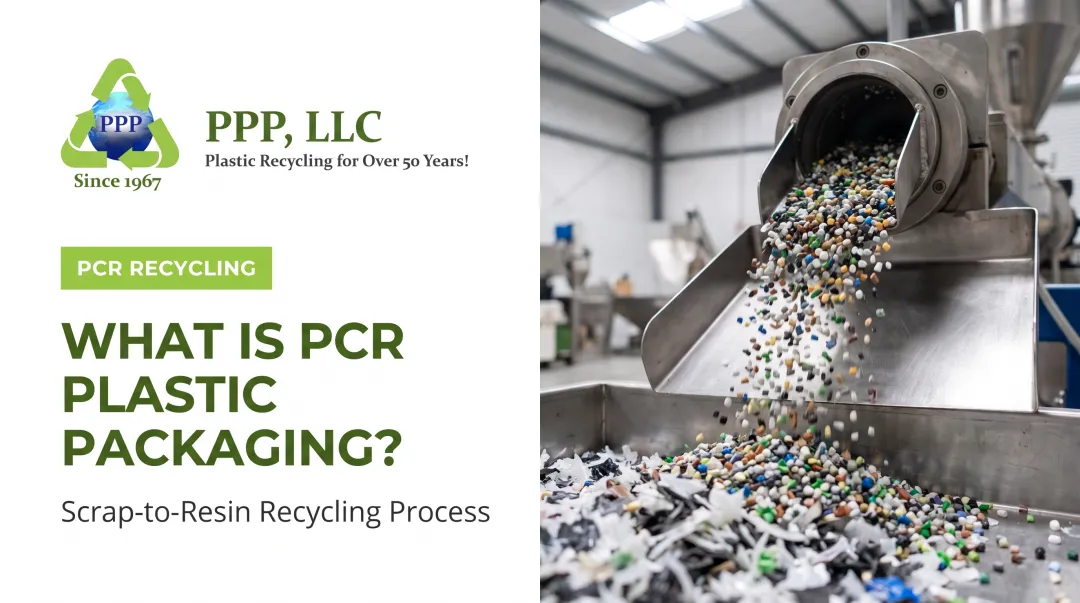
- Grinding — Clean HDPE gets shredded into flake or granules.
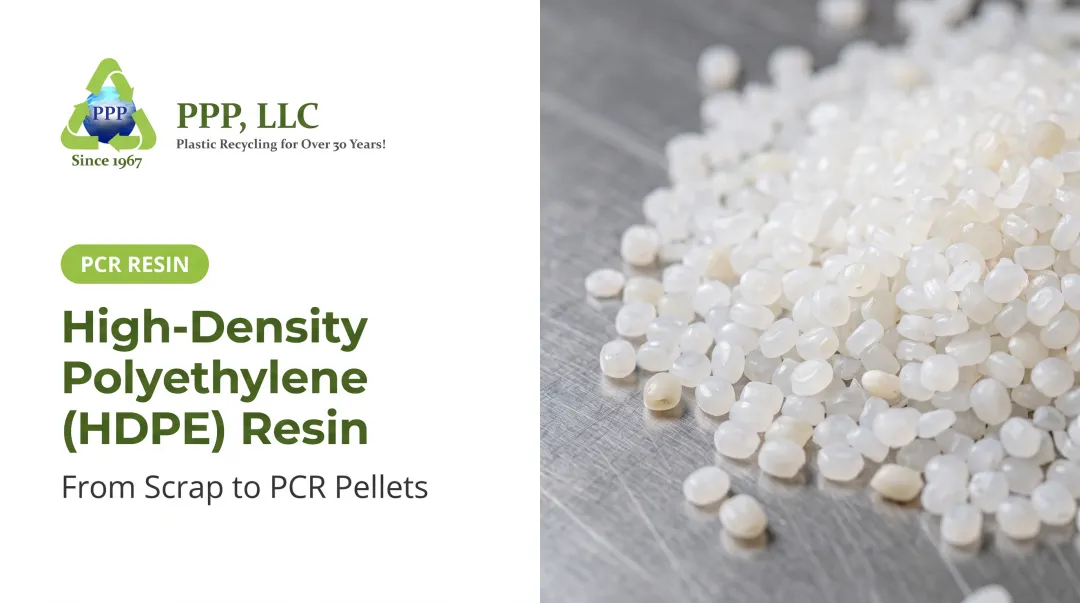
- Pelletizing — The granulated material is melted and extruded into small PCR resin pellets.
- Sheet extrusion or compression — Sheet manufacturers melt those pellets a second time and form them into flat panels of specific thicknesses.

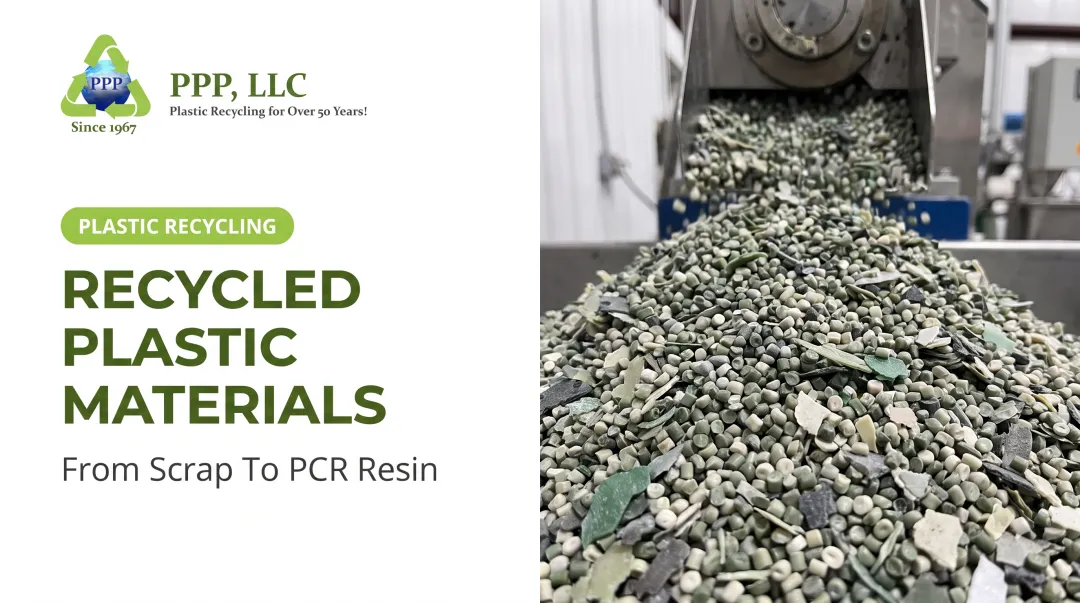
Full-service recyclers that specialize in grinding and pelletizing HDPE scrap supply the PCR resin pellets at the center of this chain. PPP, LLC has run this process since 1967, sourcing HDPE from beverage containers and industrial scrap, then shredding, washing, melting, and pelletizing it into resin. Sheet producers melt those pellets down and extrude them into finished panels.
PCR Content & Certification
Buyers still need proof of what went into the sheet. PCR (Post-Consumer Recycled) certification verifies that resin comes from qualifying post-consumer sources and meets consistent quality benchmarks. Because certification can lapse, buyers should confirm it's re-verified on an ongoing basis, not just granted once. PPP, LLC's PCR status, for example, goes through quarterly compliance reviews plus a full annual re-certification review.
Recycled content percentage matters too. Some sheet resin blends PCR material with virgin plastic; other batches, like PPP's dedicated PCR resin line, run 100% post-consumer content. That percentage affects both the sustainability claim a manufacturer can legitimately make and, in some cases, the sheet's finished color and consistency.
Key Properties & Benefits of Recycled HDPE Sheets
Recycled HDPE sheets aren't a compromise material. In most applications, they perform close to virgin HDPE while delivering measurable sustainability gains.
Key advantages include:
- Durability: Retains most of its toughness through reprocessing, so it holds up in structural and load-bearing uses where wood cracks or concrete needs reinforcement
- Weather and chemical resistance: Stands up to moisture, UV, rot, and most acids and solvents—fit for docks, bulkheads, and outdoor furniture without sealing or coating
- Low maintenance: Needs no painting, sealing, or fungicide treatment, and termites can't touch it, which often erases wood's upfront cost edge within a few years
- Marketing credibility: Certified PCR sheet stock lets manufacturers support sustainability claims with documentation instead of vague green language
Energy and emissions savings are just as concrete. Producing HDPE resin from recycled material uses about 88% less total energy than virgin HDPE resin, according to a 2018 Association of Plastic Recyclers life-cycle study (APR, 2018). The same study found post-consumer recycled HDPE resin produces 71% lower greenhouse gas emissions than virgin resin production.
Those savings don't automatically mean a lower shelf price. Recycled resin markets swing with supply, so ask for current pricing rather than assuming recycled always undercuts virgin. Even then, every ton of HDPE sheet made from scrap is a ton that didn't need new petroleum feedstock or landfill space.

Common Applications & Uses of Recycled HDPE Sheets
Recycled HDPE sheet stock shows up anywhere a business needs a tough, weather-resistant material without wood's upkeep or metal's corrosion risk.
Primary applications include:
- Outdoor furniture and picnic tables
- Decking and boardwalk surfaces
- Marine bulkheads, docks, and piling wraps
- Signage and wayfinding panels
- Playground equipment and safety surfacing
- Agricultural panels and livestock equipment
- Industrial dunnage and protective shipping boards
Other common uses include retail display fixtures, construction-site protection boards, and the recycling bins and trash receptacles that collect the next batch of scrap.
Demand spans several buyer types. Residential customers want low-maintenance decking. Marine contractors need a material saltwater can't rot. Industrial buyers need dunnage that survives forklift traffic.
That spread of use cases keeps recycled HDPE sheet stock moving into new product categories instead of staying a niche material.
Recycled vs. Virgin HDPE Sheets: Pros, Cons & Which to Choose
For most non-food-grade applications, the performance gap between recycled and virgin HDPE sheets is small enough to ignore.
| Factor | Recycled HDPE Sheets | Virgin HDPE Sheets |
|---|---|---|
| Strength & rigidity | Comparable for most structural uses | Slightly more consistent batch-to-batch |
| Weather resistance | Comparable | Comparable |
| Cost | Often lower, though pricing fluctuates with supply | Typically stable, premium pricing |
| Color consistency | Darker, sometimes mottled tones from blended scrap | Wide range, consistent color matching |
| Food/potable water contact | Generally not approved | Can be approved under FDA rules, case by case |
| Sustainability claims | Strong, supports circular-economy positioning | Limited |
Where recycled sheets fall short:
- Color options skew toward black, gray, or mottled finishes because scrap sources mix during reprocessing
- Most recycled HDPE is not approved for direct food or drinking-water contact. FDA reviews are case-by-case and require proof that contaminants are removed and migration stays below its threshold (FDA, 2020)
- Minor batch-to-batch variability can appear in thickness tolerance or surface finish, depending on recycler QC
Decision guidance:
- Choose recycled HDPE sheets for outdoor furniture, decking, signage, marine structures, and industrial uses when color matching and food-contact approval are not required
- Reserve virgin HDPE for cutting boards, medical equipment, or any product that needs FDA food-contact or medical-grade certification
For most structural and outdoor uses, recycled sheets deliver the performance you need at a lower cost and with a stronger sustainability story.
Sourcing PCR-Certified Recycled HDPE Sheets: What to Look for in a Supplier
Not every recycler backs up its "recycled" label with real verification. Before you commit, vet certification status, California compliance fluency, written specs, and how much of the process sits under one roof.
Certification and Membership
Confirm the recycler holds current PCR certification, not a certificate from three years ago. Quality PCR programs require quarterly reviews plus a full annual re-certification, so ask when the supplier's last review happened. Also check for Association of Plastic Recyclers (APR) membership, which signals adherence to industry-wide recycling and material standards rather than a self-created quality claim.
California Compliance Awareness
California's packaging rules have moved fast, and suppliers need to track them accurately:
- SB 343 is the state's actual "truth in recycling" law, restricting recyclability claims to materials that meet CalRecycle's collection-and-processing criteria
- SB 54 sets extended producer responsibility targets, including 65% recycled content across covered packaging by 2032
- SB 270's original reusable-bag PCR requirements have since been superseded by newer legislation
A supplier who can speak fluently about which rules still apply and which ones have changed is one who's actually paying attention.
Full Specifications and Documentation
Request written specs for size, shape, color, finish, and performance consistency before ordering, not after a shipment shows up wrong. Also ask for documentation of the recycled-content percentage. Manufacturers need that paper trail to substantiate their own zero-waste or sustainability marketing claims further down the chain.
One Facility, Fewer Headaches
Sourcing PCR feedstock from a full-service recycler that handles grinding, pelletizing, and reprocessing under one roof cuts supply-chain complexity. Sheet and packaging manufacturers get more consistent material when those steps share one quality system instead of split vendors.
PPP, LLC has run that combined process since 1967, giving buyers over 50 years of quality-control history to evaluate. Businesses that want to convert their own HDPE or LDPE scrap into resin without giving up ownership can also request a toll-processing quote directly.

Frequently Asked Questions
What is recycled high-density polyethylene?
Recycled HDPE is reprocessed Type 2 plastic scrap, such as bottles, jugs, and containers, that's cleaned, ground, and pelletized into resin for reuse in new products like sheets, lumber, and containers.
Does HDPE give off microplastics?
Yes, though HDPE is more stable than brittle plastics. UV exposure and weathering can weaken the polymer over time, and mechanical stress or abrasion then sheds micro- and nanoparticles.
Are recycled HDPE sheets as strong as virgin HDPE sheets?
For most structural and outdoor applications, yes. Recycled HDPE sheets retain comparable strength and durability, though extremely high-performance or food-grade uses may still call for virgin material.
Can recycled HDPE sheets be used for food contact or drinking water?
Generally, no. The FDA reviews recycled plastics for food contact case by case, and most recycled HDPE sheet stock hasn't been tested to that standard. Virgin HDPE remains the safer choice.
How many times can HDPE be recycled before it degrades?
A 2015 study found measurable hardness and modulus decline in one HDPE grade starting around the 10th reprocessing cycle, with severe changes by roughly cycle 30. Actual results vary by resin grade and processing conditions.
Are recycled HDPE plastic sheets recyclable again at the end of their life?
Yes. HDPE sheets can typically be reground and repelletized again for new products, which supports closed-loop recycling instead of landfill disposal.