
That confusion carries real risk. Buying mislabeled resin can derail sustainability claims, trigger compliance issues, and damage buyer trust. This guide breaks down what PCR resin actually is, how it's made, why it matters for your business, and how to source a certified, quality supply.
Key Takeaways
- PCR resin is plastic that completed its consumer life cycle before being collected and reprocessed into new material.
- Unlike post-industrial recycled (PIR) or virgin resin, PCR comes from finished consumer goods and carries a stronger environmental benefit.
- Using PCR cuts landfill waste, lowers carbon output, and supports compliance with state recycling mandates.
- Third-party certification (like APR's PCR program) is the only reliable way to confirm authenticity.
What Is Post-Consumer Recycled (PCR) Resin?
PCR stands for Post-Consumer Recycled resin. The Association of Plastic Recyclers (APR) defines it as material generated by households, or by commercial, industrial, or institutional facilities acting as end users, once a product can no longer serve its original purpose. Returns from the distribution chain count too.
In plain terms: PCR is plastic that a real consumer actually used. Think milk jugs, detergent bottles, plastic bags, and drums, not factory offcuts that never left the production floor. That distinction drives how recycled content is credited—and why it matters in the next section.
The most common resin types processed into PCR are:
- HDPE (high-density polyethylene)
- LDPE (low-density polyethylene)
- PET (polyethylene terephthalate)
- PP (polypropylene)
Each behaves differently once reprocessed, so matching the right PCR type to your application matters. Done right, PCR closes the loop: manufacturers put already-used material back into production instead of extracting new petroleum feedstock.
PCR vs. Post-Industrial Recycled (PIR) vs. Virgin Resin
These three terms get mixed up constantly, and the differences aren't cosmetic.
| Material | Origin | Waste Diversion Impact |
|---|---|---|
| PCR | Plastic used by an actual consumer, then collected after end-of-life | Highest — diverts material that would otherwise sit in a landfill |
| PIR | Manufacturing scrap (trim, overruns, rejects) that never reached a consumer | Moderate — good manufacturing practice, but not new waste diversion |
| Virgin | Newly manufactured plastic, typically refined from oil or natural gas | None — doesn't reduce existing plastic waste |
PIR is sometimes marketed as "recycled," but it's really just good housekeeping. That scrap was likely headed back into the same process anyway. Virgin resin, meanwhile, is manufactured from raw petroleum feedstock and contributes nothing toward waste reduction, as outlined in NIST guidance on recycled plastics.
PCR is considered the most impactful choice precisely because it targets plastic that already reached the end of its useful life. Every pound of PCR used is a pound that skipped the landfill.

How Is PCR Resin Made? The Recycling Process Explained
Turning used plastic into usable resin isn't a one-step process. It requires several stages, each one critical to the quality of the final pellet.
- Collection – Curbside programs, commercial recycling streams, and industrial collection partnerships bring in used packaging such as bottles, jugs, films, and drums.
- Sorting – Sorters separate material by resin type, color, and cleanliness level. Skip this step and contaminated batches ruin downstream processing.
- Washing – Washing removes labels, adhesives, and organic residue. Leftover contamination causes odor, discoloration, and even charring during extrusion.
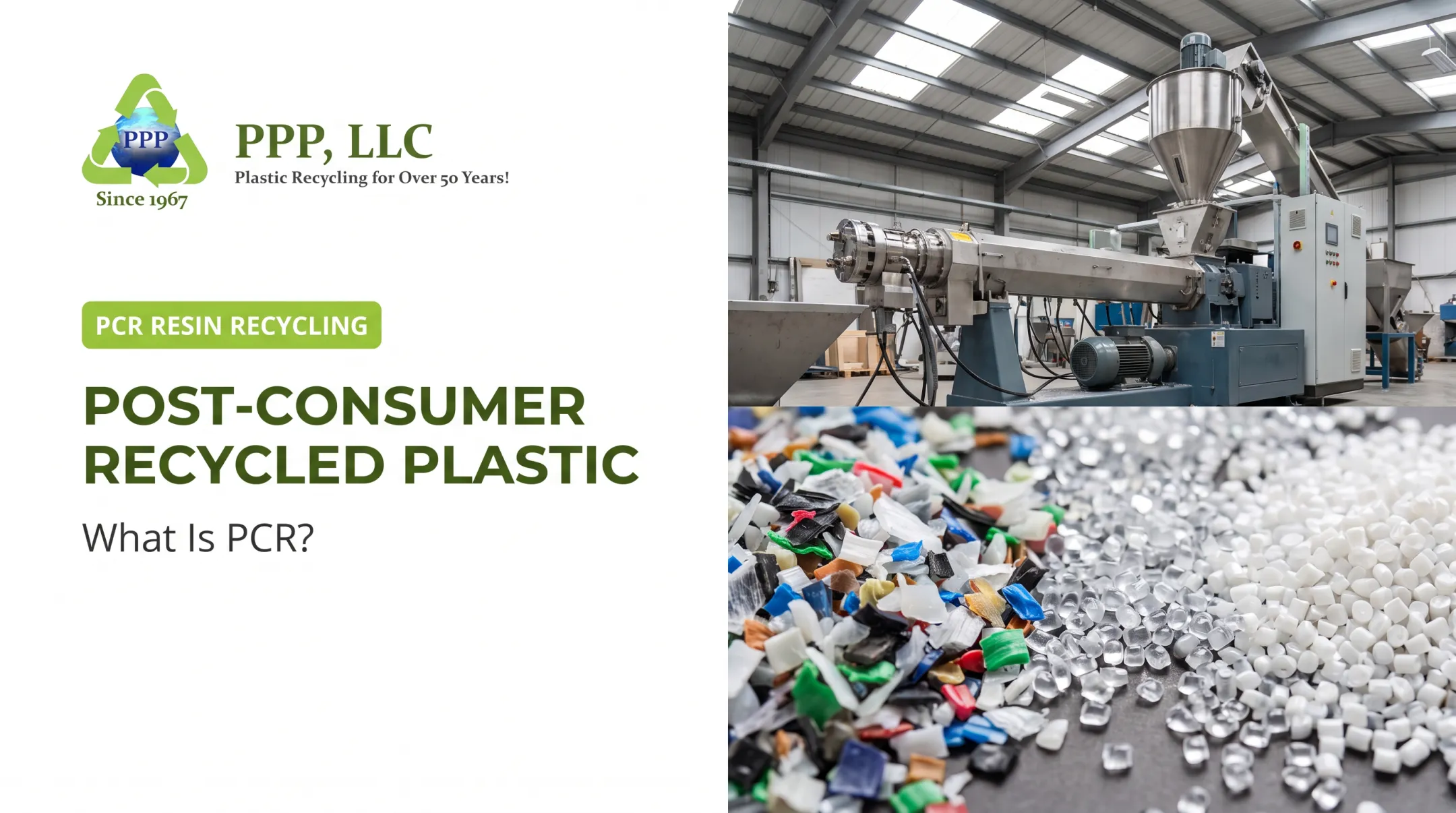
- Grinding and pelletizing – Cleaned scrap is ground, melted, and repelletized into resin ready for manufacturing. PPP, LLC has run this process for HDPE and LDPE scrap since 1967, with a focus on clean, consistent PCR pellets.
- Quality testing – Labs evaluate melt index, density, and ash content before resin ships. This step confirms the material will perform on a manufacturing line, not just look clean.
The scale of this industry is bigger than most people assume. According to the Association of Plastic Recyclers, at least 5.1 billion pounds of U.S.-generated post-consumer plastic was recovered for recycling in 2024, up nearly 115 million pounds from the prior period. That figure is feedstock recovered, not finished resin output, but it shows how much material enters the system.
Why PCR Resin Matters: Environmental and Business Benefits
PCR resin delivers measurable environmental and operational advantages for manufacturers.
Environmental impact. According to EPA plastics data, 27 million tons of plastic were landfilled in 2018, accounting for 18.5% of all landfilled municipal solid waste that year. Every ton of PCR resin used instead of virgin material is a ton that never adds to that pile.
Carbon footprint. Manufacturing with PCR resin takes a fraction of the energy required to produce virgin plastic. According to an APR-commissioned life cycle assessment, virgin HDPE requires 75.3 MJ per kilogram and generates 1.89 kg of CO2e. Recycled HDPE needs just 8.7 MJ per kilogram and produces only 0.56 kg of CO2e. APR/Franklin Associates, 2020 That cuts energy use and emissions sharply for the same material output.

Resource conservation. Each ton of PCR also displaces fossil fuel feedstock that would otherwise be extracted and refined into virgin plastic.
Regulatory compliance. California manufacturers face a growing list of recycled-content mandates:
| Regulation | Requirement |
|---|---|
| AB 478 | Proposed 10-30% PCR in thermoform containers depending on year and resin recycling rate |
| SB 270 | Historical PCR minimums for reusable plastic film bags |
| SB 54 | Plastic recycling-rate milestones of 30% (2028), 40% (2030), 65% (2032) |
Sourcing verified PCR resin is one of the most direct ways manufacturers stay ahead of these rules.
Brand and cost value. Beyond compliance, PCR lets manufacturers market a genuine zero-waste pledge to eco-conscious buyers. In many grades, it also costs less than comparable virgin resin.
Common Types of PCR Resin by Plastic
Not all PCR performs the same way. Quality, applications, and processing requirements shift depending on the source plastic.
HDPE PCR Resin
HDPE PCR typically comes from milk jugs, detergent bottles, and similar rigid household containers. Once reprocessed, it commonly ends up in:
- New bottles and containers
- Irrigation piping and agricultural components
- General retail and industrial packaging
LDPE PCR Resin
LDPE PCR is sourced primarily from plastic films, bags, and wraps. Once reprocessed, it commonly ends up in:
- Bag production and flexible film
- Food and pharmaceutical packaging
- Electronics packaging
PPP, LLC processes HDPE and LDPE scrap into PCR resin for these applications. The company also offers toll processing, converting a customer's own scrap into resin without transferring ownership of the material.
Two other streams worth knowing:
- rPET – recycled from soda, water, and beverage bottles; commonly reused in new bottles and synthetic fibers
- rPP – recycled from tubs, closures, and trays; used across varied rigid packaging applications
How to Choose Quality, Certified PCR Resin
Here's an uncomfortable truth: virgin or post-industrial plastic sometimes gets fraudulently sold as PCR. Since recycled and virgin pellets can look identical, buyers have no way to visually confirm what they're actually purchasing. That undermines sustainability commitments and puts brand credibility at risk.
Third-party certification solves this problem. Programs like APR's PCR Certification require full chain-of-custody verification—every step from collection to final pellet is documented and audited. Mass-balance or "book and claim" accounting isn't accepted; the material itself must be traceable.
When vetting a supplier, look for:
- Active PCR certification with documented re-certification cycles
- APR membership, showing active engagement with current recycling standards
- Transparency about source materials and processing methods
PPP, LLC holds PCR certification, re-verified annually through quarterly and annual reviews, and maintains active membership in the Association of Plastic Recyclers. That repeated, documented verification is what helps manufacturers keep mislabeled material out of their supply chain.

Frequently Asked Questions
What does PCR stand for in plastics?
PCR stands for Post-Consumer Recycled resin. It is plastic that finished its intended consumer use, then was collected and reprocessed into new material for manufacturing.
What does PCR mean in sustainability?
In sustainability, PCR keeps used plastic in circulation. It diverts waste from landfills and cuts manufacturers' reliance on virgin plastic.
Is PCR plastic better?
PCR is often better for environmental and regulatory goals. Performance versus virgin plastic still depends on resin quality, certification, and fit for the application.
What is the difference between PCR and PIR resin?
PCR comes from plastic that a consumer actually used and discarded. PIR comes from manufacturing scrap, such as trim or rejects, that never reached an end user.
What types of plastic can be turned into PCR resin?
The most common types are HDPE (milk jugs, detergent bottles), LDPE (films, bags), PET (beverage bottles), and PP (tubs, closures, trays).
Is PCR resin safe for food packaging?
PCR can be used in food-contact applications only when specifically certified safe for that purpose. The FDA reviews each proposed use case by case and issues Letters of No Objection when appropriate.