
Only 9% of global plastic waste was actually recycled in 2019, according to the OECD's Global Plastics Outlook. That gap between what could be recycled and what actually gets a second life is exactly why the pathway you choose matters. This article breaks down both models, where each one fits, and how manufacturers working with HDPE and LDPE can move closer to a true closed loop.
Key Takeaways
- Closed-loop returns material to the same or similar product with little quality loss; open-loop turns it into something different, usually lower-grade
- Aluminum and glass set the closed-loop standard; most plastics, paper, and textiles stay open-loop
- Pick the path by material type, regulatory pressure, and whether circularity or broad recovery matters more
- PCR-certified processors like PPP, LLC help HDPE and LDPE makers move closer to closed-loop results with spec-compliant resin
Closed-Loop vs. Open-Loop Recycling: Quick Comparison
Here's how closed-loop and open-loop recycling compare on the factors that matter most to manufacturers.
| Factor | Closed-Loop | Open-Loop |
|---|---|---|
| Cost | Higher upfront sorting/collection cost; more stable long-term pricing | Lower mixed-stream processing cost; more variable material quality |
| Material Quality Retention | Little to no degradation across multiple cycles | Progressive degradation (downcycling) with each pass |
| Common Materials | Aluminum, glass, batteries, electronics, select HDPE/LDPE streams | PET, paper/cardboard, textiles, mixed plastics |
| Regulatory Fit | Strong fit for recycled-content claims and PCR mandates | Counts toward diversion goals; weaker for "recycled content" labeling |
| End-of-Life Outcome | Reusable indefinitely in theory | Eventually reaches a non-recyclable end point or landfill |
The clearest example: an HDPE milk bottle recycled back into a new milk bottle is closed-loop, while that same bottle turned into plastic pipe is open-loop. Same resin, two very different outcomes.
What Is Closed-Loop Recycling?
Closed-loop recycling converts a used product back into the same or a nearly identical product, without meaningful loss of quality. For manufacturers, that consistency is the whole appeal. It means:
- Reduced dependency on virgin resin purchases
- Predictable material specs for size, shape, color, and performance
- Lower carbon footprint per unit produced
There are two flavors worth knowing. Fully closed-loop means a single manufacturer's own scrap comes back as resin for its same product line. Industry-wide closed-loop means material stays within a material category, such as HDPE packaging generally, even if it doesn't return to the exact same manufacturer.
How PPP, LLC Approaches Closed-Loop Processing
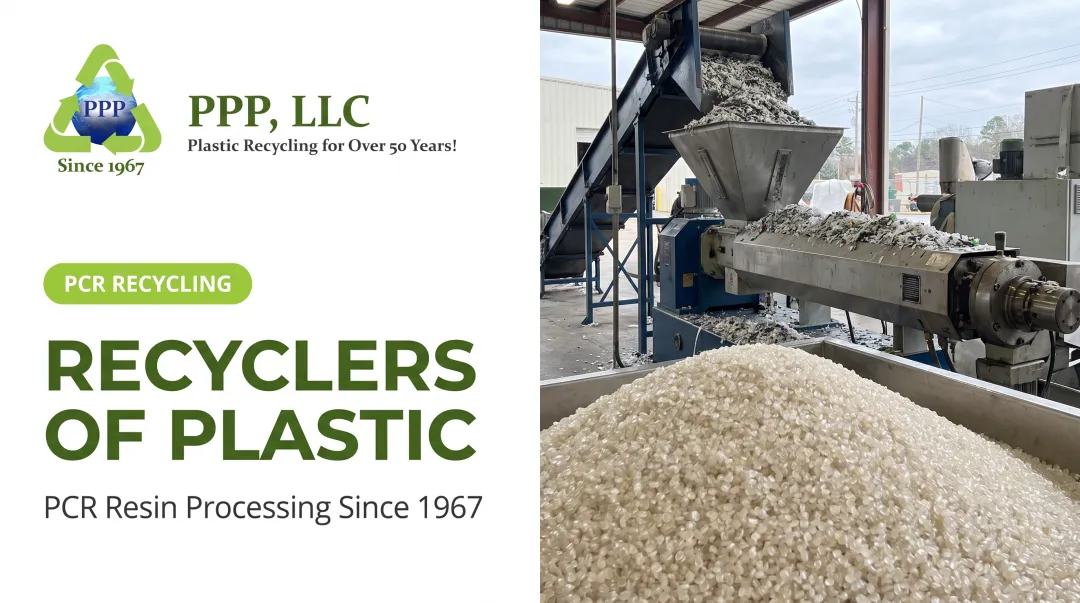
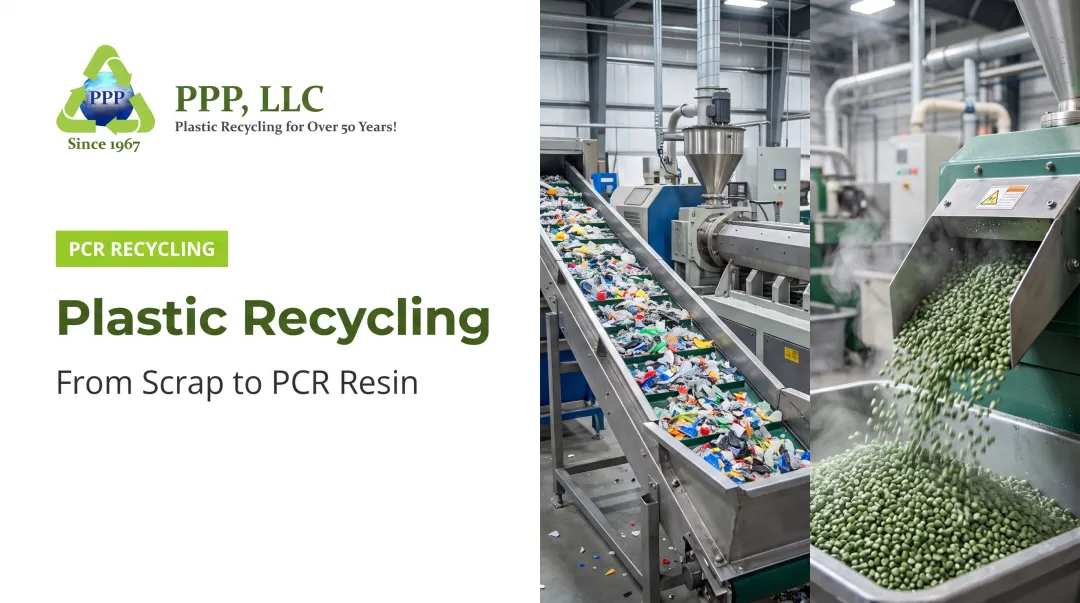
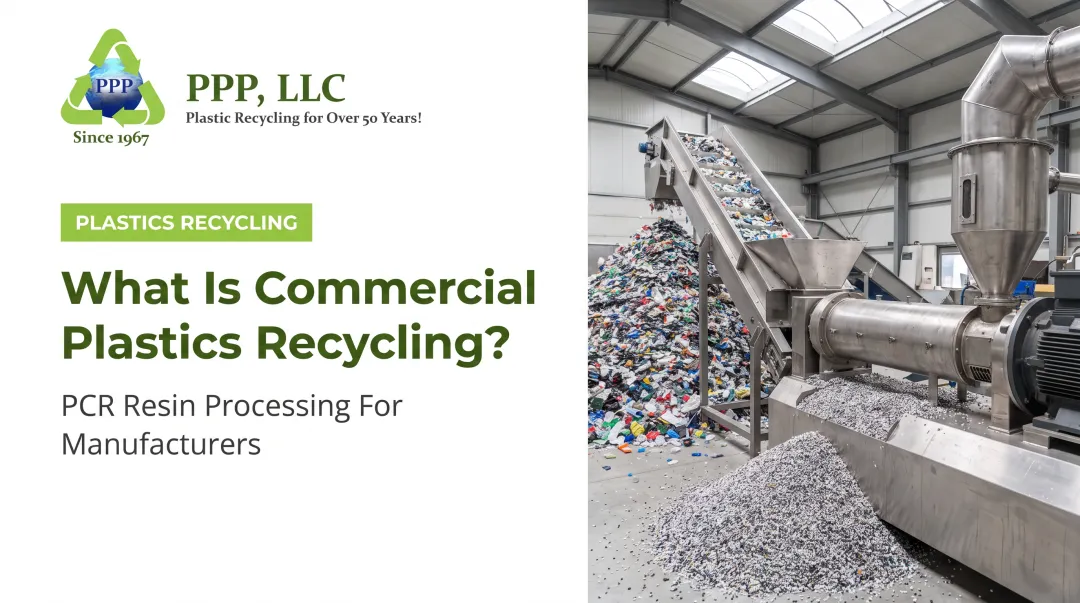
PPP, LLC's process moves post-consumer HDPE and LDPE scrap through sourcing and sorting, grinding or shredding, cleaning, melting, extrusion, and pelletizing. Items like detergent bottles, milk jugs, and plastic film packaging get reduced to granules, washed, then reprocessed into a continuous resin stream and pelletized for reuse.

Consistency is backed by PCR certification with quarterly reviews and annual re-certification, plus APR membership. PPP also offers toll processing, where manufacturers, converters, and recyclers retain ownership of their scrap while PPP handles the shredding, washing, extrusion, and pelletizing. It's a practical route toward tighter, more manufacturer-specific material control.
Where Closed-Loop Recycling Dominates
Closed-loop shows up most in bottle-to-bottle and can-to-can remanufacturing loops. Aluminum beverage cans are the textbook case: nearly 97% of recycled aluminum cans become new cans, with an average recycled content of 71% and a full turnaround from bin to store shelf in under 60 days, per the Aluminum Association.
Glass bottles follow a similar path. HDPE bottles and bags are increasingly joining this category, especially in states enforcing strict PCR mandates.
What Is Open-Loop Recycling?
Open-loop recycling converts a used product into something different, and usually lower-grade. It's the right fit for materials that can't be restored to their original quality or application. Compared with closed-loop systems, open-loop processes typically offer:
- Broader material acceptance across mixed streams
- Simpler sorting requirements in many cases
- Diversion of materials that would otherwise never get recycled
There's also a spectrum here. Single-cycle downcycling takes material through one transformation, like PET turned into fiber, with no return trip. Multi-cycle open-loop use allows several passes, though quality still declines with each one.
Common Open-Loop Applications
Open-loop recycling is common when mixed plastics or fibrous materials become secondary feedstock for unrelated industries:
- PET bottles reprocessed into carpet fiber or fleece
- Plastic grocery bags converted into composite decking
- Cardboard reprocessed into paperboard products
- HDPE bottles reprocessed into plastic pipe, which can stay in service for decades
Paper and cardboard illustrate the limits of open-loop recycling well. Recycled paper fibers can typically be reused 5 to 7 times before they become too short and weak for further processing, according to the American Forest & Paper Association. That's a hard ceiling closed-loop materials like aluminum simply don't have.
Closed-Loop vs. Open-Loop: Which Is Better for Your Business?
There's no universal answer here. It depends on a handful of concrete factors:
- Material type — Can the resin realistically return to its original application without failing performance or food-contact requirements?
- Regulatory exposure — Do you need documented post-consumer content for rules like the RPPC Law's 25% PCR threshold, or recyclability claims under SB 343?
- Cost tolerance — Can you absorb higher sorting and collection costs for pricing stability, or do you need the lower processing cost of mixed streams?
- Sustainability marketing goals — Recyclability claims under SB 343 require the material type and form to be genuinely collected and sorted at scale statewide, not just theoretically recyclable.

Closed-loop supply chains usually make that recycled-content paperwork cleaner. SB 54 still matters either way: it requires 65% of plastic covered material to be recycled by 2032, per the bill text, but it tests a "responsible end market" standard rather than giving closed-loop extra credit on its own.
Choose closed-loop when you're working with HDPE, LDPE, aluminum, or glass and want supply chain control plus a strong recycled-content story. Choose open-loop when material degradation is unavoidable or your collection stream is too mixed to sort economically.
California's regulatory picture has also shifted. AB 478 was proposed in 2021 but never passed, and SB 270's original PCR requirements for plastic bags were repealed and replaced by paper-bag PCR rules phasing in through 2028. SB 54 is the packaging law manufacturers should track most closely today.
Real-World Example: Closing the Loop on HDPE/LDPE Packaging
Picture a bag or flexible-packaging manufacturer facing two pressures at once: virgin HDPE resin prices climbing, and California's recycled-content standards pushing them toward documented PCR percentages. Sourcing recycled material isn't the hard part. Sourcing consistent, spec-compliant recycled material at scale is.
A single PCR-certified, APR-member processor can close that gap. Instead of piecing together mixed-quality PCR from multiple sub-scale suppliers, manufacturers work with one partner for grinding, pelletizing, and resin supply—cutting batch-to-batch swings in color, melt flow, and performance.
For manufacturers targeting the RPPC Law's 25% post-consumer content threshold or AB 478's proposed 20% PCR benchmark for thermoformed containers, working with an established processor means:
- One point of contact for PCR-certified resin instead of multiple unverified suppliers
- Consistent pelletized resin sized and colored to match existing production specs
- A processing partner with over 50 years of HDPE and LDPE-specific experience
PPP, LLC has done this work since 1967. The company maintains PCR certification through quarterly and annual reviews and offers both direct resin supply and toll processing for manufacturers who want to keep ownership of their scrap.

Ready to explore closed-loop HDPE/LDPE recycling for your supply chain? Contact PPP, LLC to discuss resin specifications, toll processing, and volume-based quotes tailored to your production line.
Conclusion
Closed-loop recycling delivers stronger material integrity and better regulatory alignment, but it only works for materials that can realistically return to their original form. Open-loop recycling remains genuinely valuable for materials that can't be endlessly reprocessed, keeping them out of landfills even if they can't come full circle. The right move is matching the pathway to your specific material and compliance obligations, not defaulting to one model across the board.
For manufacturers running HDPE or LDPE packaging lines in California, that often means partnering with a PCR-certified processor that can deliver consistent, spec-compliant resin batch after batch. PPP, LLC has spent over five decades doing exactly that—if you need PCR resin or toll processing support, reach out to discuss your material and compliance requirements.
Frequently Asked Questions
What are the 5 R's of closed-loop recycling?
Refuse, Reduce, Reuse, Repurpose, and Recycle describe a hierarchy for keeping material value intact within a closed system. Each step prioritizes retaining a product's original form and function before it ever reaches recycling.
What are examples of a closed-loop recycling system?
Aluminum can-to-can recycling and glass bottle recycling are the most established examples. PCR-certified HDPE and LDPE reprocessing, like PPP, LLC's grinding-to-pelletizing process, also fits this model.
What is the main difference between closed-loop and open-loop recycling?
Closed-loop recycling retains material quality well enough to reuse it in the same product category. Open-loop recycling typically results in a different, lower-grade product due to unavoidable quality loss during processing.
Is plastic recycling considered open-loop or closed-loop?
Most plastic recycling is open-loop, or downcycled, into products like fiber or decking. However, PCR-certified processors can achieve closed-loop outcomes for select resins, particularly HDPE and LDPE bottle-to-bottle applications.
Why is closed-loop recycling important for manufacturers?
It supports regulatory compliance under laws like California's SB 54 and the RPPC Law. It also stabilizes long-term material costs and strengthens sustainability claims with verifiable recycled content.
Can HDPE and LDPE plastics be recycled in a closed loop?
Yes. With proper sorting and PCR certification, HDPE and LDPE can be reprocessed into resin suitable for similar packaging applications, as demonstrated by processors like PPP, LLC.