
That question gets more complicated every year. Many manufacturers struggle with contamination issues, inconsistent bale quality, and a shifting patchwork of California recycling laws that keep changing what "recyclable" actually means. Getting it wrong can mean rejected loads, wasted labor, or noncompliant recycled-content claims.
This article breaks down what plastic recyclers, also called reclaimers, actually do, walks through the process from curbside bin to finished resin pellet, and explains how to vet a certified recycling partner before you sign a contract.
Key Takeaways
- Reclaimers, not haulers or MRFs, grind, wash, and pelletize sorted bales into usable resin
- Contamination and material type determine what actually gets recycled; PVC and polystyrene foam rarely make the cut
- PCR certification and APR membership signal a recycler meets real quality and compliance benchmarks
- Scrap value swings hard with resin type and purity, sometimes fourfold within a single year
What Is a Plastic Recycler?
Not every company touching your plastic scrap does the same job. A hauler picks it up. A material recovery facility (MRF) sorts it. A recycler, formally called a reclaimer, is the one that actually transforms it into raw material manufacturers can reuse.
| Entity | What it does |
|---|---|
| Hauler | Collects recyclables and delivers them to processors or MRFs |
| MRF | Sorts and bales material by resin type, size, and shape |
| Reclaimer | Washes, separates, filters, and converts plastic into flake or pellets |
This is the reverse supply chain in miniature: bin to bale to pellet. Curbside bins and drop-off centers feed an MRF. The MRF compresses sorted material into 1,000- to 1,500-pound bales. A reclaimer buys those bales, breaks them down, and rebuilds them into resin manufacturers can run through their own equipment.
Mechanical vs. chemical recycling. Most reclaimers, including PPP, LLC, rely on mechanical recycling: grinding, washing, and melting plastic without altering its chemical structure. The EPA considers this the predominant method in the plastics industry today.
Chemical recycling breaks plastic down closer to the feedstock or monomer level. It is still emerging and far less common for standard resins like HDPE and LDPE.
Mechanical processing stays the standard because it is faster, cheaper, and needs less specialized infrastructure. PPP has processed HDPE and LDPE this way since 1967, grinding, washing, extruding, and pelletizing scrap into resin.
The Plastic Recycling Process: From Curbside Bin to New Resin
Here's what happens between the moment plastic leaves a bin and the moment it becomes new packaging.
Step 1: Collection & Hauling
Curbside bins, community drop-off centers, and commercial haulers form the first link. Trucks gather bottles, bags, and packaging film and deliver it to an MRF. Businesses generating scrap directly—trim, rejects, or post-industrial film—often skip curbside collection and send material straight to a hauler or reclaimer.
Step 2: Sorting at the Material Recovery Facility (MRF)
At the MRF, workers and machines pull obvious contaminants first: garden hoses, clothing, and electronics.
Optical sensors then sort by resin type, identifying PET, HDPE, and PP because light bounces differently off each material. Ballistic separators and screens sort by size and shape. The result is compressed bales of a single resin, ready to sell to reclaimers.
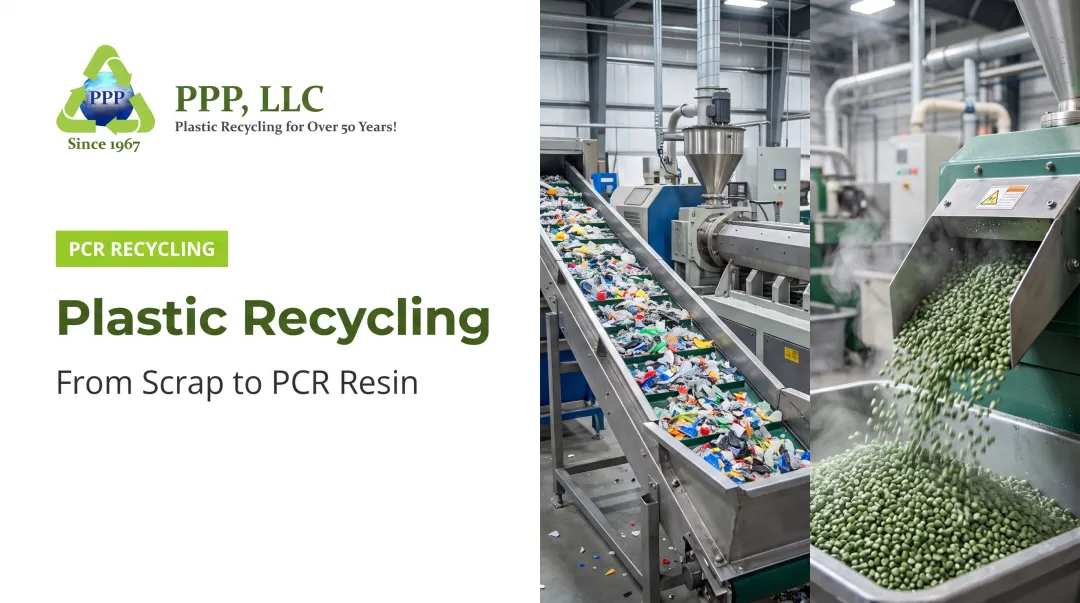
Step 3: Reclaimer Processing (Grinding, Washing, Pelletizing)
Reclaimers handle the core conversion. A reclaimer typically:
- Cuts open bales and re-sorts for contaminants the MRF missed
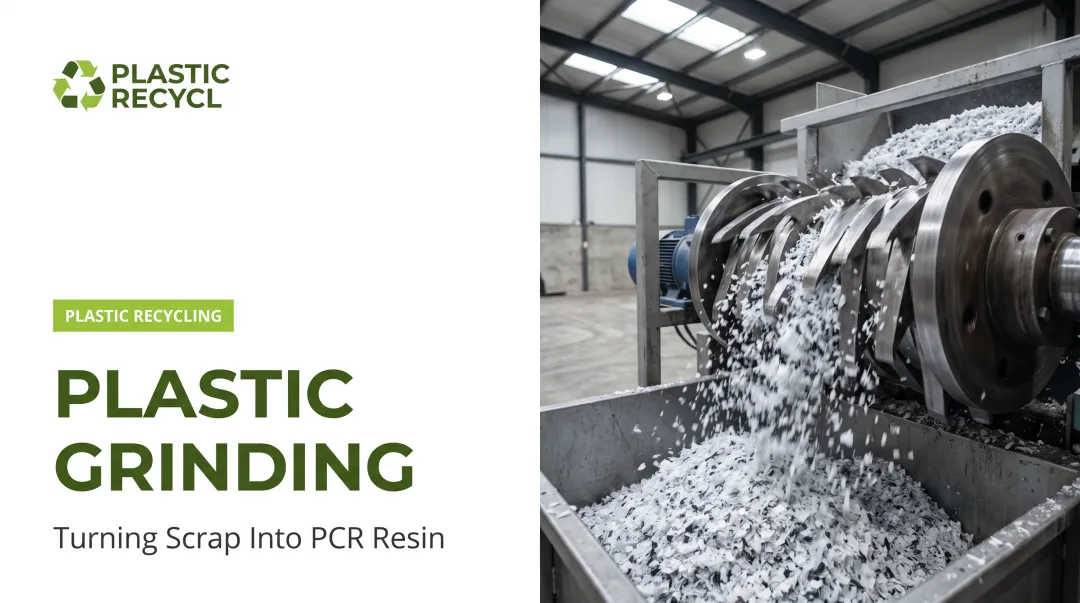
- Grinds material into small flake
- Washes and rinses flake in hot water and detergent to strip labels and adhesives
- Uses float-sink tanks to separate plastic types by density
- Dries, melts, and filters the flake through an extruder
- Pelletizes the molten stream into uniform resin pellets
Food-grade recycled resin requires extra scrutiny. Producers seeking an FDA Letter of No Objection typically add decontamination steps such as heat, vacuum, and low-oxygen processing, though FDA review is case-by-case, not one industry-wide formula.
Step 4: Back to Manufacturers
Finished pellets, now classified as post-consumer recycled (PCR) resin, go back to manufacturers, who run them directly into new bottles, bags, and packaging.

The energy case is substantial. According to APR's life cycle comparison of recycled versus virgin resin, 100% recycled HDPE uses roughly 12% of the energy required to produce virgin HDPE pellet-for-pellet, with a carbon footprint around 30% of virgin resin's. That gap is large enough to reshape the economics of an entire manufacturing line.
Types of Plastics Recyclers Process (and What Can't Be Recycled)
Recyclers accept some resins far more readily than others. Three dominate the standard recycling stream:
- PET (#1) — bottles and clear containers, widely accepted and easy to reprocess
- HDPE (#2) — milk jugs, detergent bottles, and rigid containers
- PP (#5) — yogurt cups, bottle caps, and some rigid packaging
HDPE and LDPE (#4) get special attention at facilities like PPP because they behave so differently on a processing line. HDPE is rigid and holds its shape through grinding and washing.
LDPE and LLDPE mostly show up as flexible film—grocery bags, stretch wrap, irrigation tubing. Film needs different equipment than rigid containers, so those lines typically run separate from HDPE even within the same facility.
What Can't Be Recycled Economically
Some materials show up in the recycling stream but rarely become finished resin:
- PVC (#3) — sinks during float-sink separation and, even in small amounts, can contaminate an entire batch of other resin
- Polystyrene/styrofoam (#6) — lightweight, easily contaminated, and lacking the processing infrastructure built up around PET or HDPE
- Multilayer or composite films — mixing polyethylene with PET, foil, or paper creates material a reclaimer can't cleanly separate
- Heavily contaminated or mixed-color loads — food residue, adhesive, or mixed pigments drive down bale value
If you're generating scrap and unsure whether it's recyclable, that's usually the first question a reclaimer asks before quoting a price.
How to Choose a Certified Plastic Recycling Partner
A few credentials separate a serious recycling operation from a middleman:
- PCR certification — look for a recycler undergoing quarterly and annual reviews to keep its Post-Consumer Recycled certification current. The annual review isn't a formality; it can result in denial if standards slip.
- APR membership — Association of Plastic Recyclers membership signals the recycler stays current on sorting standards, bale specs, and design guidance the industry actually uses.
- Regulatory compliance — California manufacturers especially need a partner tracking SB 54 (65% recycling and 25% source-reduction by 2032), the RPPC Law's 25% post-consumer content rule, and SB 343's truth-in-labeling requirements.
- Full-service processing — a facility handling grinding, extrusion, and pelletizing under one roof cuts out the handoffs that come with juggling multiple vendors.
- Spec matching — manufacturers need resin that's drop-in ready: consistent size, shape, color, finish, and performance, not a guessing game every time a new batch arrives.
AB 478's proposed thermoform recycled-content targets never became law, and SB 270's old 40% PCR rule for reusable bags has been repealed. A partner that tracks proposed bills alongside enacted rules won't leave you exposed when requirements shift.
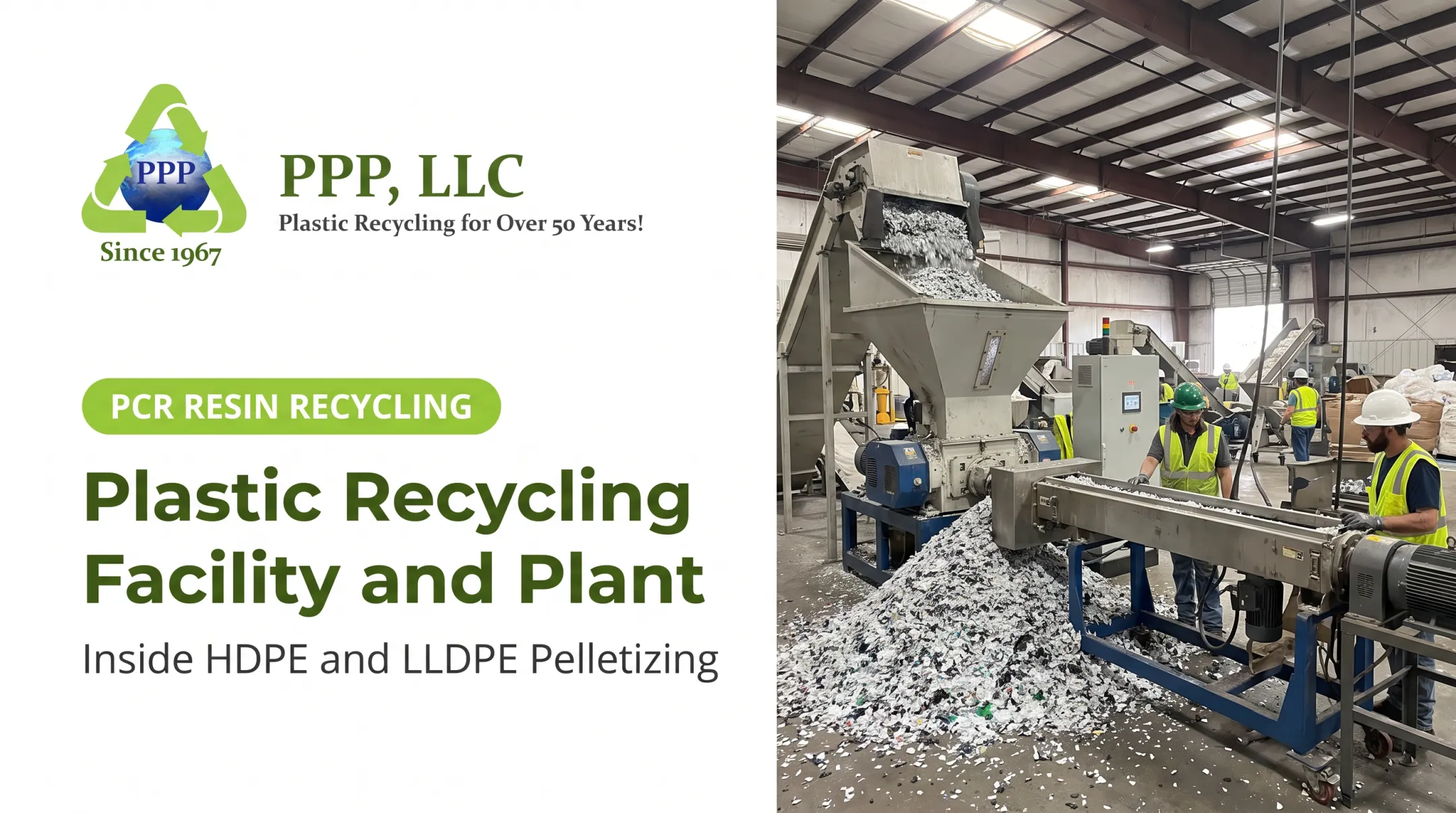
Those criteria are easiest to judge against a partner with a clear track record. PPP, LLC has processed HDPE and LDPE scrap since 1967, holds PCR certification with annual re-certification, and is an APR member. It runs grinding, extrusion, and pelletizing in-house and offers toll processing for businesses that want to keep ownership of their scrap while converting it into usable resin.
PPP serves manufacturers across California, Arizona, and nationwide, matching resin specs to what each line needs. Businesses can request a quote for bulk scrap purchasing or toll processing.
The Economic & Environmental Value of Plastic Recycling
Is scrap plastic worth money? Yes, but the price swings hard. Clean, single-resin material commands a premium; mixed or contaminated loads often don't.
In July 2023, natural HDPE bales averaged 40.94 cents per pound compared to just 9.31 cents for color HDPE—more than a fourfold gap driven by purity and color separation. Grade A film brought roughly double what Grade B film fetched over the same period.

For manufacturers, switching to PCR resin instead of virgin plastic brings advantages:
- Lower raw material costs when recycled resin trades below virgin pricing
- Reduced need for in-house recycling infrastructure when using toll processing
- A stronger sustainability story to market, including zero-waste pledges backed by verifiable PCR content
The environmental case is just as direct. Roughly 91% of plastic produced globally is never recycled, and much of what is landfilled can take close to a century to break down.
Every pound of scrap sent to a reclaimer is a pound that does not require new virgin material to be extracted, refined, and shipped. Those avoided steps cut energy use and emissions across the supply chain.
Frequently Asked Questions
Is scrap plastic worth money?
Yes, value depends on resin type, cleanliness, and current market demand. Clean HDPE, LDPE, and PET typically sell for more than mixed or contaminated loads, sometimes four times as much.
Where can I get rid of plastic waste?
Curbside recycling programs and community drop-off centers handle household volumes. For bulk or commercial plastic scrap, businesses can partner directly with a full-service recycler like PPP, LLC through its contact page.
What kind of plastic cannot be recycled?
PVC, polystyrene/styrofoam, multilayer or composite films, and heavily contaminated plastics are typically excluded from standard recycling streams. Contamination risk and limited processing infrastructure keep them out of most programs.
What certifications should I look for in a plastic recycler?
Look for PCR (Post-Consumer Recycled) certification with regular re-certification review, plus membership in the Association of Plastic Recyclers (APR). Together, they signal quality assurance and up-to-date industry standards.
What is the difference between virgin and recycled (PCR) plastic resin?
Virgin resin comes from new petroleum-based feedstock, while PCR resin is reprocessed from post-consumer plastic waste. PCR resin can offer comparable performance with a smaller environmental footprint.
How is HDPE different from LDPE in recycling?
HDPE is rigid and used in bottles and containers, making it easier to grind and wash on standard lines. LDPE is flexible, mostly appearing as bags and film, and needs separate equipment built for that format.