
Here's the problem: many contractors and manufacturers still treat pipe scrap as trash. They landfill offcuts, decommissioned sections, and installation waste without realizing HDPE is one of the most recyclable plastics available.
This article breaks down why HDPE pipe recycles so well, the real benefits for your bottom line and your compliance obligations, and the best practices that turn scrap into usable resin instead of landfill volume.
Key Takeaways
- HDPE (resin code #2) reprocesses into new products with little performance loss, making pipe scrap a high-value feedstock
- Recycling pipe scrap cuts landfill waste, lowers raw material costs, and supports state recycled-content mandates
- Clean, well-sorted scrap produces higher-value recycled resin than mixed or contaminated loads
- Partnering with a PCR-certified, APR-member recycler protects your compliance and resin quality
Why HDPE Pipe Is Highly Recyclable
HDPE carries the #2 resin identification code, but that symbol is a sorting aid, not a recyclability guarantee. What actually makes HDPE valuable as scrap is its thermoplastic nature: it can be melted, filtered, and reformed into pellets without losing its basic chemical structure.
That said, don't take "recyclable" to mean "infinitely interchangeable." Lab work puts clear limits on that claim:
- A 2015 simulation ran HDPE through 100 consecutive extrusion cycles, yet pipe-grade resin does not keep full mechanical strength across all of them
- Repeated reprocessing changes crystallinity (2021), so heat and mechanical history matter
- For pressure pipe, a 2020 study found feedstock source and quality strongly shape performance
The takeaway: HDPE is genuinely recyclable, but grade, contamination, and processing history all determine what the recycled resin can become.

Common Sources of HDPE Pipe Scrap
Pipe scrap accumulates from multiple points in the infrastructure lifecycle:
- Water and sewage system replacements or repairs
- Irrigation and agricultural piping removed at end of service
- Gas distribution line installations and decommissioning
- Industrial fluid transport systems
- Construction offcuts and installation waste
Key Benefits of HDPE Pipe Recycling
Recycling HDPE pipe cuts energy use, material cost, and landfill volume while helping manufacturers meet rising recycled-content rules. The gains show up in six places:
- Saves up to 70% of the energy versus virgin resin, per the Association of Plastic Recyclers' 2018 life-cycle assessment (not pipe-specific, but a clear scale marker)
- Lowers resin cost versus virgin once avoided extraction, refining, and disposal fees are included—especially at volume
- Feeds real demand: the Plastic Pipe Institute reports roughly 600 million pounds of recycled PE already goes into HDPE drainage pipe each year, with room to pass 1 billion pounds
- Prepares supply chains for California SB54, AB478, and SB270, plus similar producer-responsibility laws moving into other states
- Gives buyers verifiable proof of scrap recovery instead of a generic sustainability claim
- Keeps pipe scrap in circulation as reprocessed pellets for new manufactured goods rather than landfill
The HDPE Pipe Recycling Process Step-by-Step
Turning pipe scrap into usable resin follows a consistent sequence:
- Collection and sorting. Separate HDPE from PVC, PP, and other plastics using resin codes and visual inspection. Keep pipe lots separate by grade and service history where possible.
- Cleaning. Remove soil, adhesives, and residue that built up during years underground or in industrial service.
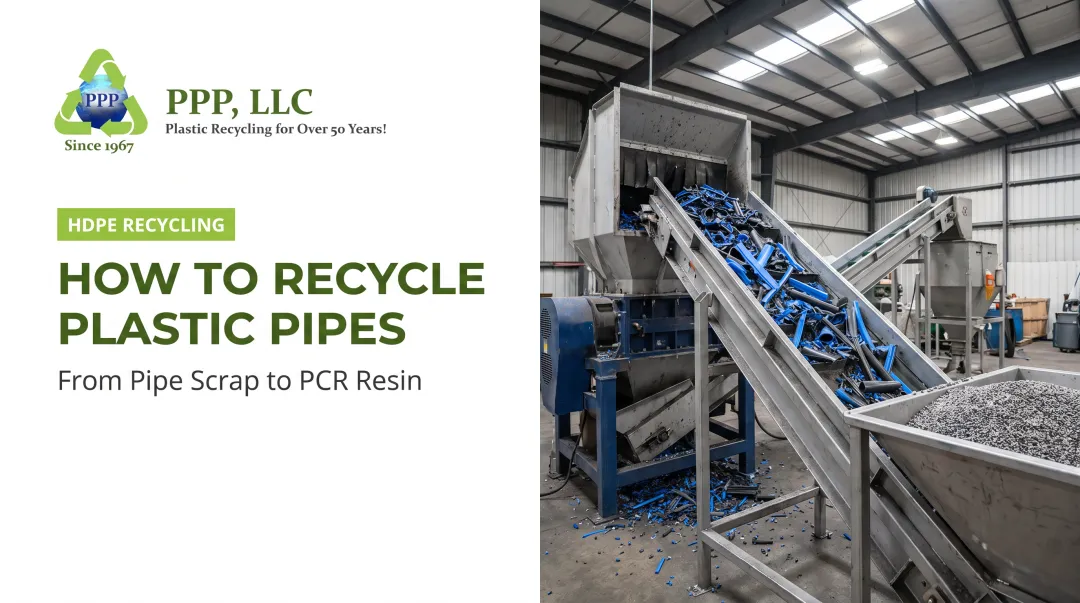
- Shredding and granulating. Reduce pipe sections into manageable chips and flakes.
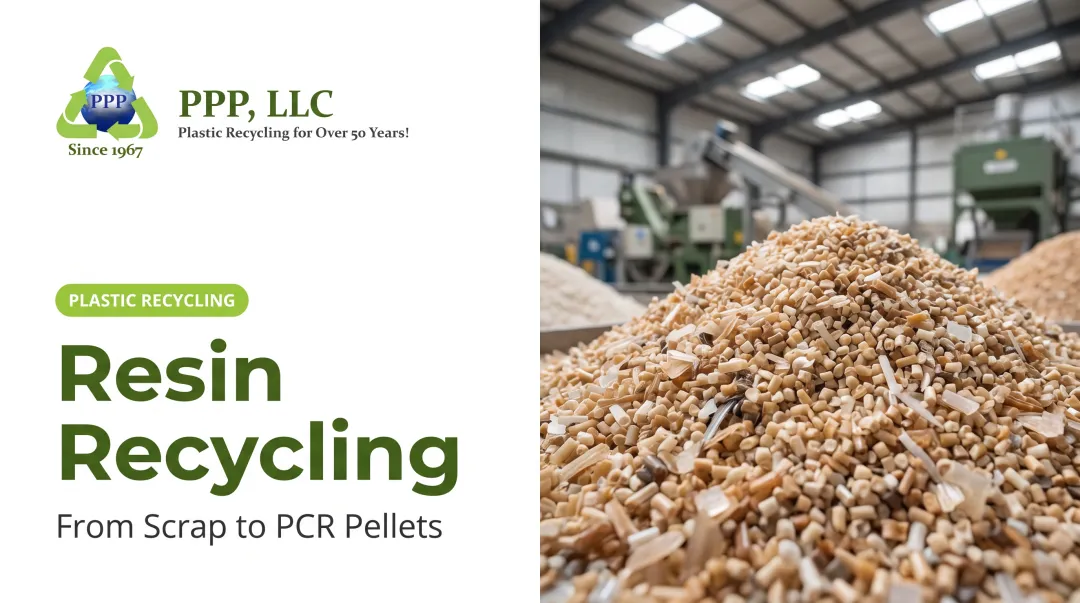
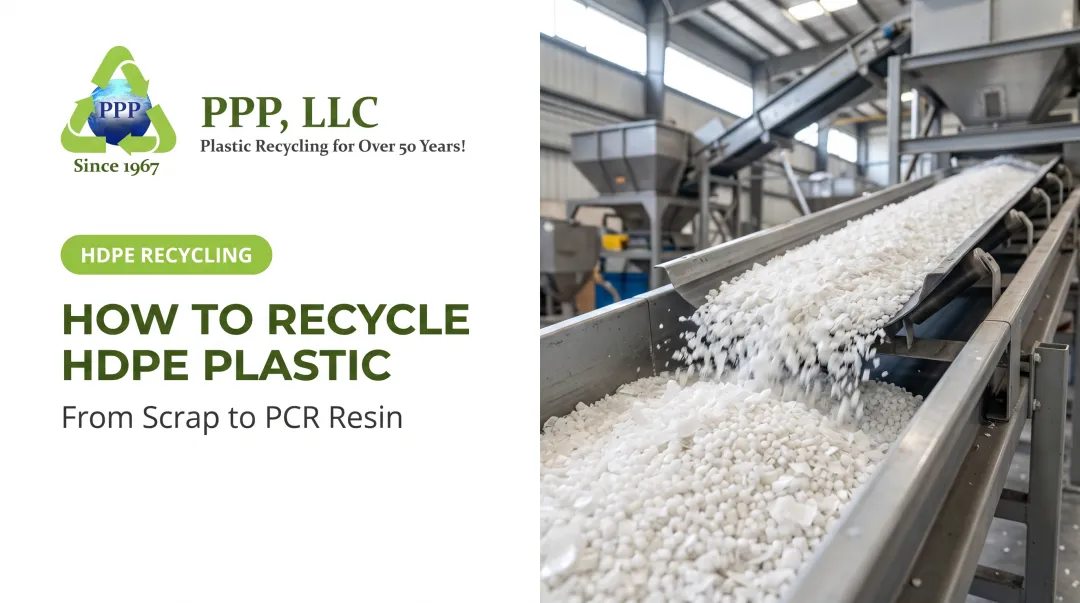
- Melting and pelletizing. Melt the flake, filter it, and extrude it into PCR pellets ready for manufacturing.
- Quality release. Test moisture, contamination, density, and melt-flow behavior before releasing pellets for a specific end use.

End products typically include:
- Non-pressure pipe
- Conduit
- Manufactured goods matched to the recycled resin's properties
Partnering with a full-service recycler streamlines the process. PPP, LLC has specialized in HDPE and LDPE grinding, extrusion, and pelletizing since 1967. The company offers scrap purchasing and toll processing for businesses that want to retain ownership of their material through reprocessing.

Best Practices for Recycling HDPE Pipe in the US
Quality recycled resin starts with solid habits at your facility:
- Segregate by resin type on-site. Mixing HDPE with PVC or PP degrades the value of the entire batch.
- Strip non-HDPE components first. Remove fittings, metal bands, and labels before shipping scrap out.
- Work with certified recyclers. Prefer APR members and PCR-certified facilities over self-described recyclers.
- Store scrap under cover. Weather exposure and haphazard storage can degrade material value before it ever reaches a processor.
Choosing the Right Recycling Partner
Look for two credentials specifically: PCR certification and APR membership. PCR certification, as administered through the Association of Plastic Recyclers, requires independent chain-of-custody verification and quarterly plus annual review. That's a meaningfully higher bar than a company simply calling itself a "recycler."
PPP, LLC holds both credentials, with certification maintained through ongoing quarterly and annual re-certification reviews — the kind of consistent third-party check that gives manufacturers confidence in what they're buying.
Navigating US Recycling Regulations & Compliance
California continues to lead on plastic recycling law, and its rules increasingly influence expectations nationwide:
| Law | What it covers |
|---|---|
| AB 478 | Post-consumer recycled content requirements for certain thermoform containers |
| SB 270 | Historically covered single-use carryout bags (now superseded by SB 1053) |
| SB 54 | Producer responsibility for packaging and single-use food service ware; PCR certification required for source-reduction credit as of January 1, 2027 |
| SB 343 | Restricts recyclability claims and chasing-arrows symbols unless material is actually collected and processed |

Not all of these laws apply directly to industrial HDPE pipe. Some target packaging specifically.
If your business ships product into California or uses recycled content claims in marketing, verify which rules apply to your material stream before making public claims.
Businesses generating or using recycled HDPE content should ask their recycling partner for compliance documentation up front — not after a regulator asks for it. Working with a compliant, certified recycler like PPP, LLC helps manufacturers stay aligned with evolving state requirements.
Frequently Asked Questions
How can HDPE pipe be recycled?
HDPE pipe scrap is collected, sorted by resin type, and cleaned of contaminants. It is then shredded into flake, melted, and pelletized into new PCR resin ready for manufacturing.
Is HDPE pipe hazardous waste?
HDPE pipe itself is generally non-hazardous. However, pipe that transported certain industrial fluids should be assessed for contamination before it's sent for recycling.
Can I put HDPE pipe in my recycling bin?
No. Curbside bins aren't built for rigid pipe sections. Send pipe scrap to a specialized recycler or facility equipped to handle rigid HDPE material.
What products are made from recycled HDPE pipe?
Common outputs include non-pressure pipe, conduit, and other industrial or construction products, depending on the grade and quality of the recycled resin.
Is recycling HDPE pipe cost-effective for businesses?
Recycled resin typically costs less than virgin HDPE, and recycling can offset disposal fees you'd otherwise pay when landfilling that scrap. That combination often creates a positive return.
How should I prepare HDPE pipe scrap for recycling?
Remove fittings, metal bands, and labels, clean off soil or adhesive buildup, and sort scrap by resin type before sending it to a recycler.