
Here's the pain point for businesses: many companies generating LDPE scrap don't realize it's recyclable, or they don't know how to find a partner equipped to process it. The result is landfill fees piling up and revenue-generating scrap getting tossed instead of sold.
This article breaks down what LDPE actually is, why recycling it matters for your bottom line and the planet, how the recycling process works step by step, and what to look for in a qualified recycling partner.
Key Takeaways
- LDPE bags, sacks, and wraps had a 10% recycling rate in 2018 (EPA)—far below PET and HDPE bottles
- Recycling LDPE cuts landfill waste, reduces marine wildlife hazards, and lowers demand for virgin resin
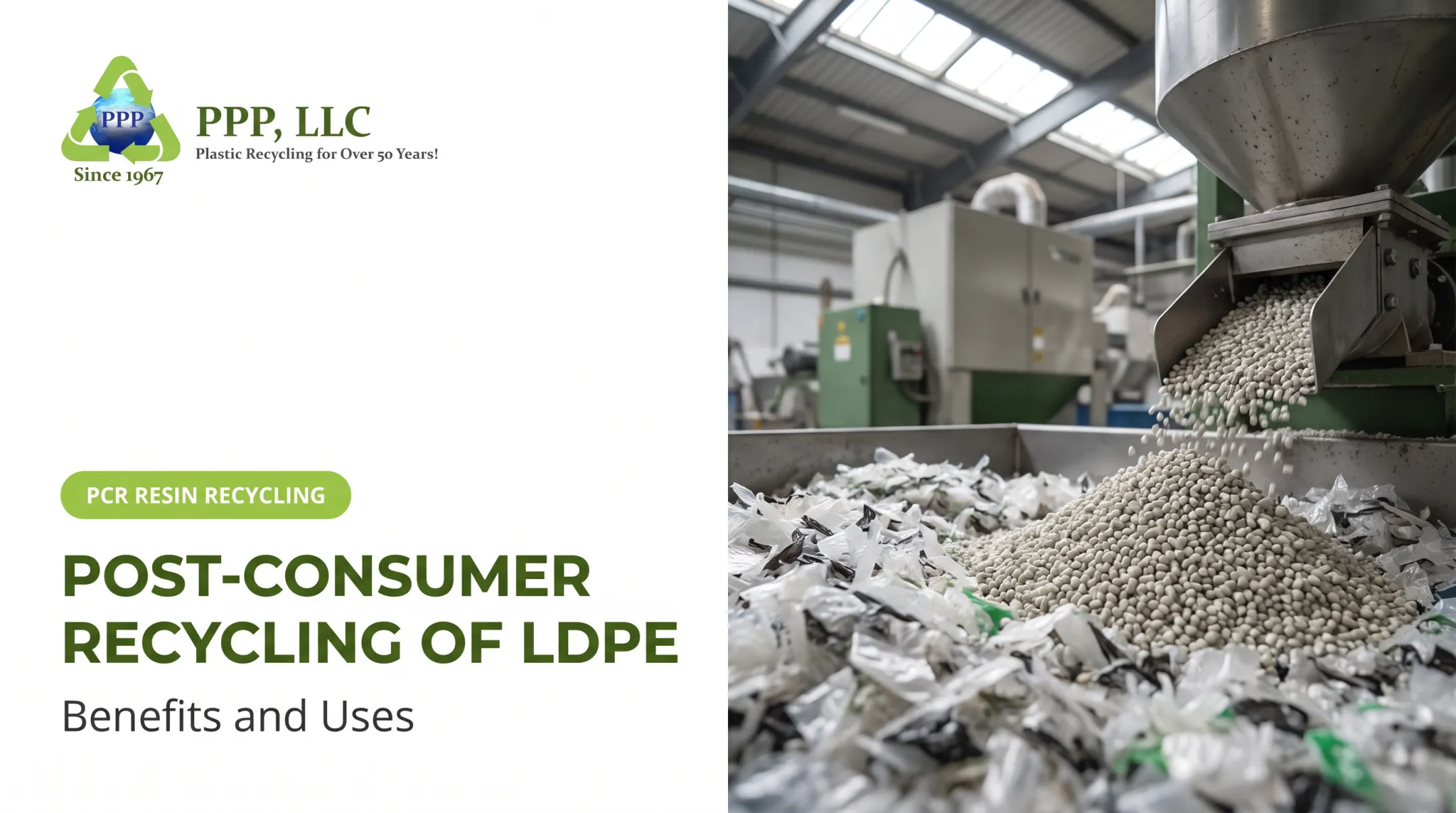
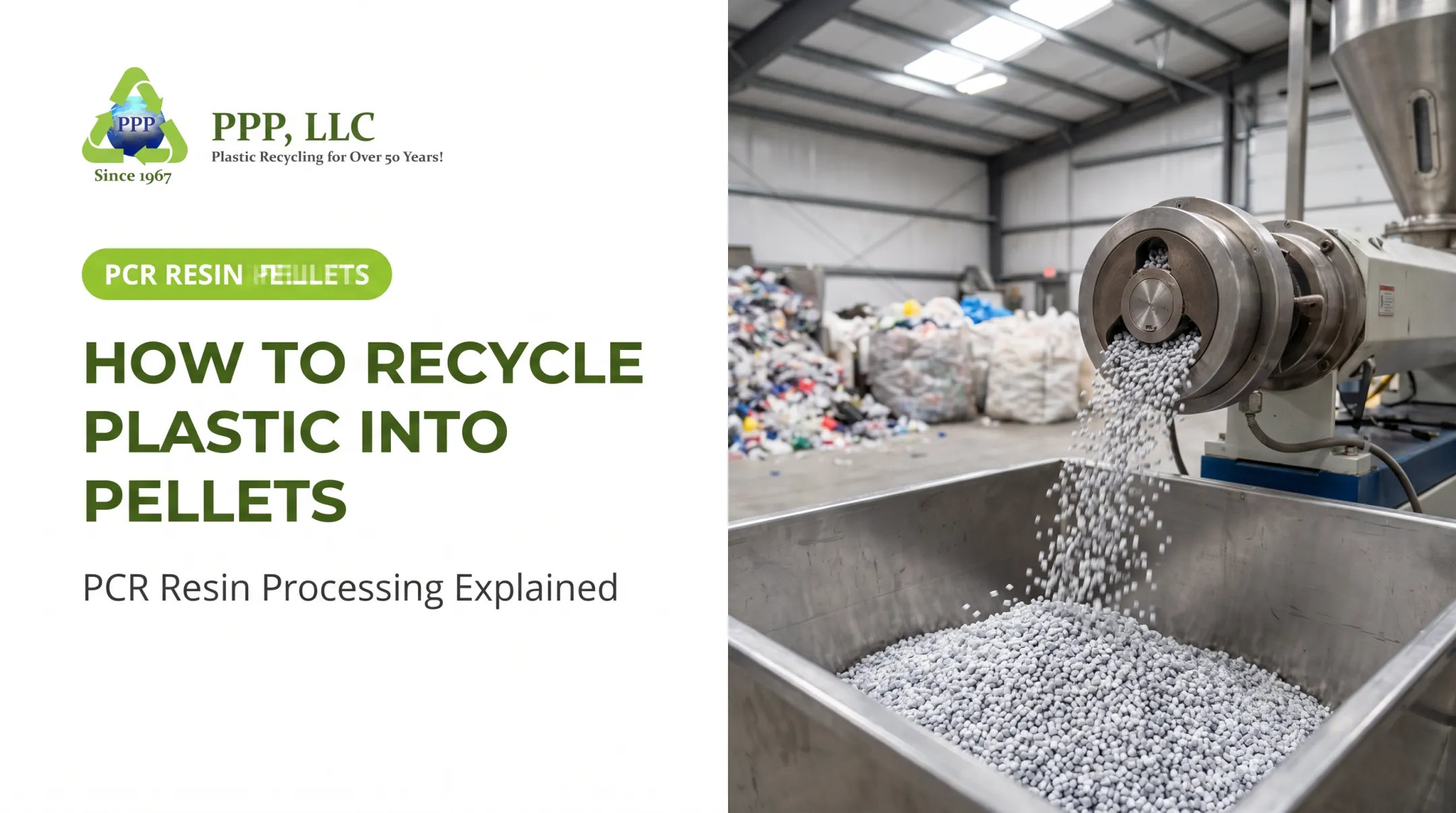
- Sorting, grinding, washing, extrusion, and pelletizing turn scrap into reusable PCR resin
- A PCR-certified, APR-member recycler helps businesses meet California SB 54 and cut disposal costs
What Is LDPE Plastic?
LDPE stands for low-density polyethylene, a thermoplastic made by polymerizing ethylene monomer. Its molecular structure is highly branched, which stops the polymer chains from packing tightly together. That's what gives LDPE its signature flexibility and lower density compared to its rigid cousin, HDPE.
You'll find LDPE marked with the resin identification code #4, typically stamped inside the recycling triangle on packaging. According to Britannica, LDPE has a melting point around 110°C (230°F). It resists moisture, chemicals, and impact well for such a lightweight material.
Where LDPE Shows Up
This combination of flexibility and durability makes LDPE a workhorse across industries. Common products include:
- Plastic grocery and retail bags
- Shrink wrap and stretch film
- Squeeze bottles (think ketchup or shampoo)
- Food packaging film
- Wire and cable insulation
- Agricultural mulch film
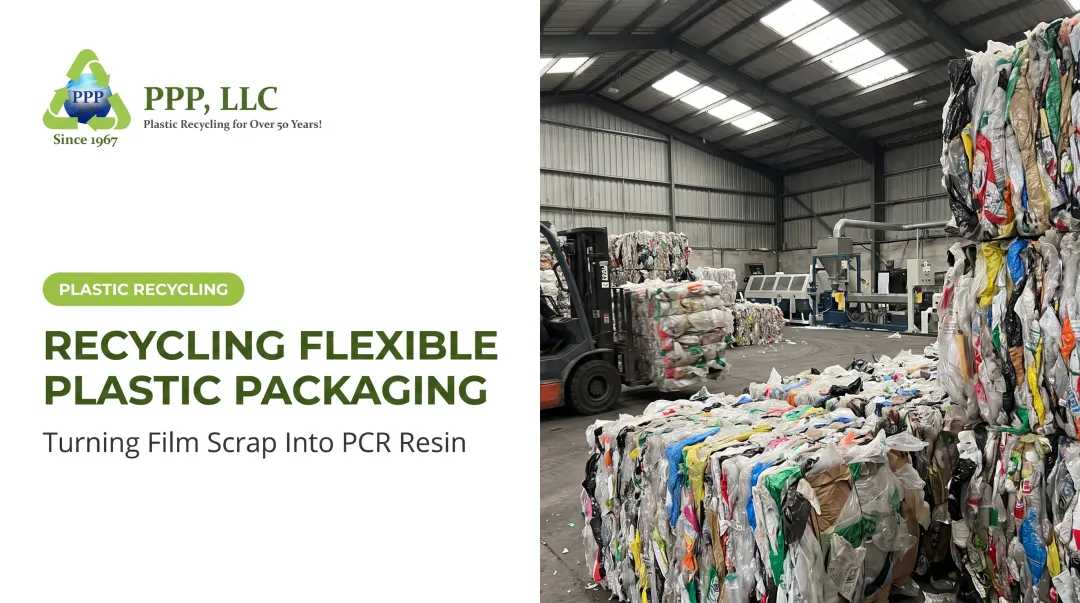
Because it's thin, pliable, and often transparent, LDPE shows up in high-volume, single-use applications. That profile generates a lot of scrap for manufacturers and packaging companies.

Why LDPE Recycling Matters
LDPE film and bags have a rough track record. The EPA's most recent figures put the recycling rate for plastic bags, sacks, and wraps at just 10% in 2018, compared to 29.1% for PET bottles and 29.3% for natural HDPE bottles that same year, according to the EPA's Facts and Figures report.
That gap means a lot of usable material still goes straight to landfills.
The Wildlife Problem
Unrecycled film doesn't just sit in landfills. It escapes into waterways and oceans. A 2020 systematic review in Conservation Letters examined 1,328 marine animal mortalities across 80 species and found that flexible plastic (bags, sheets, and packaging) accounted for the largest share of debris-related deaths, primarily through gastric obstruction (Roman et al., 2020).
Sea turtles in particular mistake floating film for jellyfish.
The Carbon and Cost Case
Recycling plastic also saves energy. The Association of Plastic Recyclers reports that using recycled content instead of virgin resin can save up to 70% in energy during production, based on its own life-cycle analysis (APR). Less energy demand means a smaller carbon footprint in manufacturing.
For businesses, the calculation is simple:
- Lower disposal costs by diverting scrap away from landfill fees
- Potential revenue from selling LDPE scrap to a recycler instead of paying to trash it
- Reduced dependence on volatile virgin resin pricing
California's Regulatory Push
Regulations are tightening the screws, too. California's SB 54 (Plastic Pollution Prevention and Packaging Producer Responsibility Act) requires 65% of covered packaging to be recycled by 2032, with permanent regulations taking effect May 1, 2026. Truth-in-labeling requirements fall under SB 343, which restricts recyclability claims unless materials meet statewide collection and processing thresholds.
Meeting those rules starts with recycling LDPE so recovered resin re-enters the manufacturing supply chain and reduces dependence on non-renewable feedstock.
The LDPE Recycling Process: From Scrap to Pellets
Turning a pile of shrink wrap into usable resin involves six distinct stages. Skipping any one of them compromises the quality of the final pellet.
Collection & Sorting - LDPE scrap (film, bags, packaging) gets separated from rigid plastics and other resin types using the #4 identification code. Mixed loads slow everything down, so sorting at the source saves time later.
Contamination Removal - Dirt, paper labels, and multilayer materials get stripped out. Left in, they can gum up processing equipment or weaken the final resin.
Grinding & Shredding - Scrap is reduced into small flakes, increasing surface area and prepping the material for melting.
Washing - Flakes are cleaned to remove residues, oils, and adhesives that would otherwise show up as defects in the finished pellet.
Extrusion & Pelletizing - Clean flakes are melted, filtered, and reformed into uniform pellets. PPP, LLC runs sourcing, grinding, washing, extrusion, and pelletizing under one roof, so material never shuttles between multiple facilities.
Quality Testing & Certification - Before pellets ship out as PCR resin, they're checked against size, shape, color, and performance specifications. PPP maintains PCR certification through quarterly reviews and annual re-certification, so each batch meets the same standards.

A pellet that's the wrong size or contaminated with the wrong polymer can throw off an entire manufacturing run downstream.
What Happens to Recycled LDPE? End Products & Common Challenges
Products Made From Recycled LDPE
Once pelletized, recycled LDPE resin re-enters manufacturing in familiar forms:
- Garbage bags and can liners
- Plastic lumber and composite decking
- Shipping envelopes and mailer film
- New packaging film for retail and e-commerce
High-quality PCR pellets can be engineered to match size, shape, color, and performance specs. Manufacturers don’t have to trade quality for recycled content.
Common Challenges in LDPE Recycling
LDPE recycling still hits recurring snags that keep rates behind other plastics:
- Contamination and mixed materials. Multilayer film, food residue, and non-LDPE plastics mixed into a load reduce the purity, and therefore the value, of the final resin.
- Equipment tangling. Thin film and bags wrap around rotating machinery at material recovery facilities. This single issue is a major reason most curbside programs won't accept LDPE film at all.
- Limited end markets. Demand for LDPE is less consistent than for bottle-grade plastics, so processed material can sit in storage.
Solving them takes specialized sorting and a facility built to handle flexible film—not every recycler can. Full-service processors that grind, pelletize, and supply PCR LDPE resin help keep material moving into bags, film, and packaging instead of storage or landfill.
Partnering With a Certified LDPE Recycler for Your Business
Attempting in-house LDPE recycling rarely pencils out. The equipment investment, quality control demands, and regulatory documentation required to produce certified PCR resin are steep for a manufacturer whose core business is making, not recycling, plastic products.
What to Look For in a Partner
Before signing on with a recycler, check for:
- PCR certification with regular re-certification (quarterly and annual reviews are a good sign)
- APR membership, which signals adherence to industry-wide standards
- Proven regulatory compliance with laws like California's SB 54, SB 270, and SB 343
- Full-service capability, meaning grinding, washing, extrusion, and pelletizing happen at one facility instead of being outsourced piecemeal
PPP, LLC checks each of these boxes. Founded in 1967, it brings more than 50 years of hands-on HDPE and LDPE processing experience.
The company is PCR-certified with quarterly and annual re-certification, holds APR membership, and complies with California's AB 478, SB 270, SB 54, SB 343, and the RPPC Law. PPP serves businesses across California, Arizona, and the broader U.S., purchasing scrap outright or offering toll processing for companies that want to retain ownership of their material through the recycling process.

Preparing Your LDPE Scrap for Pickup
A little prep work on your end speeds up processing and often improves the price you'll get for your scrap:
- Separate film from rigid plastics - Keep LDPE bags, wrap, and film away from bottles or containers made of other resins.
- Minimize contamination - Remove food residue, labels, and non-plastic materials where possible.
- Bale or bag by type - Grouping similar material together makes assessment and processing faster on the receiving end.
Businesses generating consistent volumes of LDPE scrap can request a quote directly from PPP to discuss pickup and processing options.
You lower operational and disposal costs, and you gain a documented sustainability story to share with customers who care where their packaging comes from.
Frequently Asked Questions
What does the recycling number 4 mean on LDPE products?
The number 4 is the resin identification code for low-density polyethylene. It tells recyclers and sorting facilities what type of plastic they're handling, though it's not a guarantee the item will actually be recycled.
Can LDPE plastic bags go in curbside recycling bins?
Most curbside programs don't accept LDPE bags or film because they tangle sorting equipment. Drop-off bins at grocery stores are typically a better option for consumers, while businesses with bulk scrap should work directly with a recycler.
What products are made from recycled LDPE?
Common end uses include garbage bags and liners, plastic lumber, shipping envelopes, and new packaging film. High-quality PCR resin can be customized for specific manufacturing needs.
Why is LDPE recycled less often than HDPE or PET?
LDPE's thin, flexible form makes it harder to sort and prone to tangling in recycling machinery. Limited market demand for the processed resin also plays a role, resulting in lower acceptance at standard facilities.
How can businesses recycle bulk LDPE scrap instead of landfilling it?
The most reliable route is partnering with a certified, full-service recycler that accepts bulk LDPE scrap for grinding and pelletizing. This turns waste into usable resin instead of a landfill expense.
Is recycled LDPE resin as high quality as virgin plastic?
PCR-certified LDPE, when processed correctly, can meet the same size, shape, and performance specifications as virgin resin for many applications.